
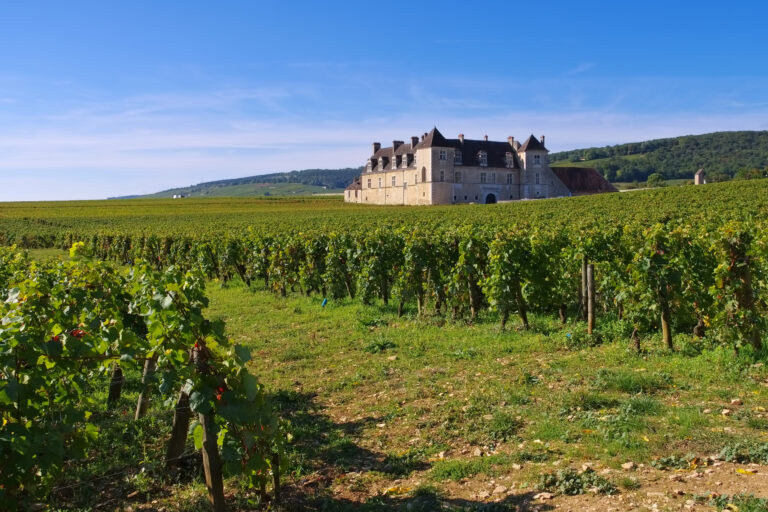
Grands Jours in Burgundy
A spotlight on the 2023 and 2024 vintages, featuring a Clos Vougeot 2016 flight
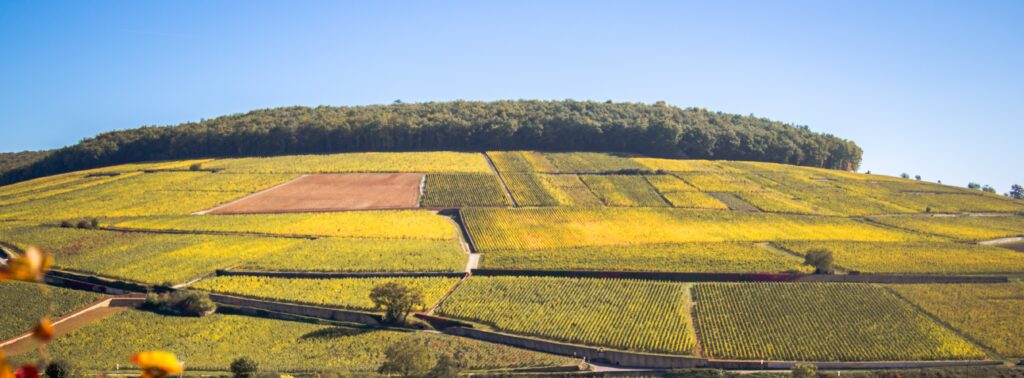
A recent visit to Burgundy, timed with the Grands Jours de Bourgogne, offered a rare and comprehensive lens through which to assess the trajectory of the latest vintages across the Côte d’Or and beyond, extending into the Côte Chalonnaise. Over several days of tasting – spanning Chardonnay, Pinot Noir and Aligoté – the scale and diversity of the region revealed itself with remarkable clarity. Particular attention was devoted to Volnay and Pommard, two appellations that, in this context, delivered especially compelling and nuanced interpretations. A focused exploration of Meursault confirmed its standing as a benchmark for white Burgundy, where the wines continue to distinguish themselves through precision, textural depth, and mineral clarity. Among the lesser-heralded areas, Monthélie emerged as a particularly meaningful discovery. Its landscape alone sets it apart: more varied than many neighboring zones, with vineyard exposures that extend beyond the classic east-facing slopes. A similar mosaic of orientations can be observed on the hill of Corton, where diverse aspects contribute to the expressive complexity of the wines.
The 2024 Vintage is a a vintage of extremes, indeed at first glance, 2024 appeared destined to be a difficult vintage. But the growing season was marked by significant challenges. Rainfall exceeded 1,200 mm in certain sectors, while a cold, damp spring created intense pressure from downy mildew. Flowering was uneven, with widespread coulure and millerandage, particularly across the Côte de Nuits. Some appellations were hit especially hard – Nuits-Saint-Georges, followed by Vosne-Romanée and much of the northern Côte. Yields plummeted to levels seldom witnessed in modern Burgundy, generally between 10 and 18 hectolitres per hectare, with some parcels falling below even these thresholds. In stark contrast, 2023 frequently delivered 40–45 hl/ha, highlighting the sheer scale of the difference. In many respects, these figures evoke the low-yielding vintages of the 1980s. Yet August proved decisive. A shift toward warmer, drier conditions allowed the remaining grapes to regain balance and achieve phenolic ripeness. Harvest began in late August in the Côte de Beaune, progressing into the Côte de Nuits and extending into late September for later-ripening parcels. This late-season improvement was critical in preserving the quality of the surviving fruit. In the cellar, 2024 demanded technical precision. Lower sugar levels and uneven ripening required careful selection and sensitive vinification. Despite these constraints, the results have surpassed expectations. The wines – though extremely limited in volume – show concentration, definition, and clarity. The best examples combine freshness with structure, suggesting solid aging potential. So, the reds are more restrained, requiring time to fully express themselves and the whites are immediately compelling, defined by tension and precision.

A comparison with the Burgundy 2014 vintage is tempting, yet 2024 appears to surpass it in overall quality in the glass. With exceptionally low yields, the wines display notable depth and purity. In Meursault in particular, the best examples strike a balance between freshness and ripeness, though a certain stylistic convergence among producers is noticeable. Eventually, 2024 is a vintage of adaptation and quiet success – defined not by power, but by precision, restraint, and transparency.
The 2023 Vintage: charm, accessibility, and generosity. In contrast, 2023 is shaped less by adversity and more by natural generosity. A warm, relatively stable growing season produced abundant yields and wines of immediate appeal. The style is defined by: expressive fruit profiles (red berries, ripe orchard fruit); balanced structures, without excessive weight; early approachability, even at higher appellation levels.
Compared to more powerful years, 2023 prioritizes charm over intensity. The wines are often open-knit and inviting, with softer tannins in reds and rounder textures in whites. If Pinot noirs are supple, aromatic, already accessible, the Chardonnay shows generous, sometimes less taut than cooler vintages. While not lacking in quality, 2023 does not consistently reach the depth or concentration of more structured vintages. Instead, it offers immediacy and drinkability, making it particularly appealing for earlier consumption.