
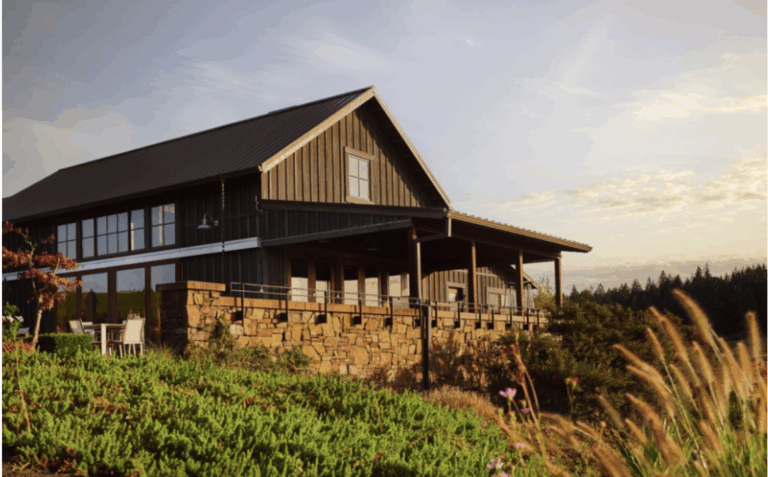
Gran Moraine
The company, the site, the style
written by Erika Mantovan
Gran Moraine is a California-based operation working in Oregon, whose ultimate owner is none other than Jackson Family Wines, the Santa Rosa group founded by Jess Jackson, who in 1974 bought an eighty-acre orchard in Northern California and in 1982 launched the first Kendall-Jackson Vintner’s Reserve Chardonnay. Today it is the ninth-largest wine producer in the United States, with forty brands and roughly fifty thousand acres of vineyard — in short, the largest owner of coastal vineyard land in California and Oregon. At the helm since 2011: Barbara Banke (Chairman & Proprietor) and Don Hartford (Vice Chairman). In Oregon, the group controls four properties, Gran Moraine among them.
The vineyard itself didn’t originate with Gran Moraine: it was planted in 2004 by Premier Pacific Vineyards, and the winery that occupied the site was called Solena Estate Winery. In May 2013, Jackson Family acquired the hillside vineyard and the building; around the same time it also took over Zena Crown. Gran Moraine officially opened in 2014, releasing its first wine in May — a Yamhill-Carlton Pinot Noir with a suggested retail price of forty-five dollars. A detail that isn’t secondary — it already signals the winery’s positioning and ambitions. The team driving the project toward a high level of quality is made up of Eugenia Keegan and Ken Kupperman, who oversee roughly 200 acres.
Where we are
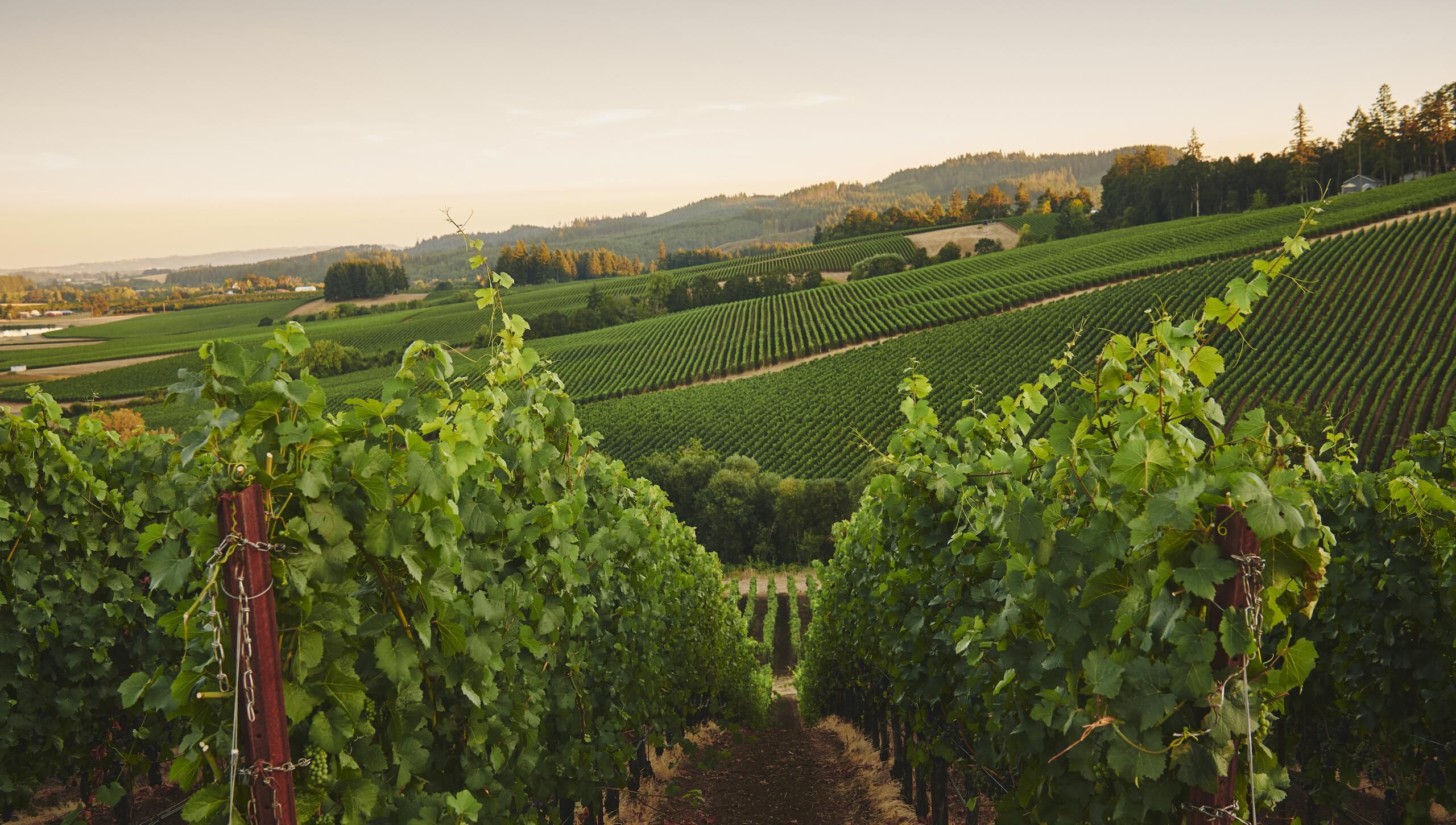
We’re in Yamhill-Carlton, in the western, cooler part of the Willamette Valley — hills at the foot of the Coast Range, in a rain shadow from the Pacific, yet close enough to the ocean to catch cooling afternoon breezes. In fact, one of the AVA’s westernmost vineyards.
The soil is alluvial-sedimentary, and its origin is the reason behind the winery’s name: during the last ice age, the Missoula Floods — catastrophic events, not ordinary floods — broke through the ice dam and released enormous volumes of sediment-laden water into the interior. As the waters retreated, they left moraines behind: small depressions, hollows, miniature valleys of rock and deposited sediment. Gran Moraine as nomen omen for anyone looking for a geological description.
Across the parcels you find drop stones — boulders of mountain origin, completely different in nature from the surrounding sediment, carried by the ice and left behind when it melted. It was impossible not to dedicate a wine to this feature: the name of the wine Dropstone comes from these very stones.
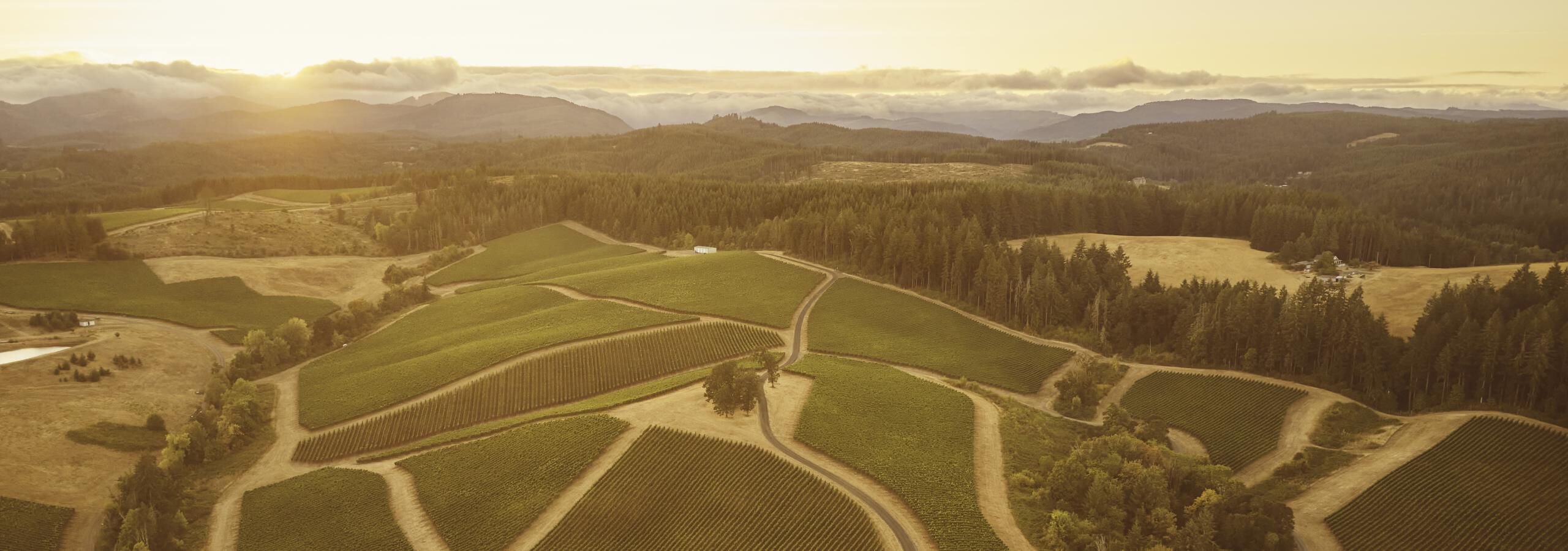
Block 5, on the other hand, belongs to a different geological story. It’s a parcel with lower soil potassium than the rest of the vineyard, vinified only in the coldest vintages (such as 2016, 2019 and 2021). And while Cascade shares its origin with the vineyard’s central block, Upland occupies the top of the hill. Each block gets its own wine.
Discipline and freedom
Shane Moore is a native of Idaho, and his path doesn’t resemble that of any other Oregon winemaker: wineries in Canada, in Western Australia, and on the Golan Heights in Israel — where he worked in military-run facilities, from which he imported the strict processes that still govern the winery today. He joined Jackson Family Wines in 2011 as an enologist, specializing in Sonoma Coast Pinot Noir and Chardonnay. In 2013 he returned to the Pacific Northwest for Gran Moraine. Winemaker in all but title from 2016.
Inside the winery, music apparently plays around the clock. The team describes it as a sonic bubble surrounding the building. The official formula is the secret sauce of discipline and freedom of expression: rigorous processes on one hand, no fear on the other. The result in the bottle is a style the winery itself describes as, in part, antithetical to the natural tendencies of Yamhill-Carlton: elegance, restraint, and fresh acidity as the through-line. In a sub-zone that tends toward full fruit and weight, Gran Moraine’s wines are animated by tension, giving very recognizable, identity-driven wines. This owes something to open-top fermentation, variable percentages of new oak (from 20% to 50% depending on the label), and roughly sixteen months of aging in Burgundian barrels.

Pinot Noir
Cascade 2022 — 95/100
This Pinot Noir expresses the winery’s style through a floral profile, with notes of cherry and balsamic. The palate is vertical, fresh, the tannin elegant and extremely fine — dense and fine-grained on the finish. Refined, and highly enjoyable.
Telluric 2022 — 95/100
A deeper, richer, more intense sip. The nose is mentholated, with spice, blueberries and forest berries. On the palate it’s concentrated and dense, the tannin still fine-grained but tight and fully integrated; notable length and persistence, with a finish that lingers on the fruit.
Conifer 2022 — 95/100
Aged with 45% new oak. On the nose, cherry and sweet spice, harmonious and full, well concentrated; a touch of oak still to shed, a wine that asks for time, but already showing drive, persistence and depth.
Spole 2019 — 95/100
With a hint of evolution, dark and intense fruit emerges, along with notes of cherry and dark spice. On the palate: citrus, iodine-like mineral notes, in a structure that is lean, elegant and nicely taut.
Block 5 — 97/100
Vintages 2016, 2019, 2021: made only in cold years, from low-potassium soils. On the nose, dried flowers, pepper, cherry, redcurrant. A wine that is taut yet dense, extremely elegant, with tannin resolved to perfection. Deep and very long, with a finish on blackberry and violet. Stunning.
Chardonnay
Dropstone 2022 — 94/100
Made from a selection of grapes, it ferments in oak and ages sixteen months (20% new barrels). Fresh, with iodine-like and citrus notes, lemon and citron. Very clean, lean, showing great balance.
Desiderium 2022 — 93/100
Sixteen months in barrel with bâtonnage. Ripe pineapple, rich, white pepper, saline. An elegant, soft, full nose, very well balanced and pleasantly harmonious.