
Abbott Claim
the talent of the vineyard that gave the domaine its name
written by Erika Mantovan
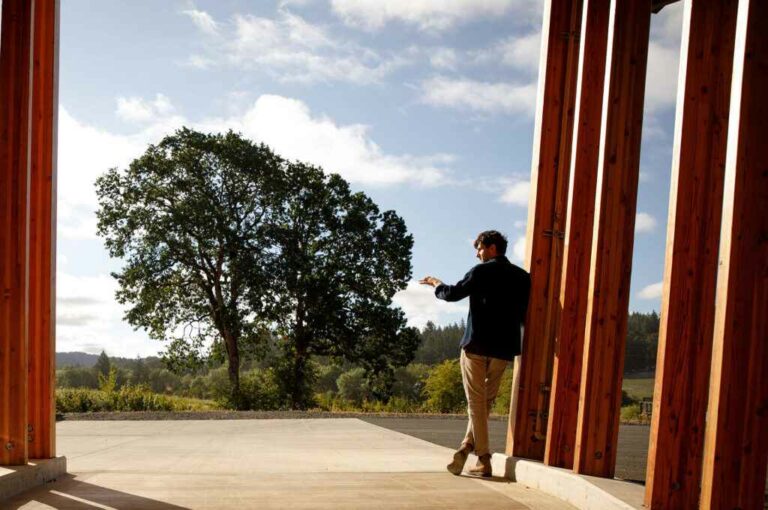
From Abbott Claim’s plots, the gaze sweeps across vine-covered hills interspersed with woodland, until it meets the ridges of the Chehalem Mountains on the horizon. The 1,800-square-meter winery, completed in 2020, is dug into the hillside and follows its contours, almost disappearing into the landscape. Visits end in the barrel room, in an intimate atmosphere of soft light and candles: a semicircular space that wraps around the library of older vintages, lit from above by an oculus.
Abbott Claim is one of the few Oregon estates investing in massal selection to build a plant heritage ever more closely tied to its own environment. The historic core of the vineyard is Pinot Noir, Pommard clone, planted in 2001; today, some of those vines are selected and propagated to preserve the diversity that has developed on the site. To the estate’s own material are added selections from Tony Soter and from other vineyards on Savannah Ridge, with the aim of identifying combinations of plant material and rootstocks able to face the future conditions of the Willamette Valley.
So we have more DNA from this property.”
Abbott Claim does not produce traditional-method sparkling wine. Yet the welcome begins with a glass of Champagne. “It’s what we like, and we share it with the people who come to visit us.”
A hill between ocean and mountains
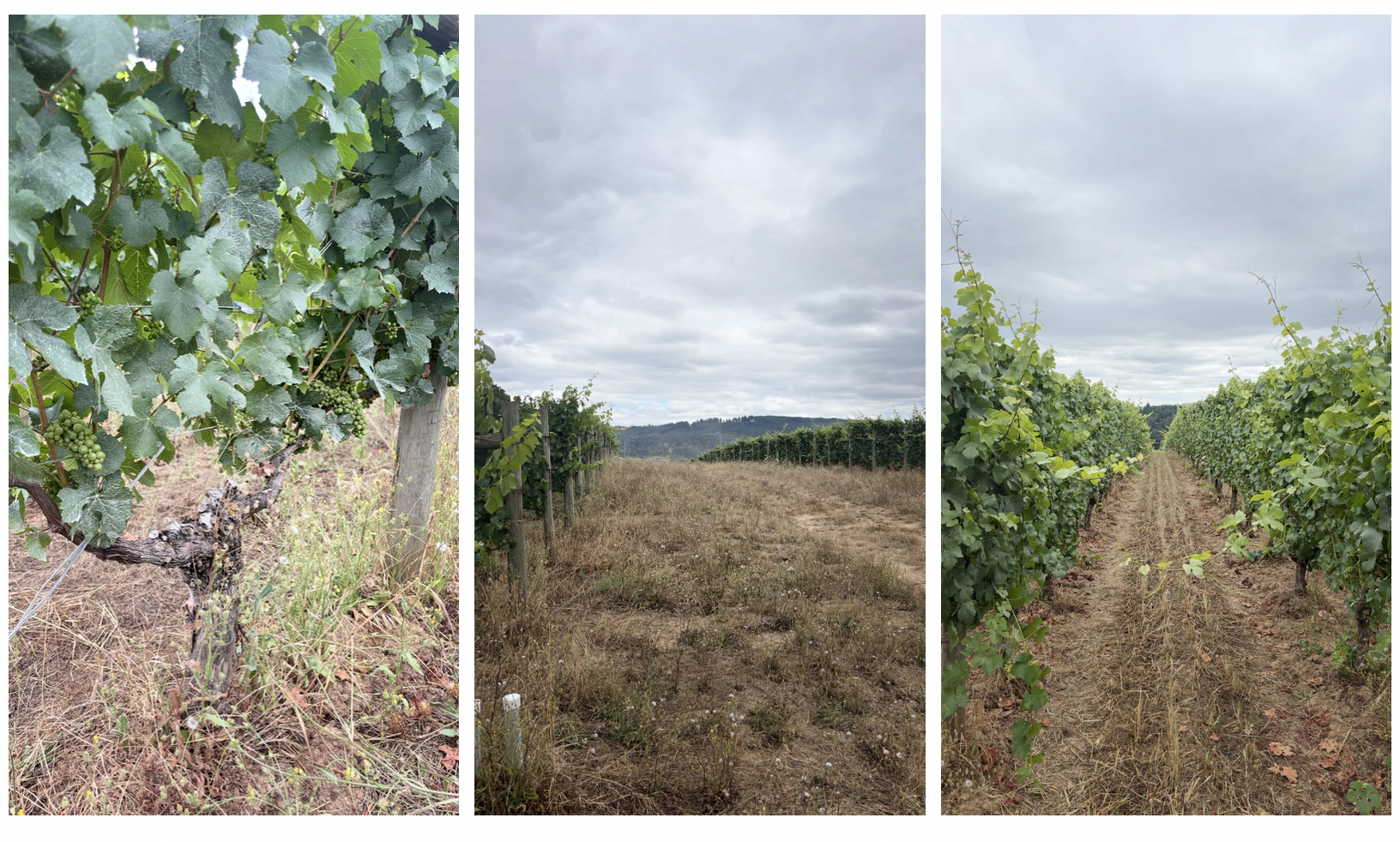
Abbott Claim sits on Savannah Ridge, just east of Carlton, within the Yamhill-Carlton AVA. The site occupies a sheltered position between the Coast Range to the west, the Chehalem Mountains to the north and the Dundee Hills to the east. This layout creates a partial rain shadow, while afternoon breezes help ventilate the vineyard.
The Willamette Valley has a cool, maritime climate, marked by rainy winters and generally dry summers. But climate change is shifting the balance here too: during the visit, a person from the team mentions recent temperatures above 100°F, just under 38°C, and puts adaptation at the center of future choices about plant material, rootstocks and canopy management.
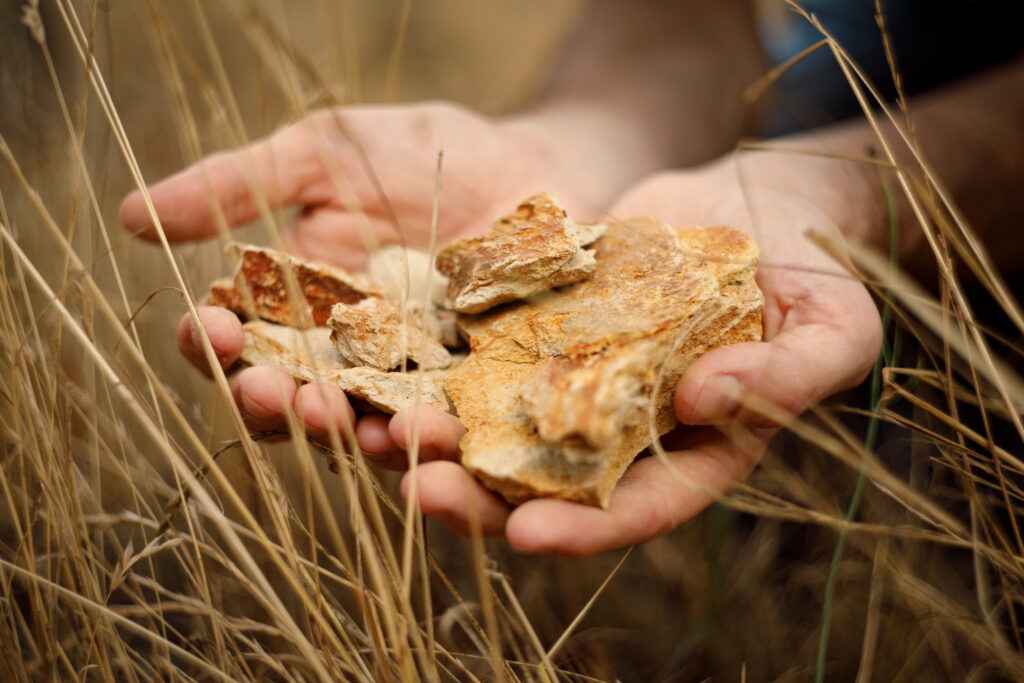
The property extends over roughly 170 acres (about 69 hectares), of which around 35 acres of vine (13 hectares) are planted. The vines lie between 330 and 480 feet of elevation, roughly 100 to 146 meters, with mainly southeast and southwest exposures. Savannah Ridge is made up of ancient marine sediments: fractured oceanic sandstones, mainly attributed to the Willakenzie and Wellsdale series. Shallow, poor, very well-drained soils, for wines that tend to have good structure.
A project born long ago
The Abbott Claim project as we see it today was born long ago, but not from a continuous nineteenth-century winegrowing tradition. The name recalls John F. Abbott, one of the first Euro-American settlers whose presence on the site is documented. In 1855 Abbott filed a land claim for 170 acres on Savannah Ridge under the Oregon Donation Land Law. The claim, identified as Donation Land Claim No. 945, took several years to process and the certificate was formalized in 1860.
Our story starts with John, but it’s really not about him. He’s just the first person whose name we know who lived here on the site.”
No vineyards are recorded here in the nineteenth century: the first vines in the Willamette Valley appear only around the mid-1960s. The winegrowing story begins in the late 1990s with Ken Wright and his wife Karen, who bought a distinctive piece of land for its gentle slope and drainage. Wright identified the north slope of the hill as the right place for a small vineyard and in 2001 planted four acres of Pinot Noir, Pommard clone; through 2003 came the first hectares of Pommard, Dijon 115 and 777 on different rootstocks. He decided to call the vineyard Abbott Claim, reviving the name of the historic land claim. The idea of a more structured winery took shape with Antony and Angela Beck, who first bought a lower part of the hill from Wright, who helped prepare the site; in 2012 came the acquisition of Abbott Claim Vineyard and in 2017 the merging of the parcels.
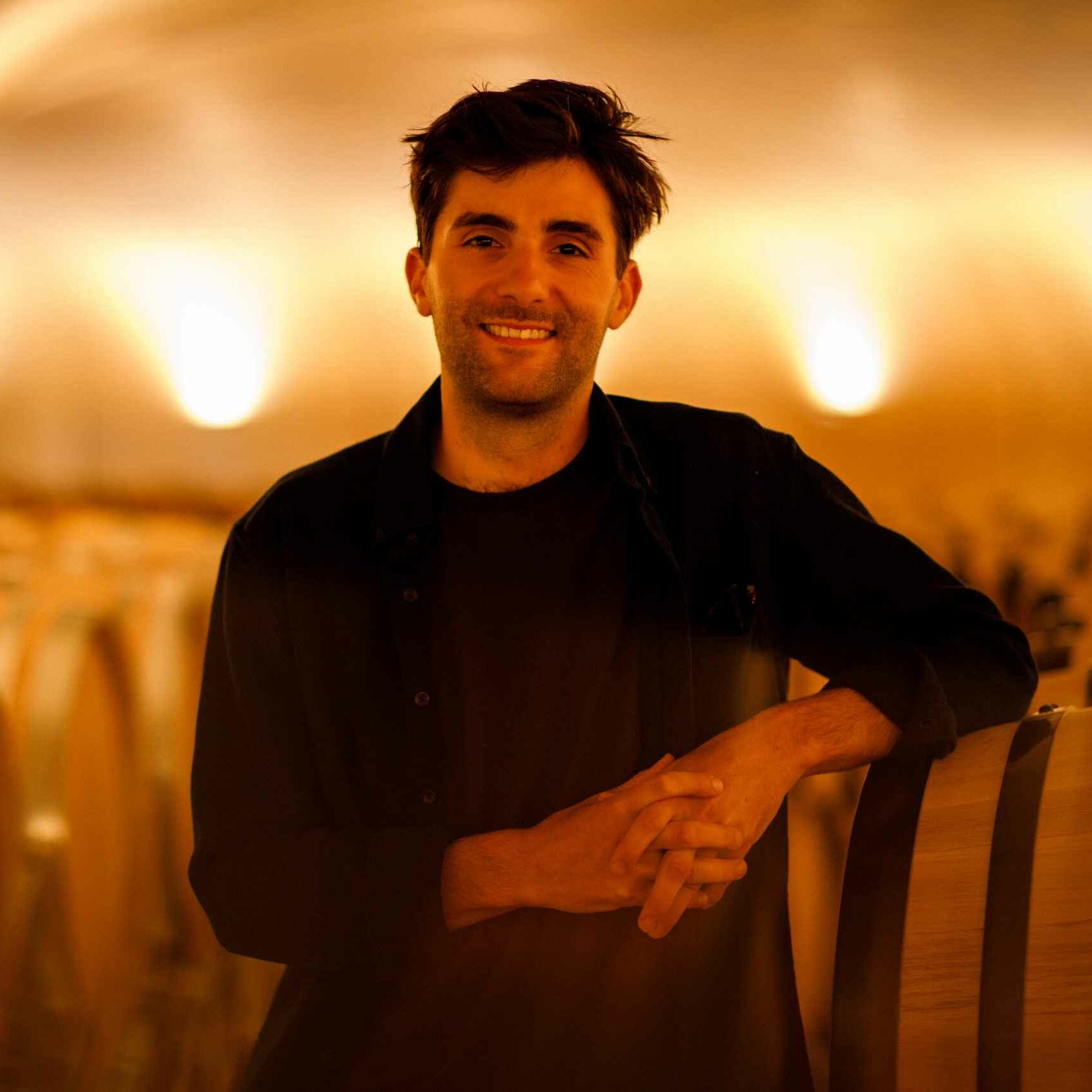
In 2017 the French winemaker Alban Debeaulieu also arrived at Abbott Claim. Born near Paris and raised in the south of France, he does not come from a family of winemakers. Wine, however, has been part of his life since childhood, thanks to his grandparents: visits to the cellars of Chinon and Touraine, and the care of a few rows of vines in the Vendée. After studying agronomy and viticulture in French Catalonia, he moved to Burgundy, where he earned his bachelor’s and master’s degrees in enology. After stints in Beaujolais and at Maison Joseph Drouhin in Beaune, in 2013 he landed in Oregon for a harvest at Domaine Drouhin Oregon. He stayed in the region as assistant winemaker at White Rose Estate, then from 2016 as winemaker at 00 Wines and Chapter 24 Vineyards, before arriving at Abbott Claim in May 2017, where he met the Becks’ project.
Not America’s Burgundy
His French background and his link to Drouhin make the comparison with Burgundy almost inevitable. Organic viticulture, spontaneous fermentations, long aging on the lees, and no fining or filtration are not, in his view, exclusively Burgundian techniques, but traditional practices found in many regions.
What is truly Burgundian, if anything, is the level of attention paid to differences within the vineyard: the parcel-by-parcel approach, across exposures, soils, vine behavior and response to the vintage. A method of observation that leads to sharp differences in each vintage
The reason why I want to work with Alban is because every year tastes different. He wants to show the translation of this land and show what the weather does every year as opposed to kind of control it,” says a member of the team, who last year worked production at another winery, where every vintage was meant to taste the same.
For Debeaulieu, vineyard and cellar are one continuous process: the work serves to translate the place, not to impose a style, and for the most delicate steps the lunar and tidal calendars are taken into account. 2017 was the turning point in the vineyard too: since then the estate has followed organic, biodynamic and regenerative practices.
We don’t follow Demeter, but we operate as if we would be getting certified by them.”
In the vineyard they use cover crops, compost, preparations and herbal teas. Tillage is limited, irrigation is avoided in the Abbott Claim vineyard, and the estate states that it forgoes herbicides and pesticides. In some plots the shoots are tucked and woven rather than topped, to reduce interference with ripening and keep the canopy active for longer.
The attention extends to the whole ecosystem. The estate preserves native oaks, creates habitat for pollinators, and installs perches for raptors, which are entrusted with part of the natural control of rodents. A green container full of red worms and mulch produces fertilizer for the property, while solar panels generate power and a particular vermifiltration system, using worms and microorganisms, treats the winery’s process wastewater.
Massal selection and beyond
When we replanted a couple of the blocks of vines a couple years ago, we did massal selection through our own vines to plant as opposed to going and buying new clonal material.”
Budwood is taken from the estate’s 2001 plants and entrusted to a nursery for propagation. To this heritage are added selections from Tony Soter and from other vineyards on Savannah Ridge. The aim is to preserve a more varied population, experiment with new rootstocks and make use of material that has already spent a significant period in the local environment.
The vines are still genetically Pommard, but after more than twenty years on Savannah Ridge they can show differences linked to mutation. Propagating them means preserving diversity and building a biological memory of the vineyard.
Two geologies for Pinot Noir and Chardonnay
The heart of the Pinot Noir remains Abbott Claim Vineyard, on the marine sediments of the Yamhill-Carlton AVA. The range includes a bottling that interprets the vineyard as a whole and two selections, Due North and Orientate, born from a more granular reading of its blocks. The name Due North means “true north”: it is the parcel that faces north, planted to Pommard, with the oldest vines.
For Chardonnay, the project looks instead to the Eola-Amity Hills, where the soils are mostly volcanic and the Van Duzer Corridor brings cooler ocean air. In 2020 Abbott Claim began working with about an acre and a half of Chardonnay planted in the early 1990s at Temperance Hill Vineyard. To this is added X Omni, a rocky site on Nekia and Ritner soils, planted to a wide variety of clones and selections.
The future, however, is Lily Springs vineyard, an estate-owned property planted in 2021 about 20 miles south of Abbott Claim. It is a steep, rocky slope, exposed to the winds of the Van Duzer Corridor, with shallow volcanic soils, shale, fossils and fragments of petrified wood. While the young vines come into production, X Omni and Temperance Hill continue to support the current Chardonnay.
What’s up in the cellar?
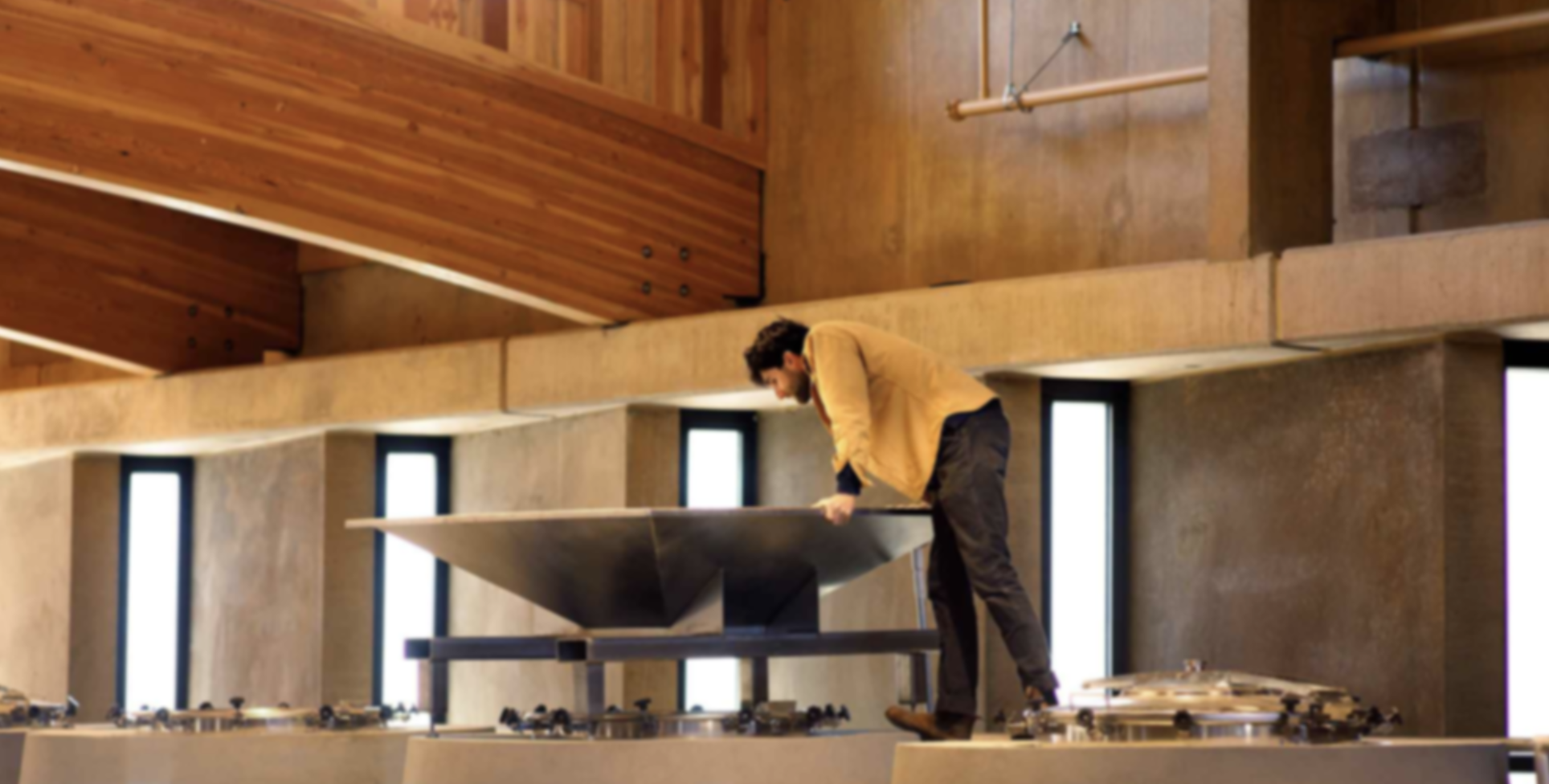
Grapes are hand-harvested and sorted. Fermentations start spontaneously and take place in oak, concrete and steel vessels. Whole-cluster percentages vary with vintage and parcel: in the 2023 Due North they are just 2%, and in the other wines they generally stay under 10%.
After fermentation, the wine is pressed in a basket press. Free-run wine, press fraction and lees may be transferred together into barrels, where malolactic fermentation starts spontaneously, sometimes only the following spring. Aging generally runs for 18 months in French oak barrels from different coopers, with 15% new oak; barrels are used for a maximum of three years. Fining and filtration are avoided when conditions allow.
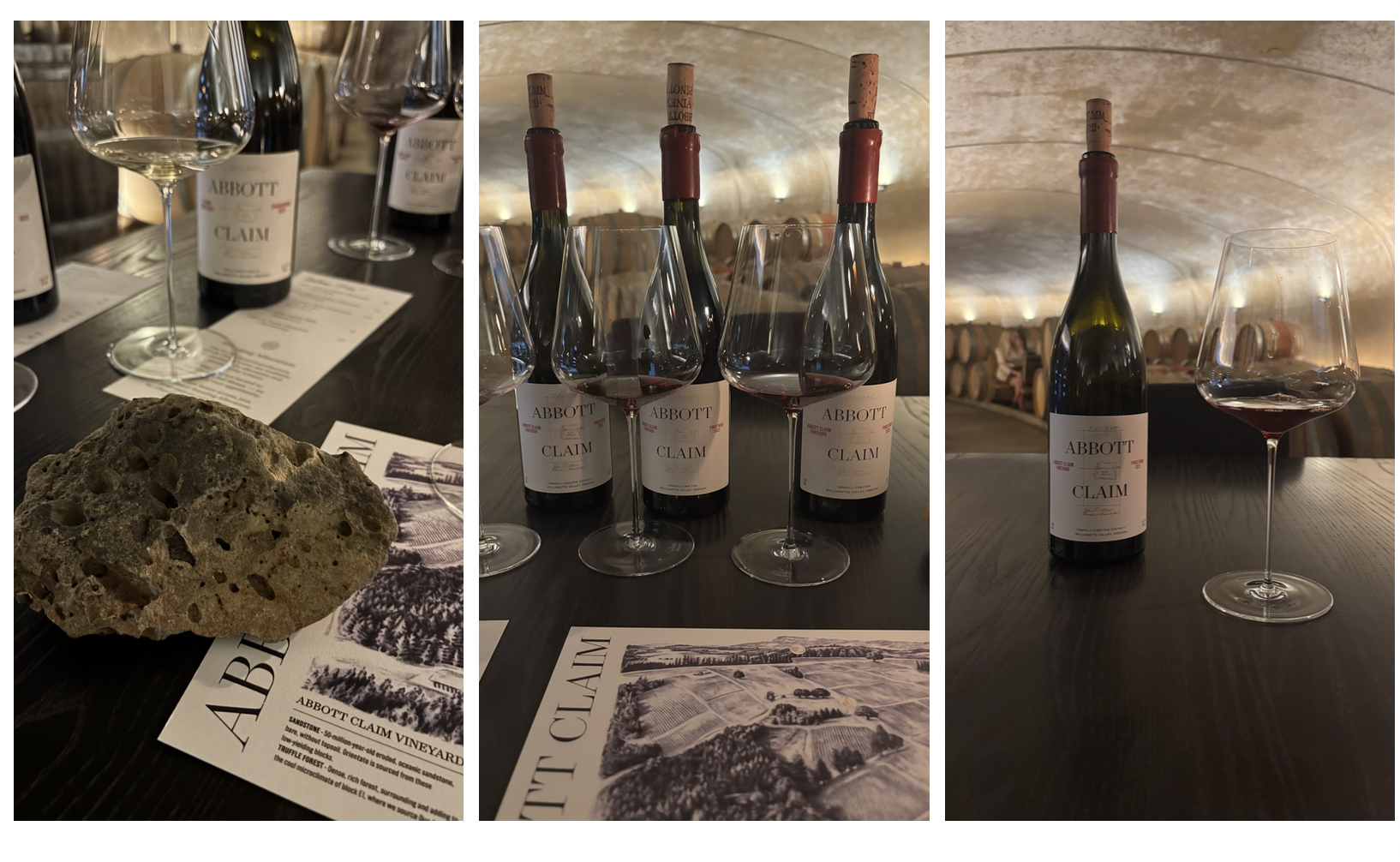
Pinot Noir Abbott Claim Vineyard: three vintages, same parcel
2021- 95/100. On the nose, a Burgundian aura, with toasted oak, finesse and elegance, cherry and sweet spice. On the palate it is elegant and velvety, harmonious, immensely pleasurable and full of substance. Long and very persistent, with cherry on the finish and mineral, iodine-tinged nuances.
2022 – 95/100. A vintage marked by frost, which cost much of the crop. Mineral, fine nose, with citrus, spice and balsamic hints, full of energy. The mid-palate is full, rich, weighty and textural, with freshness holding it up. It is still young; the finish is textural and ripe.
2023 – 97/100. Delicate, floral nose with juniper; dynamic, with an energy that soars. Unadorned, with deep, rich substance, propulsive and balsamic, substance and elegance. Stunning. Flowers and cherry return on the finish.
Due North 2023 – 97/100. Pommard from old vines, with just 2% whole cluster. Floral notes, mint, balsamic, botanical, orange and citrus. Pleasing and harmonious, deep and broad, with integrated tannins: a layer of tannin and concentration, stratified, with assertive spice. On the finish it is slightly ferrous and saline.
Chardonnay
Vintage 2023 – 95/100. The nose recalls a Puligny-Montrachet: oak, apple, citrus. On the palate, power and harmony, freshness, with a profile that calls to mind Chassagne; citrus, substance and weight, but with restrained oak that hugs the fruit. Tension on the finish, iodine notes. Full malolactic, 30% new barrels.
Temperance Hill 2022 – 95/100. Tropical, brioche and smoke, lemon, grapefruit and ripe citron. Elegant, with silkiness and roundness; here the oak is more absorbed on the palate. Volcanic soil. 2023 – 97/100. A more vertical, dynamic vintage, perfectly drinkable.
X Omni 2023 – 94/100. Thirteen different Chardonnay clones, massal selection. The most herbaceous of the flight: fresh herbs and citrus on the nose, a harmonious, complex, vertical and dynamic palate. Long finish with a saline edge.