
The Harvest: Understanding the decisive moment when a wine is truly born (Part 2)
 The stem: a long-forgotten element
 The stem: a long-forgotten element
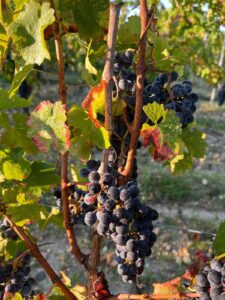
 When you look at a bunch of grapes, you naturally notice the berries. However, the woody part that connects them—called the stem (or rachis)—also plays an important role in the quality of the resulting wines.
For a long time, most wineries practiced almost systematic destemming. The berries were separated from their stems before being placed in vats to prevent the extraction of plant-derived tannins and herbaceous compounds.
Today, this view is much more nuanced. In many major wine-growing regions of Burgundy, the Rhône Valley, Beaujolais, and even certain regions of Italy, some or even all of the grape clusters may be left in the wine during fermentation. It all depends on the ripeness of the stems.
Stem lignification
Like the seeds, the stem changes as the fruit ripens. At the beginning of the season, it is:
- green;
- high in water content;
- very vegetable-like.
Then, gradually, it lignifies. It becomes:
- light brown;
- drier;
- more brittle;
- lower in vegetable compounds.
An insufficiently mature stem contributes:
- herbaceous notes;
- vegetal characteristics;
- dry tannins;
- sometines a slight bitterness.
Conversely, a well-lignified stems can contribute:
- greater freshness;
- better circulation of the juice in the vat;
- more refined tannins;
- a verticality sensation;
- sometimes floral, spicy, or slightly minty notes.
The decision to retain or remove the stems therefore depends directly on their maturity.
Whole-cluster or destemming?
The choice made in the winery has a profound influence on the style of the future wine.
Total destemming
The berries are completely separated from the stems. This method generally results in:
- more fruit;
- softer tannins;
- faster extraction;
- fewer vegetal characters.
It remains the most widely used method today.
Partial destemming
Only part of the bunches is retained. The winemaker then seeks a balance between:
- finesse;
- freshness;
- structure.
Many wineries adjust the percentage of grape stems they retain each year depending on the vintage.
Whole bunches
Some wines are vinified using 100% whole bunches. This practice is particularly common:
- in several great Burgundy Pinot Noirs;
- in certain northern Syrahs;
- in several Beaujolais crus;
- in certain natural wines.
Whole bunches promote partial intracellular fermentation and profoundly alter the wine’s aromatic profile. The wines often exhibit:
- greater freshness;
- a more airy structure;
- more pronounced floral notes;
- greater ageing potential.
Tasting the berries
A few weeks before the harvest, winemakers walk through their vineyards every day. They don’t just look at the grapes—they taste them. A thorough tasting involves observing the following in succession:
The pulp
It allows you to assess:
- sugar content;
- acidity;
- juiciness;
- texture.
The skin
The taster assesses :
- its thickness;
- its firmness;
- its aromatic richness;
- the quality of the tannins.
A ripe skin quickly colors the mouth and readily releases its compounds.
The seeds
They are then chewed. The taster looks for:
- their color ;
- their hardness ;
- their bitterness.
Seeds that are still green generally indicate incomplete phenolic ripeness.
The stem
In some wineries, the stems are also tasted. They should no longer show pronounced vegetal characteristics if some of the bunches are to be retained during fermentation.
Laboratory analyses
Tasting alone is not enough. The grapes are also analyzed very regularly. In particular, the laboratories measure:
- potential alcohol;
- sugar content;
- must density;
- pH;
- total acidity;
- tartaric acid;
- malic acid;
- potassium;
- assimilable nitrogen (YAN), which is essential for proper fermentation.
Some wineries also monitor:
- extractable anthocyanins;
- total polyphenols;
- phenolic ripeness indices.
These analyses help confirm the observations made in the plots.
Risks of stalled ripening
Climate change is making this phenomenon increasingly common. When a vine suffers from severe water stress, it closes its stomata to limit water loss. Photosynthesis slows down significantly. Ripening is then disrupted. Sugar levels increase only slightly. The berries sometimes practically stop developing. However, the tannins continue to evolve, very slowly.
This phenomenon is called a stalled ripening. After a rainfall, ripening may resume. But this recovery is rarely completely uniform. The berries absorb water and swell. The sugar content may be slightly diluted. Certain aromatic compounds evolve differently. The winemaker must then reassess his entire harvest strategy.
Hand-harvesting or machine-harvesting ?
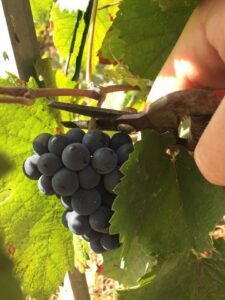
For a long time, hand-harvesting was considered to be consistently superior.
Today, this view is much more nuanced. Modern machines have become extremely efficient. They allow for:
- rapid harvesting;
- night harvesting;
- significant cost reduction;
- very high-quality harvest when the machine is properly adjusted.
Some machines are now equipped with:
- onboard destemming systems;
- fans that remove leaves;
- sorting tables;
- optical systems.
Their precision has improved considerably.
Night harvesting
Night harvesting is becoming increasingly common in many warm regions. Harvesting grapes at 12°C rather than 30°C offers several advantages. The grapes arrive at the winery cooler. Aromas are better preserved. Oxidation is slowed down. Spontaneous fermentation is limited. Cooling requirements are reduced. Energy consumption is also reduced. White, rosé and sparkling wine grapes are particularly well suited to this practice.
Grape sorting
Once harvested, the grapes are often sorted again. The sorting can be done:
- directly in the vineyard;
- upon arrival at the winery;
- on a vibrating table;
- on a conveyor belt;
- using optical sorting.
Optical sorting is now one of the most advanced technologies available. Cameras take individual photos of each bay. A compressed-air system automatically removes:
- grapes that are not sufficiently ripe;
- spoiled grapes;
- vegetal debris;
- foreign matter.
This technology ensures a harvest of exceptional uniformity.
The different types of harvesting according to the wine
Not all grape harvests have the same goals…
Dry white wines
They generally seek:
- freshness;
- tension;
- fruity aromas.
Harvests are often relatively early.
Red wines
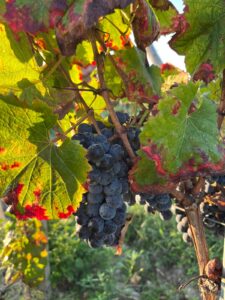
They generally require more advanced phenolic ripeness.
The richness of the skins and seeds becomes a determining factor.
Rosé wines
They prioritize:
- fruit;
- freshness;
- low tannin extraction.
The grapes are often harvested slightly earlier than those intended for premium red wines.
Sparkling wines
The grapes are harvested early to preserve high acidity. In Champagne, as in the Crémant appellations, hand-harvesting is mandatory to allow whole-bunch pressing, thereby limiting the extraction of phenolic compounds and preserving the finesse of the juice.
Sweet wines
These are likely the most complex harvests. The grapes are harvested only when they have reached exceptional concentration. For botrytized wines, the harvesters make several successive passes, known as “tries.” They select only the berries that are perfectly affected by Botrytis cinerea, allowing the others to continue ripening. The harvest can thus extend over several weeks.
Ice wines
The grapes remain on the vine until the first hard frosts. They must be harvested and pressed while they are still frozen. The water remains in the form of crystals in the press, while the resulting juice is extremely concentrated in sugars, acidity, and aromas.
Harvest organization
The grape harvest is a major logistical operation. Each plot is planned, and in some cases, each vine is even marked. Teams are assigned their tasks. Trucks shuttle move between the vineyards and the winery. The presses must be available at the right time. The tanks must be ready to receive the must.
On large estates, several hundred people may be mobilized at the same time for a few weeks. Decisions are sometimes made on a daily basis, or even several times a day, depending on the weather.
The impact of climate change
Over the past several decades, harvest dates have changed considerably.
In many European regions, they now begin one to three weeks earlier than they did during the second half of the 20th century.
This trend brings with it new challenges:
- higher alcohol levels;
- lower acidity;
- higher pH levels;
- increased risk of ripening stagnation;
- more frequent extreme weather events;
- earlier and sometimes faster harvests.
Winemakers are now adapting their practices:
- managing the vine canopy;
- limiting leaf removal;
- adjusting crop load;
- selecting new rootstocks;
- adjusting pruning dates;
- considering which grape varieties are best suited to future climates.
Harvest: the moment when everything is decided
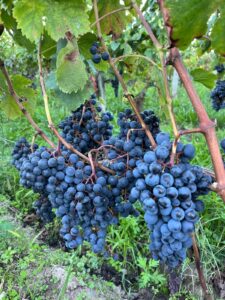
The grape harvest is not simply about picking grapes. It represents the convergence of a full year’s work in the vineyards, the weather conditions of the vintage, and the winemaker’s choices. At that moment, all the decisions made in the vineyard converge towards a single goal: harvesting each plot at the moment when its balance is at its most precise.
No laboratory analysis, mathematical model, or technology can fully replace the winemaker’s experience. Numbers guide decisions, but observing the plots, tasting the grapes, and having an intimate knowledge of each terroir remain irreplaceable.
Each vintage presents its own challenges. Some offer ideal ripeness and great tranquility. Others require growers to cope with rain, heat, drought, or disease. It is precisely this ability to adapt that makes the harvest one of the most technical, demanding, and exciting moments in all of winemaking.
It is therefore no coincidence that the adage remains as true as ever: a great wine begins in the vineyard, and its success often depends on a few decisive days during the harvest. For many winemakers, it is still too early to judge a vintage until “the grapes have been brought into the cellar,” a reminder that the harvest marks both the culmination of the growing season and the true beginning of the winemaking process.