
Rotaria, a new reading of the Roero, through soils and nebbiolo
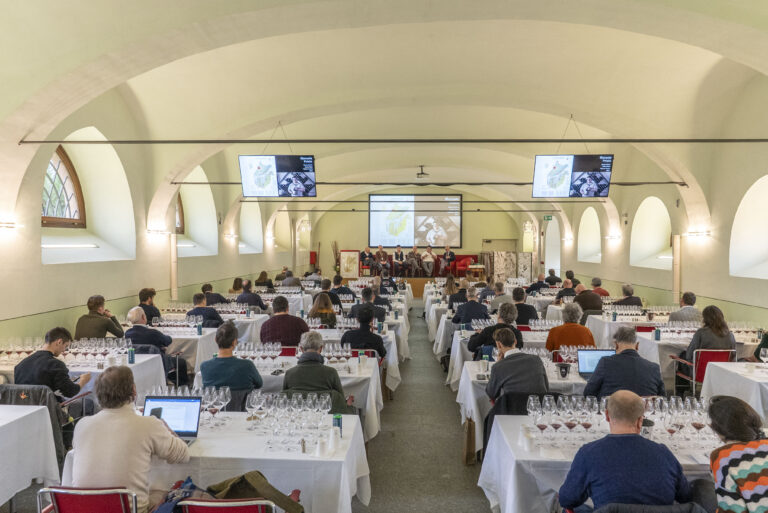
 Eighteen producers brought together around a simplified mapping of terroirs to betterunderstand and convey the many faces of Roero Nebbiolo. A transversal project, grounded in geology, comparative tasting and the sharing of knowledge, aiming to givethe Roero a clear, coherent and contemporary voice.
Officially presented in Pollenzo on 24 November, Rotaria marks the launch of an unprecedented cultural project dedicated to the Roero. Bringing together eighteenproducers and professionals with diverse backgrounds, the initiative positions itselfneither as a collective brand nor as a commercial network, but as a shared vision placed at the service of a territory. Its ambition is clear: to offer new tools to understand, narrateand enhance the Roero through a collective reading of its soils, landscapes and wines.Even the name of the project reflects this desire for historical and cultural perspective. Rotaria refers to an ancient legend according to which the lords of Roero weredescendants of the Lombard king Ròtari. Beyond its medieval roots, the referencesymbolises continuity, circulation and far-reaching connections, values the project seeksto reactivate today without barriers of style, scale or generational affiliation.
At the heart of Rotaria lies the intention to build a unified narrative, capable of linking the geological complexity of the Roero with clear and intelligible sensory expressions. “Rotaria was conceived as an open and collaborative space, designed to provide usefultools for reading and understanding the Roero,” (Nicola Pasquero-Hilberg, spokespersonfor the project). The platform is conceived as an independent observatory and a space for dialogue, giving a shared voice not only to producers, but also to restaurateurs, sommeliers and wine lovers who wish to become interpreters and ambassadors of the territory.
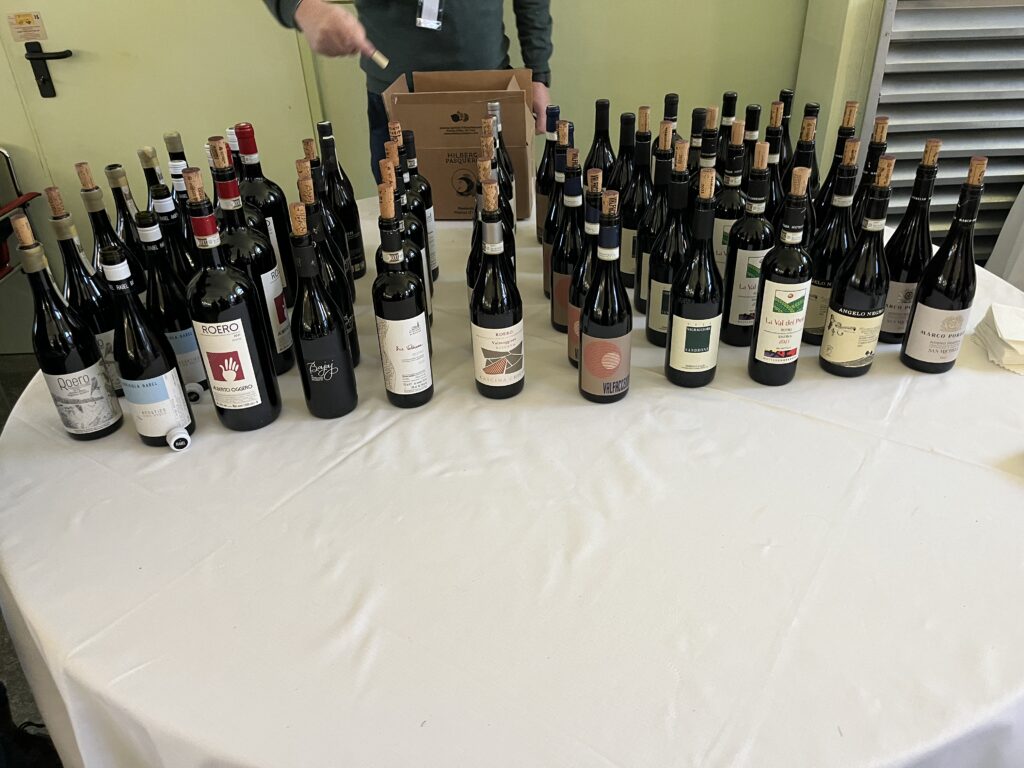
The following estates are part of the association: Almondo, Bajaj, Cascina Chicco, Correggia, Cordero, Cornarea, Deltetto, Ghiomo, Hilberg, Malvirà, Negro, Oggero, Porello, Priolo, Rabel, Rosavica, Sandrone, Valfaccenda.
Terroir differences as the key to interpretation, Nebbiolo as king
The methodology developed by Rotaria is based on a threefold approach: geological, sensory and cultural. The starting point is a simplified map of the Roero, developed froma scientific and visual excerpt of Alessandro Masnaghetti’s “Langhe e Roerogeoviticultural” map. This work led to the identification of three major macro-areas sharing common natural characteristics: sandy, marly and clay-based soils.
Far from fixing the territory into rigid categories, this reading aims to provide a clear and immediately accessible interpretative framework. Sandy soils, derived from more recentmarine formations, give rise to Nebbiolo wines recognised for their elegance, aromaticfinesse and freshness, with silky tannins and immediate drinkability. These luminous, aerial expressions are among the Roero’s strongest identity markers. The older marl zones bring structure, balance and depth. Here, Nebbiolo develops a broader frame, progressive complexity and a firmer yet harmonious tannic texture, resulting in wines that are bothreadable and capable of evolution. Clay-dominant sectors, finally, produce more intense and concentrated expressions, characterised by deeper colour, marked aromatic richnessand a tannic architecture built for ageing, expressing a more powerful side of the Roerowithout ever sacrificing balance.
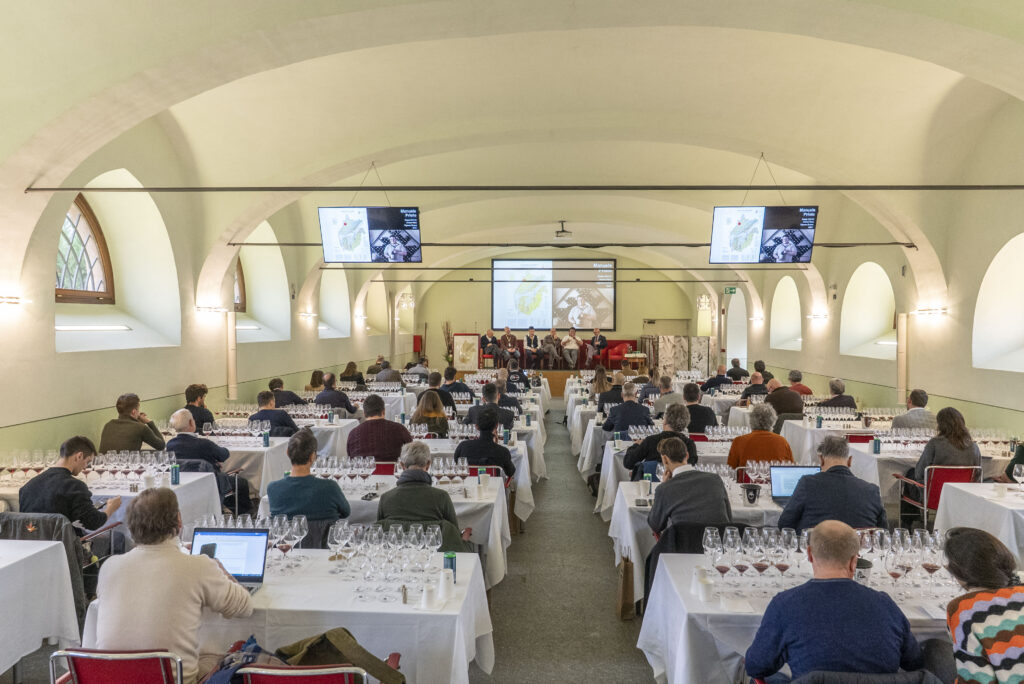
The choice of Nebbiolo as the project’s common thread comes naturally. An emblematicgrape of both the Roero and the Langhe, it acts here as a true revealer of terroir. Throughcomparative tastings involving the producers directly, Rotaria seeks to objectifydifferences linked to soils, exposures and agronomic choices, in order to build a shared, clear and transmissible language. Through its diversity of profiles, histories and styles, the Rotaria collective faithfully reflects the richness of the Roero. Open and evolving, the project aims to transform terroir diversity from a complexity to be explained into a genuine force for interpretation, dialogue and the long-term valorisation of the territory.