
Georgia, the birth of Nimbi
written by Erika Mantovan
The Cotarella team’s new project debuts at Vinitaly and Looks to the great terroirs of the Caucasus
In Kakheti, in the district of Khashmi, about 40 kilometers from Tbilisi, a new name is emerging on the Georgian wine scene: Nimbi, produced under the technical direction of the Cotarella team.
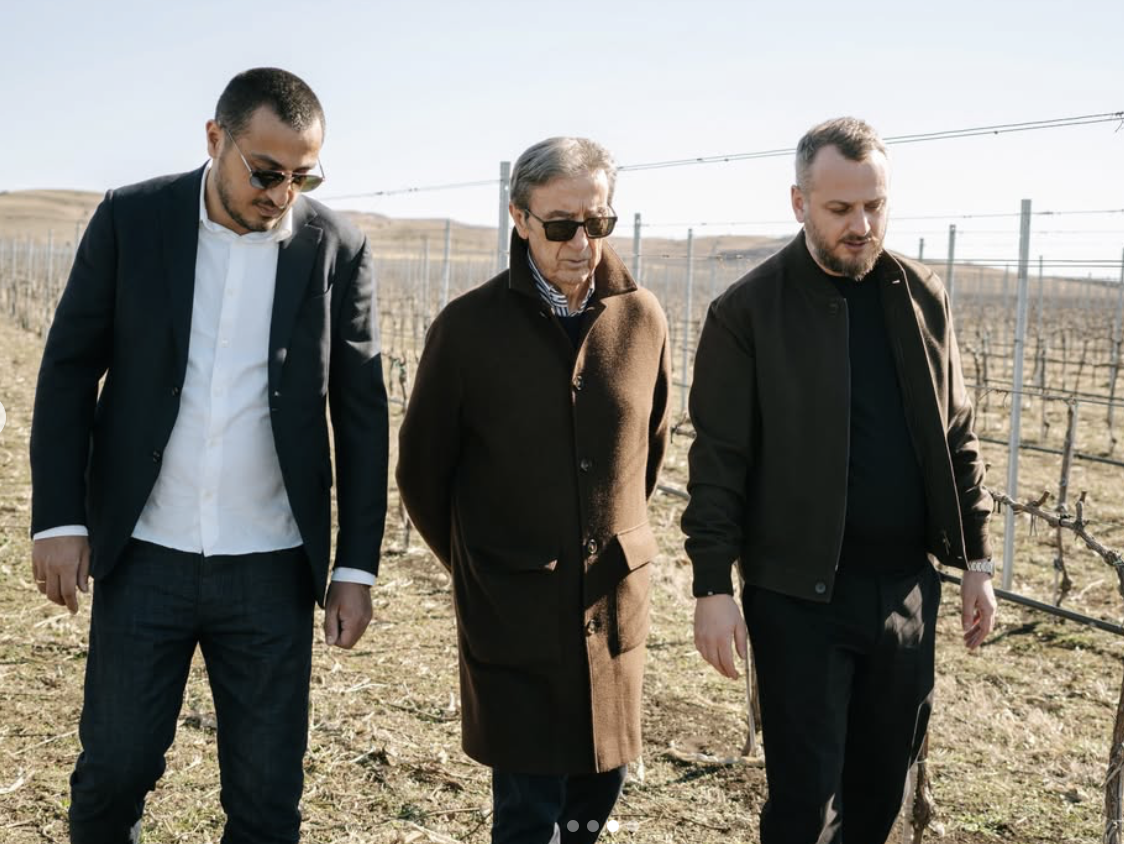
Presented at Vinitaly, the project is overseen locally by Francesco Fossati, a long‑time collaborator of Riccardo Cotarella, who blends Italian enological expertise with the vision of Georgian founders Bacho Bugdiashvili and Vato Otkhmezuri.

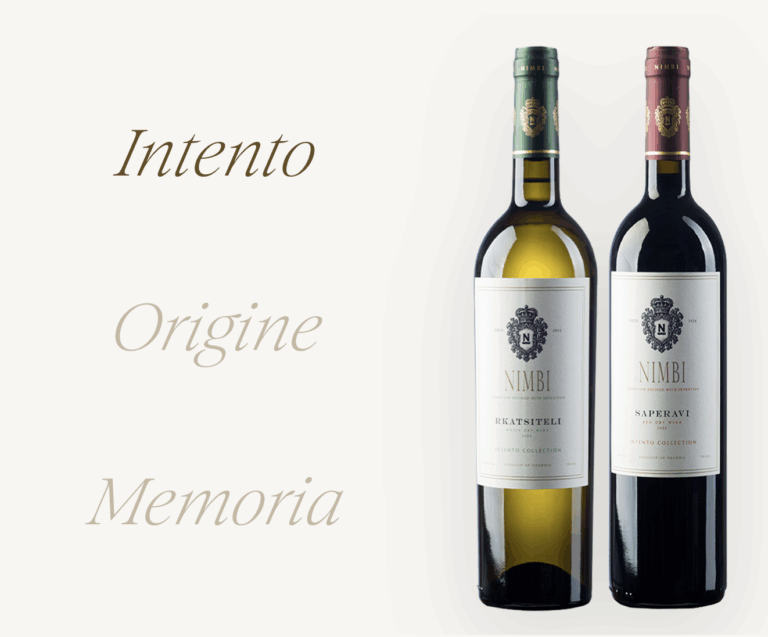
The result is a trilogy of wine collections — Intento, Origine, and Memoria — that pay tribute respectively to native grape varieties, the territory, and the wine’s evolutionary potential, expressed through depth, character, and precision.
While Intento has already made its market debut, Origine and Memoria are coming soon, marking the next chapters of Nimbi’s stylistic journey.
A land with an ancient wine heritage
Georgia is today one of the most dynamic wine‑producing countries in Eastern Europe, with over 55,000 hectares of vineyards, more than 70% of which are found in Kakheti, the cradle of the vine and the ancestral qvevri method.
In the Khashmi area, where Nimbi has planted its first 10 hectares (with plans to expand up to 100), the continental climate and strong diurnal temperature shifts allow for slow ripening and the development of complex aromatic profiles.
Building on this foundation, Fossati and the Cotarella team have structured the production into carefully defined tiers aimed at expressing increasing depth and refinement.
For Rkatsiteli, the range spans from a base wine — fresh and dynamic — to a medium version with a delicate, almost imperceptible touch of wood, and finally a premium interpretation that undergoes fermentation and aging in oak, followed by extended bottle maturation.
The Saperavi follows a parallel logic: a stainless‑steel base version focused on immediacy and drinkability; a middle label conceived as a “wannabe premium” that remains accessible; and a premium red crafted without compromise, designed to become one of the future icons of Georgian winemaking.
Looking ahead, the team plans to expand its work with lesser‑known indigenous varieties such as Kisi and Goruli Mtsvane for whites and Shavkapito for reds — a move that reflects Nimbi’s stated mission to both rediscover and reinterpret Georgia’s genetic heritage through rigorous, contemporary methods.
The Nimbi Philosophy
“Nimbi was born from the idea that Georgian wine should not sell its history, but rather demonstrate what its land can offer today,” reads the company’s manifesto on .
The motto — No myths, no medals. Just sun, slope, soil, and will. — encapsulates a philosophy based on discipline, awareness, and measure.
In a market where many references remain uneven or unfinished, Nimbi wines stand out for their pure aromas, tasting harmony, and velvety texture, finally revealing the authentic expression of Georgia’s native varieties and their mesoclimatic character.
This philosophy extends to the future harvests as well: in 2026, the estate plans to produce base wines for sparkling, using Rkatsiteli vinified for the first time in a traditional champenoise style — one cuvée aged 24–36 months on the lees, and another 60–72 months, should the quality permit.
That same year will also mark the start of new experimental vinifications with other native varieties, aimed at deepening understanding of the region’s extraordinary viticultural diversity.
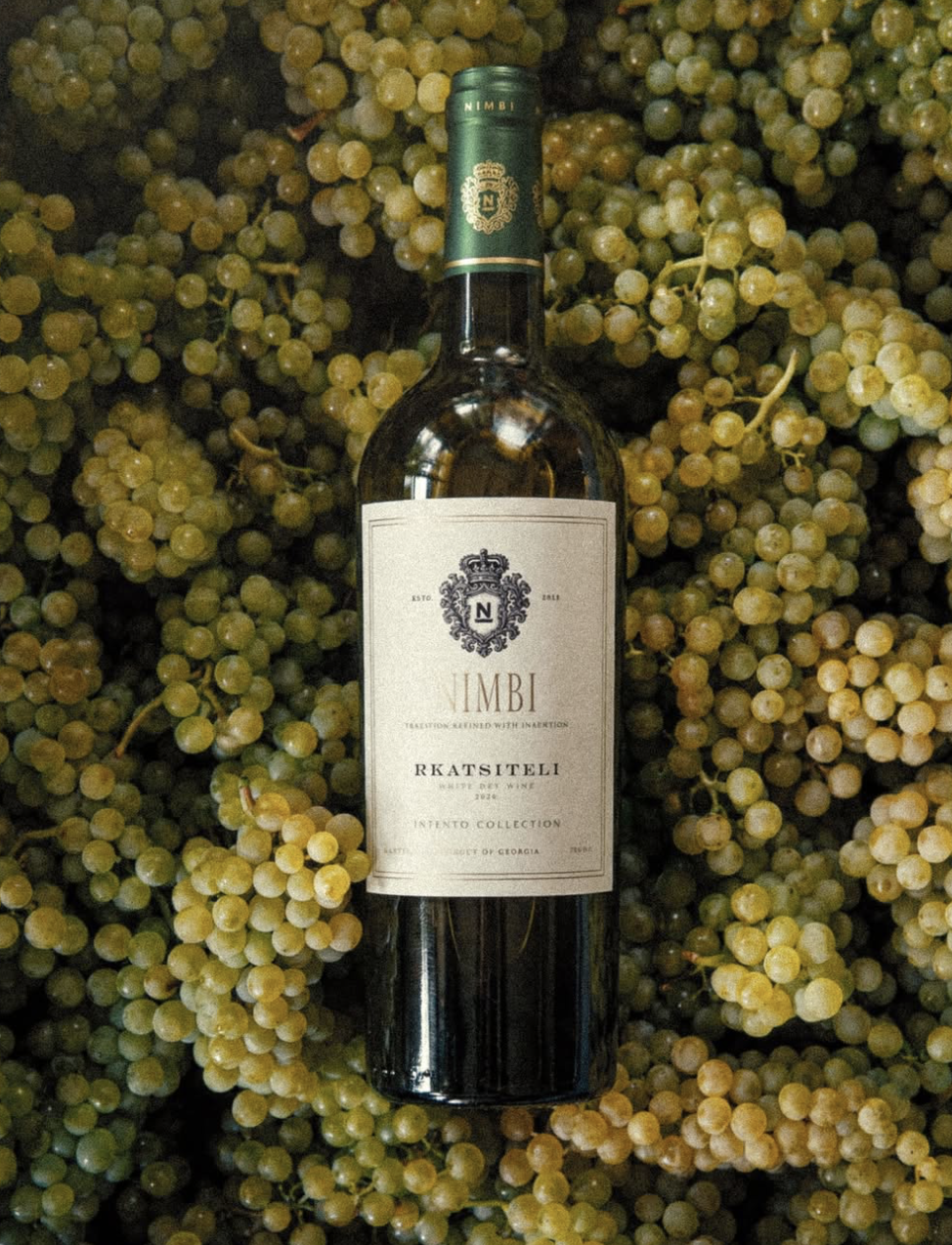
Georgia thus finds a new international voice, convincing from the first tasting — particularly with the upcoming Rkatsiteli 2025: bright zesty and cedar notes, subtle hints of vanilla and pear, and a vertical, juicy palate, its power finely balanced by tension and acidity (95)