

Rhône Valley 2026 harvest: an early vintage shaped by climatic extremes and vineyard resilience
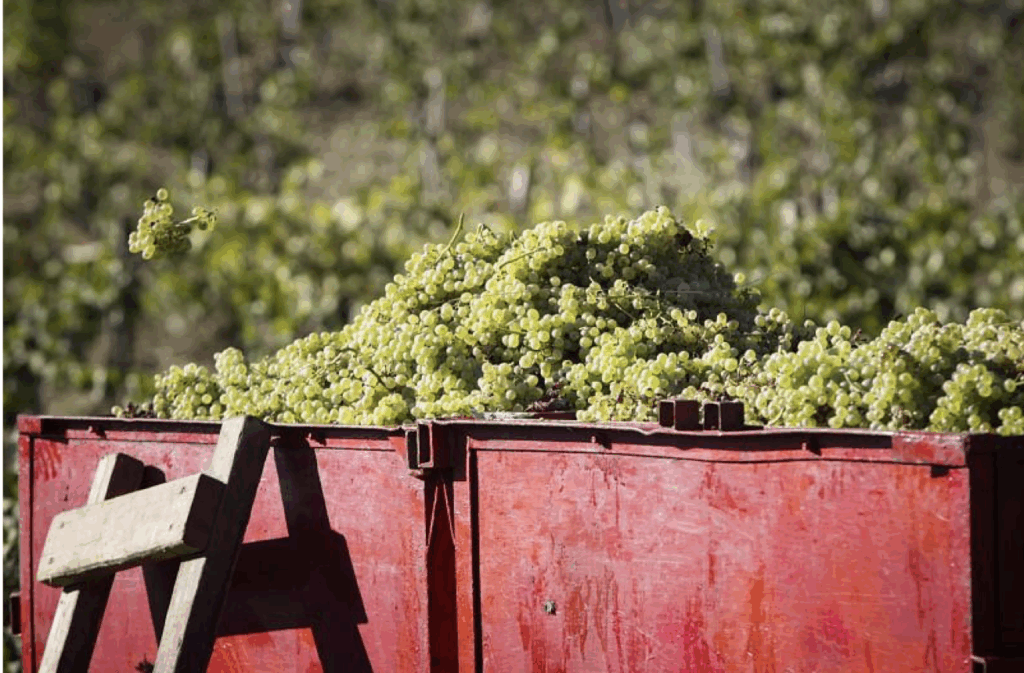
Following an exceptionally hot spring and mounting drought pressure, harvesting began as early as 11 August in the Rhône Valley’s earliest sectors. Despite a demanding growing season, fruit is arriving in excellent sanitary condition and the first juices are showing promising balance.
The 2026 harvest is now well underway across the Rhône Valley. Picking began on 11 August in the earliest-ripening areas before gathering pace during the second half of the month. Timing nevertheless varies considerably from one appellation and grape variety to another, with maturity and water stress creating marked differences between vineyards.
Early ripening has become one of the defining features of a 2025-2026 growing season characterised by sharp climatic contrasts. A generally wet autumn was followed by a mild, well-watered winter, replenishing soil water reserves and giving the vines a favourable start to the growing cycle. Conditions changed dramatically in spring. Exceptionally hot and dry, spring 2026 was the warmest ever recorded in France since measurements began, with a national temperature anomaly of +1.7°C. In the Vaucluse, temperatures remained almost continuously above seasonal norms from 21 May onwards, at times by around +4°C. The heat accelerated vine development and created a significant phenological advance across much of the region.
Winter water reserves prove crucial
As drought conditions and water stress intensified, the reserves accumulated during winter became crucial in helping vines withstand the heat. Localised cases of sunburn and berry shrivelling were nevertheless observed in the most exposed parcels. Increasing water stress also slowed vine development in some areas, reducing part of the advance recorded earlier in the season. Despite the climatic pressure, the vineyards entered harvest in remarkably good sanitary condition. Dry and windy weather helped contain the main fungal diseases, particularly downy and powdery mildew, allowing grapes to reach the winery in very healthy condition.
A highly variable picture across the Rhône
The vintage is far from uniform, however. In the Costières de Nîmes AOC, harvesting for still Rhône wines began on 13 August, broadly in line with dates seen in recent years. In the Drôme, Vaucluse and Ardèche, by contrast, some vineyards were several days to more than a week ahead of their usual benchmarks. Parts of the Northern Rhône are also showing particularly pronounced earliness.
Such variability makes close monitoring of maturity essential. While some parcels have already reached their optimum picking point, others are progressing more slowly as a result of water stress. Harvest decisions are therefore being made increasingly on a parcel-by-parcel basis. White varieties provide one of the clearest illustrations of the season’s precocity. In Clairette de Die, picking began on 11 August, making 2026 the earliest vintage ever recorded in the appellation.
Encouraging signs from the first juices
 It remains too early to define the final character of the 2026 vintage, but initial indications are encouraging. According to Inter Rhône, the first juices are showing promising balance and an interesting qualitative potential. Growers are fine-tuning both vineyard practices and picking dates according to individual parcel conditions in order to preserve freshness and balance.
Philippe Pellaton, President of Inter Rhône, sees the season as another demonstration of the vineyards’ capacity to adapt to increasingly frequent heat episodes. He also stresses the importance of ever more precise knowledge of individual terroirs and of adapting practices both in the vineyard and in the cellar. After an exceptionally demanding growing season, the Rhône Valley’s 2026 vintage is emerging as one defined by earliness and considerable heterogeneity, but also by excellent fruit health. The coming weeks will be decisive in revealing its full identity as harvesting continues progressively from the southern to the northern reaches of the valley.