
Chianti Classico and the Black Rooster Pyramid
écrit par Erika Mantovan
A journey into the heart of the territory at Wine Paestum Fest
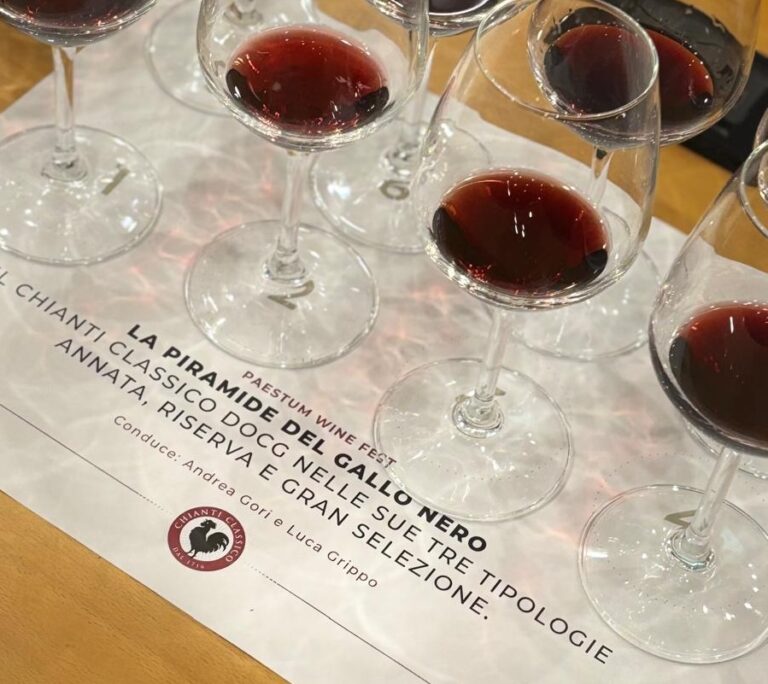
Talking about Chianti Classico DOCG means telling the story of a territory, a centuries-old tradition and one of the most recognizable wine identities in the world. This was the guiding thread of the masterclass organized by the Consorzio Vino Chianti Classico during the Wine Paestum Fest, dedicated to exploring the so-called Black Rooster pyramid, the quality hierarchy of the appellation.
Leading the audience through this journey were Gerardo Giorgi from the Consorzio Chianti Classico, together with Andrea Gori and Luca Grippo.
A story that begins centuries ago
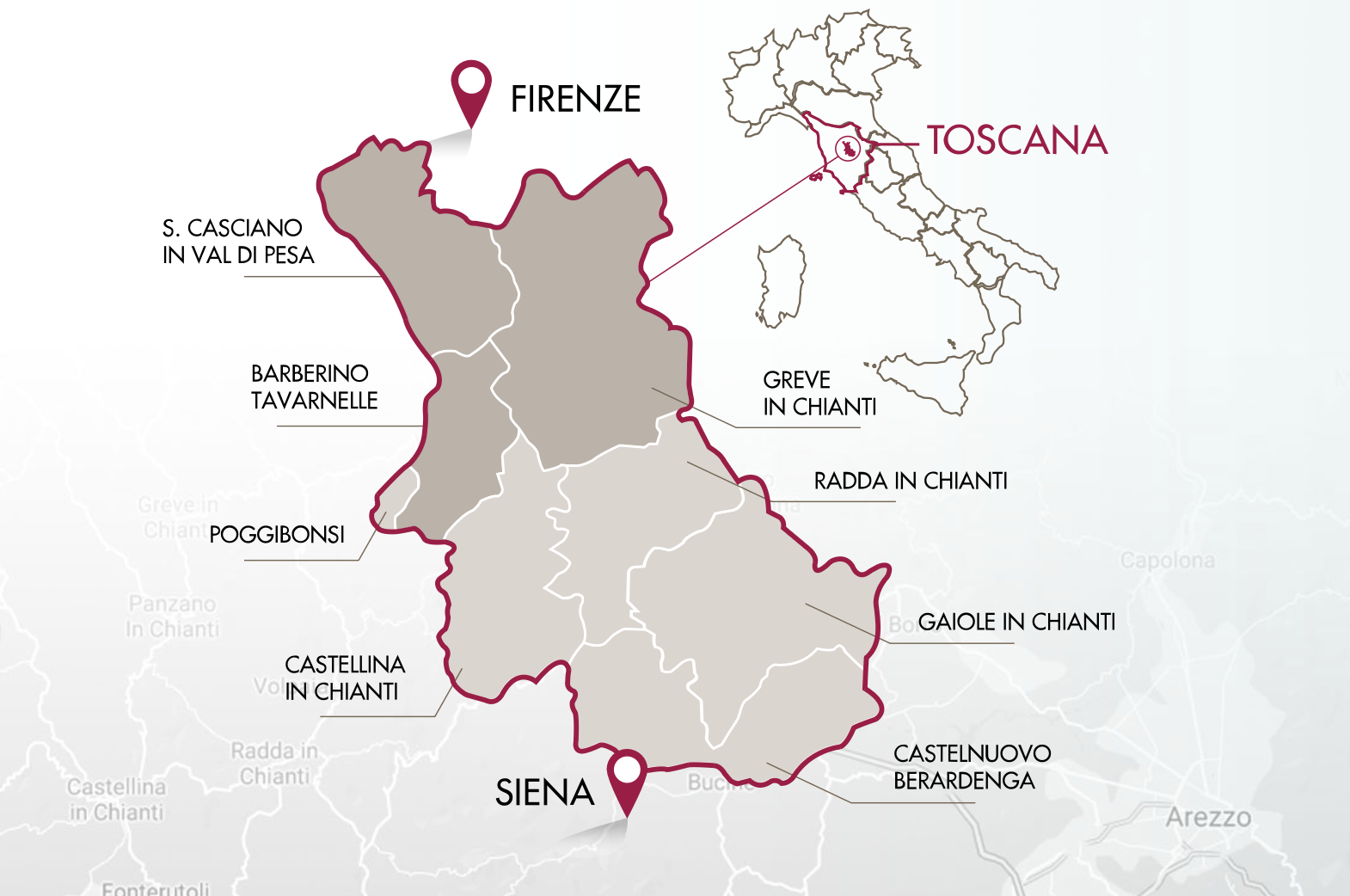
Chianti Classico was born between Florence and Siena, in a territory that has been deeply linked to wine production for centuries. As early as the 16th century, the Black Rooster symbol appeared in frescoes painted by Giorgio Vasari inside Palazzo Vecchio, already associated with this land.
A decisive moment arrived in 1716, when Cosimo III de’ Medici signed a historic edict that officially defined the wine-producing area. It represents one of the earliest examples in the world of legally protecting the geographic origin of a wine.
Centuries later, in 1924, producers joined forces to defend this identity by founding the Consorzio Chianti Classico. Today membership is almost universal: 96% of the wineries in the area belong to the consortium, a powerful sign of unity and shared commitment to promoting and protecting the denomination.
A landscape that creates diversity
Chianti Classico is often imagined as an endless sea of vineyards, yet the reality is quite different. Of the roughly 70,000 hectares that make up the appellation, only 10,000 are planted with vines.
What truly defines the territory is nature: about 65% of the land is covered by forests. This presence is not only scenic but also plays a crucial role in creating a wide range of microclimates, which influence grape ripening and ultimately shape the style of the wines.
This balance between vineyards, forests, hills and medieval villages is what makes Chianti Classico one of the most distinctive wine landscapes in Europe.
The protagonist: Sangiovese
At the heart of the denomination is Sangiovese, the iconic Tuscan grape and the essential base of Chianti Classico. Its remarkable ability to adapt to different soils and altitudes makes it an extraordinary interpreter of the territory.
Small percentages of traditional varieties such as Canaiolo, Colorino or Ciliegiolo may also be included, adding further aromatic and structural nuances.
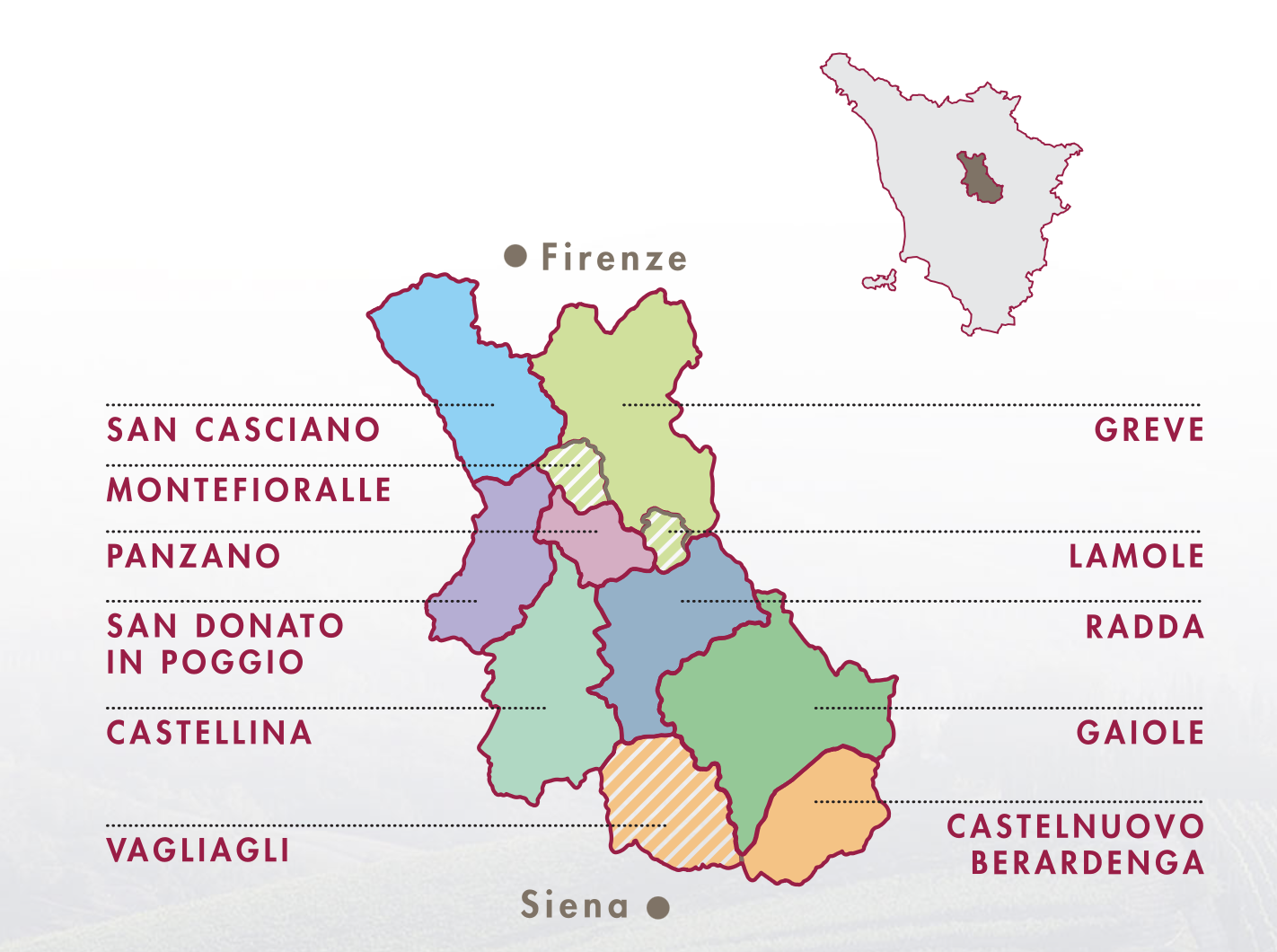
The result is a mosaic of interpretations that changes from hill to hill. To highlight this remarkable territorial diversity, the denomination has also introduced the UGAs (Unità Geografiche Aggiuntive), eleven geographical areas that allow producers to indicate the origin of the grapes more precisely on Gran Selezione wines.
The Chianti Classico UGAs are: San Casciano, Greve, Montefioralle, Panzano, Lamole, Radda, Gaiole, Castellina, Castelnuovo Berardenga, Vagliagli, San Donato in Poggio.
A system that encourages a more detailed reading of Chianti Classico as a constellation of territories, each with its own soil composition, climate and stylistic identity.
The Black Rooster pyramid
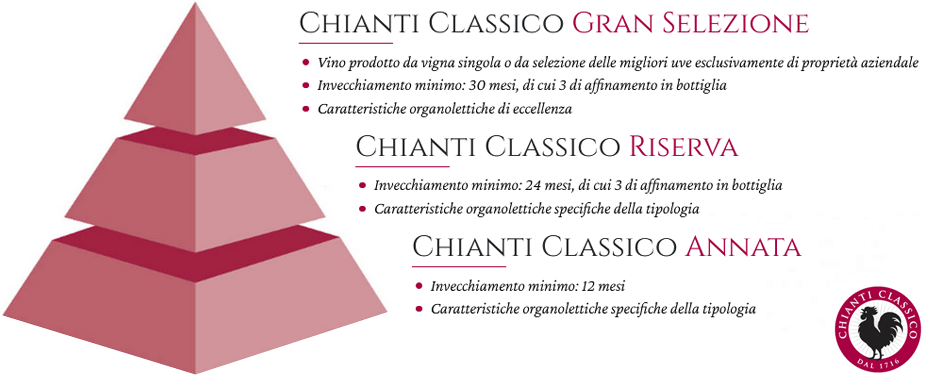
The masterclass focused on the appellation’s so-called quality pyramid, which illustrates the different expressions of Chianti Classico.
At the base we find Chianti Classico Annata, the most immediate and vibrant expression of the territory: fresh, energetic wines with crunchy fruit and great drinkability.
Moving up the pyramid is Chianti Classico Riserva, characterized by longer ageing and greater structure. These wines are designed for the table and pair beautifully with more complex dishes.
At the top sits Gran Selezione, a category reserved for wines produced exclusively from estate-owned vineyards. Here the goal is to express the highest level of quality and territorial identity.
A deeply gastronomic wine
Throughout the tasting one aspect became particularly clear: Chianti Classico’s extraordinary gastronomic vocation.
The balance between acidity, tannins and freshness makes these wines incredibly versatile at the table, capable of pairing with traditional Tuscan cuisine as well as more contemporary dishes.
Perhaps it is precisely this ability to combine territorial identity, history and drinkability that explains the denomination’s international success, now exported to more than one hundred countries.
Tasting
Baciate Me – Chianti Classico Avenne 2021
95% Sangiovese, 5% Canaiolo
From San Casciano in Val di Pesa, the wine shows a deep ruby color with purplish reflections that already hints at its harmony. On the nose, notes of blackberry and black pepper emerge alongside subtle citrus nuances. The palate is rich and enveloping, with excellent balance and generous fruit.
Dievole – Chianti Classico 2023
90% Sangiovese, 7% Canaiolo, 3% Colorino
From the Vagliagli area, where the name Chianti is believed to have originated. Deep ruby in color with solid structure, it reveals airy aromas of citrus, delicate flowers and red berries. On the palate, lively acidity is balanced by well-defined tannins.
Caparsa – Chianti Classico Riserva Caparsino 2019
100% Sangiovese
From Radda in Chianti, a very instructive and terroir-driven Chianti Classico. The bouquet is broad and floral, with notes of cherry and rose accompanied by sweet spices, balsamic hints and touches of tobacco. The palate is balanced with soft, integrated tannins.
Carpineto – Chianti Classico Riserva 2020
90% Sangiovese, 10% Canaiolo and Colorino
Produced in Greve in Chianti, one of the cooler areas of the appellation. The wine shows vibrancy and aromatic richness, with hints of raspberry and subtle oak notes. Elegant and intense on the palate, supported by velvety tannins.
Querciabella – Chianti Classico Riserva 2021
100% Sangiovese
A blend of selected grapes from Greve in Chianti, Lamole and Radda in Chianti. One of the most complete interpretations of the category, combining depth and precision. Red fruits, citrus and cherry mingle with balsamic hints. The vintage was marked by spring frosts and summer heat, balanced by forest cover and high-altitude vineyards between 400 and 700 meters.
Fèlsina – Rancia Chianti Classico Gran Selezione 2021
100% Sangiovese
From Castelnuovo Berardenga, produced from a single vineyard on the Poggio a Rancia hill, between 350 and 400 meters above sea level, characterized by limestone soils rich in alberese and galestro. Bright ruby in color, with layered aromas of black cherry, forest berries and dried flowers, enriched by spice and subtle oak. The palate is structured, dynamic and juicy with remarkable persistence.
Lamole di Lamole – Chianti Classico Gran Selezione Vigna Grospoli 2021
100% Sangiovese
From Lamole, one of the highest and most distinctive areas of Chianti Classico, famous for its terraced vineyards reminiscent of alpine landscapes. Aromas of red berries, lavender and rose emerge alongside delicate balsamic notes. The palate is tense and concentrated, with elegant tannins and a savory finish.
Ruffino – Chianti Classico Riserva Ducale Oro 2021
80% Sangiovese, Merlot, Cabernet Sauvignon and Colorino
From Castellina in Chianti, made with grapes from the Gretole and Santedame estates. A wine that combines power and elegance, offering complex aromas of ripe cherry, plum and violet with hints of spice and tobacco. Full-bodied and enveloping on the palate, with velvety tannins.