
Andrian: don’t call me the little brother
The identity of the right bank of the Adige valley
written by Erika Mantovan
At Piano 35 in Turin, the Alto Adige winery Andrian — a branch of Terlan, and never to be called its little brother — tells its story through the right bank of the Adige valley: the Classici, the Selezioni and the debut of the 2024 Pardaun Pinot Grigio. Seven wines tasted, with clear room for improvement in style and in the use of oak.
We are on the right bank of the Adige valley, the cooler and more calcareous one, with an identity that is as much about the whisper as it is about good harmony — although a considerable margin for improvement remains, both in style and in the use of oak. A round-up from the tastings held in Turin and led by sales director Klaus Gasser and sales manager Alexandra Erlacher.

Andrian was founded in 1893 by 31 growers whose decision to join forces effectively created the first cooperative winery in what is now Alto Adige, and one of the first to appear in the then Austro-Hungarian Empire. In 2008, 115 years later, came the merger with Cantina Terlano on the other side of the valley. Today there are 60 member growers and 80 hectares under vine, but it is worth stressing that the production of the two wineries remains rigorously separate.
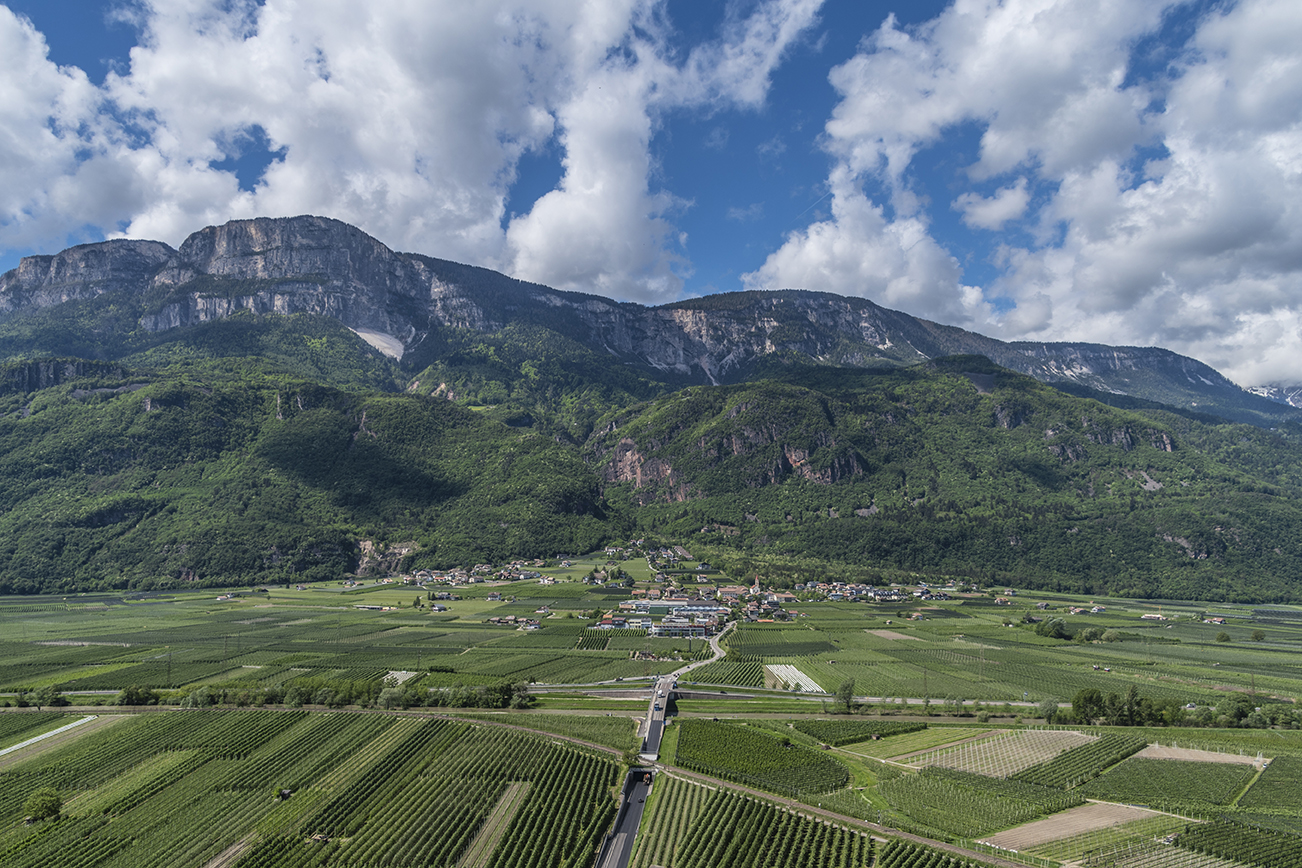
«If you look at the Adige valley, the river cuts it into two zones: on the left bank is Terlano, with volcanic soils, and on the right bank of the river are the calcareous soils», Gasser explained.
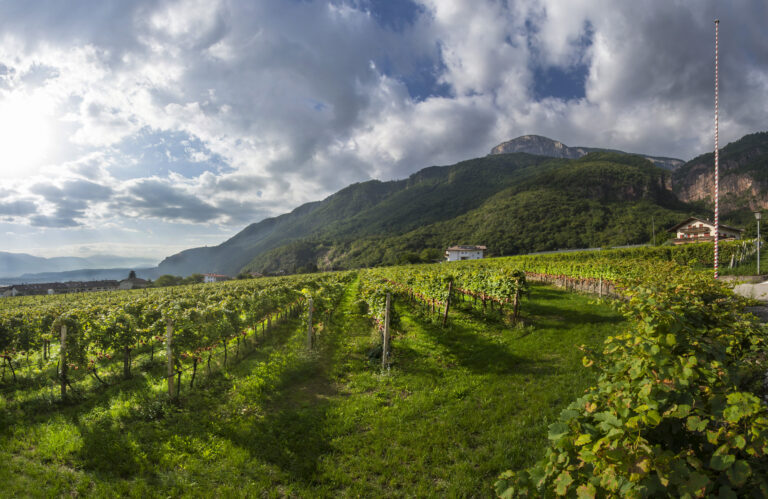
And the difference, over a short distance, is surprising: on one side silica and quartz at 60 to 70 per cent, on the other 100 per cent limestone with a slight influence of porphyry. Exposure completes the picture: «The morning sun goes to Andriano, the evening sun goes to Terlano». Behind the village, the mountain that in summer cuts across the afternoon sun, with the consequence cited most often in the tasting: «we tend to have much lower pH levels at Andriano», which means higher acidity and a precise saline edge.
The winery’s own material confirms the picture in numbers: soils with 4-5 per cent humus, a pH of around 7, vines between 260 and 340 metres at Andriano, rainfall of 550 to 650 millimetres a year, and marked temperature swings in the final phase of ripening. And an average yield of 49 hl/ha across all varieties, roughly half of what the rules would allow.
The organisational side of a cooperative with more than a hundred member growers deserves to be counted among the most meritocratic factors behind what ends up in the glass: Andrian uses a vineyard classification programme developed as early as the late 1990s, with a survey of each parcel, the number of vines, the age of the vineyard and a system for assessing the grower’s work, from pruning to leaf removal to the timing of thinning. «The quality of a wine is born outside, in the vineyard», he said. And on picking dates: the harvest at Andriano begins on average ten days later than on the opposite side of the valley.
THE WINES
Finado – Pinot Bianco 2025
1.7 g/l residual sugar · total acidity 6.0 g/l · 13.0% vol
An invented name, tied to the finesse of the variety; it grows at the highest elevations of the bank. It is the white on which the limestone of the right bank reads most immediately.
Finesse, a mineral and sulphurous note, peach. A full sip from the very first entry, an harmonious, round mid-palate, pleasant, good fruit and a warmth in the finish that wraps around.
Floreado – Sauvignon Blanc 2025
1.7 g/l residual sugar · total acidity 5.8 g/l · 13.0% vol
The most aromatic and the most textbook of the Classici on the calcareous side of the village. The Sauvignon grows at the highest elevations of the area, at Missiano, between 400 and 500 metres: like Finado and Somereto, it is one of the range’s invented names.
Very aromatic, explosively vegetal, exotic, almost floral. A green, herbaceous sip with a saline finish.
Somereto – Chardonnay 2025
1.7 g/l residual sugar · total acidity 5.9 g/l · 13.0% vol
The variety the winery says it is betting on hardest: prolonged contact with the fine lees gives substance and roundness without any oak.
Citrus and green notes, yellow fruit; the lees contact gives it substance and an enveloping mid-palate. Lovely to drink today, but compacted and slightly astringent in the finish: this is where the margin on style and oak shows.
The name Somereto should also be read as a marker of climate: «At Andrian we get the morning sun, and from six in the evening in summer the sun disappears behind the mountain. In German, summer is Sommer: Somereto stands for little summer». An alpine freshness that, according to Andrian, is the recognisable signature of the place.
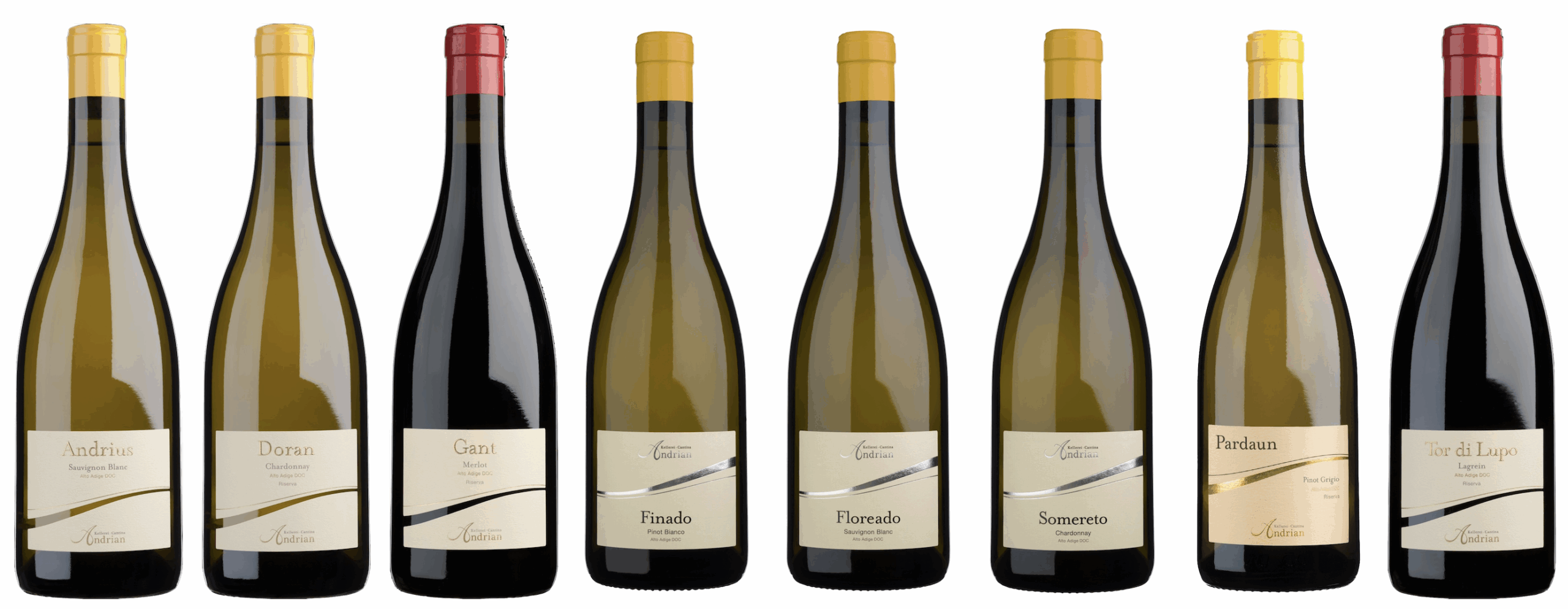
The Selezioni: Pardaun, Andrius, Doran
The Selezioni put late, hand-picked harvests, old vines and low yields at the centre.
Pardaun – Pinot Grigio 2024
2.2 g/l residual sugar · total acidity 5.9 g/l · 13.5% vol
Shown for the first time in Turin, it takes its name from the Andriano locality where it is born, where Pinot Grigio growing is documented as far back as 1894. The grapes grow between 300 and 400 metres on limestone traversed by bands of white dolomite. Alcoholic fermentation directly in oak tonneaux, followed by six months in wood — one third new, the rest second and third fill — and a year in stainless steel. From the next vintage it will carry the Riserva designation.
Saline, an expressive nose, tannic notes and citrus, very persistent. Tense but in good overall harmony.
Andrius – Sauvignon Blanc 2025
2.5 g/l residual sugar · total acidity 6.3 g/l · 13.5% vol
Released on 1 October, it is the Sauvignon of the Selezioni: older vines, better exposure, even lower yields.
Citrus, lemon, zesty; the residual sugar is perceptible and thickens the substance. Rich, ripe, saline and iodine-tinged, with full fruit on the mid-palate.
Doran – Chardonnay Riserva 2024
1.1 g/l residual sugar · total acidity 6.0 g/l · 13.5% vol
Fermentation in tonneaux, malolactic conversion and twelve months on the lees in the same container, 30 per cent of it new oak, then three months in stainless steel. Grapes from 350 to 450 metres.
A lovely fresh nose, eucalyptus, oak-spice, citrus. A fresh sip with oak still to be absorbed, well-balanced acidity, good tension and compactness, an oily finish with echoes of Mediterranean garrigue.
Gant Gran Merlot Riserva 2018
0.5 g/l residual sugar · total acidity 5.4 g/l · 14.5% vol
Intense purple-red, very elegant: a great red, a touch varnished with notes from oak ageing. A palate with a slightly earthy profile and a vegetal, green-pepper edge, but the tannin stays silky.