
Bardolino, a 100 years of Pop Soul
The Consorzio Vini Bardolino celebrates by betting on drinkability
written By Erika Mantovan
Led by president Fabio Dei Micheli, the Consorzio di Tutela tells the story of Bardolino’s style through pop art: during the Masterclass explaining the quality level of today’s wines, the journalist who conducted it, Costantino Gabardi, chose an image of a smiling Andy Warhol holding a glass of Bardolino. The graphics selected for the centenary celebrations are likewise a clear nod to the works of the artist famous for his screen-printing technique. The centenary also features the luminous work created by Marco Lodola, a figure of Italian Nouveau Réalisme, unveiled for the Consorzio’s hundredth anniversary and included in the Art Verona programme.
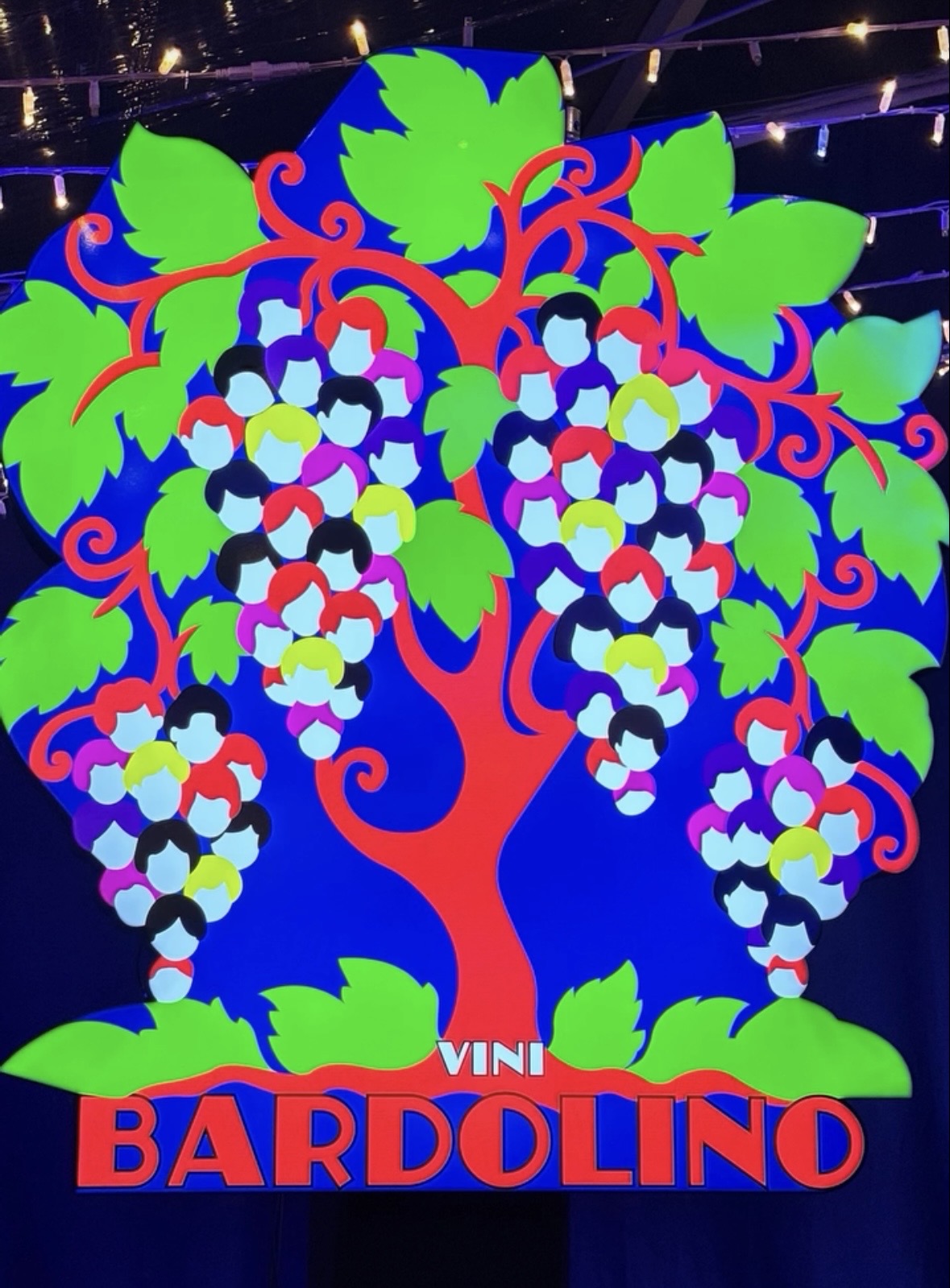
“Pop art draws inspiration from popular culture and transforms mass-market goods in an ironic way, accessible to everyone. This is the Consorzio’s project: to take Bardolino, a wine everyone knows, and present it again in a more ironic and accessible way. We are celebrating a century since the founding of the Consorzio di difesa del vino tipico Bardolino, the first protection body which, as far back as 1926, recognised and enhanced Bardolino’s ability to interpret the soul of its territory. Today we want to reclaim that vocation in the glass, embracing with determination the contemporary and convivial character of our wines,” declared the president Dei Micheli.
Born — according to the earliest traces of vine cultivation in the Garda area — in Roman times, local viticulture took hold and consolidated over the centuries under the impulse of religious institutions, until it established itself in the nineteenth century under the name Bardolino: a wine already appreciated and described at the end of that century by the historian and man of letters Giuseppe Solitro as able to compete “with the best in the peninsula,” served in Swiss hotels as Beaujolais. In the twentieth century its popularity grew rapidly: Bardolino established itself as a “typical wine,” awarded in the 1920s at the Campionaria dei Vini in Verona, and in 1926 came the denomination’s first protection body. Between the 1940s and 1950s, starting from the United States, the denomination began its path of internationalisation, which today sees 6 bottles out of 10 destined for foreign markets — without the name ever ceasing to attract imitations: passed off by the Swiss as French, fifty years later it was, for the wine historian and journalist Zeffiro Bocci, “Italy’s most plagiarised wine.”
A century-long presence for a vineyard of 2,400 hectares, of which around 1,000 are devoted to Chiaretto, and 817 members, 600 of them growers, for a PDO production equivalent to more than 18 million bottles. Of these, around 8.8 million are Chiaretto, Italy’s leading rosé and, last year, growing at a trend rate of 3%. Bardolino Doc remains numerically ahead with 9.5 million bottles, but by increasingly narrow margins against its pink counterpart, which shows a stronger market also in export terms. The Consorzio’s representativeness is very high: member companies account for around 92% of total production, a share that earned the Consorzio ministerial recognition of its erga omnes function.
The Consorzio’s actions: the five pillars
In his opening speech, president Dei Micheli retraced the development project built over four years, structured around five themes.
Identity. Defining the true identity of the wines: Bardolino’s hallmarks — freshness, savouriness, easy drinkability and contained alcohol content. These are the values the consumer is looking for and for which the denomination will be recognised over time.
Climate change. The Consorzio carried out a dedicated study based on a historical archive of 36 years of grape ripening curves, coordinated by Professor Attilio Scienza with the involvement of the sector’s leading experts. One of the few Consorzi in Italy with a database of this kind. The results, to be presented publicly by the end of the year, allow the conclusion that viticulture has changed but that climate change — at the moment — is benefiting the denomination, with better-quality grapes. Forecast models point to further temperature rises, against which the water reserve of Lake Garda as a thermal moderator and water availability for the vineyards come into play. The intersection of microclimate analysis and ripening curves also confirmed the existence of the three subzones.
Oenological cultural growth. A path strongly championed by the board of directors to identify the wines’ real characteristics in light of climate change and their still-unexpressed potential. In parallel, a study with the University of Verona and Professor Maurizio Ugliano on the light susceptibility of Chiaretto di Bardolino, to guarantee consistent quality over the bottle’s life. For next year, a research project is being studied to identify the right colour shade of Chiaretto to write into the disciplinare: “since we are Italy’s most important rosé denomination, we want to keep proving it.”
Young people. The Association of young Bardolino producers has been set up, with 40 members under forty involved in the supply chain: a result beyond expectations, plus a dedicated training programme to make them the future ambassadors of Bardolino wine.
Wine tourism. A study to monitor the state of the art of hospitality at wineries, with the aim of building development projects and new wine tourism experiences. Behind it is a conviction: by improving how wines are presented in the territory, the wines gain a better presence abroad, thanks to those who visit the lake.
The conference: identity as a choice
The “pop” theme was explored further in a conference whose name and programme — “Voltiamoci avanti” (“Let’s face forward” in the talk show format hosted by journalist Giacomo Moioli) — put identity at the centre: identity that, as a proposition, you must be able to assert and have recognised. Eligible for a choice: “someone who buys you rather than someone else.” Bardolino has history, breathtaking places and heritage on its side. In some Italian denominations like this one, if you don’t watch over the agricultural territory and make it profitable in terms of returns, “the day after tomorrow the vineyard becomes a residence with a swimming pool” — says Costantino Gabardi. There is no tourist destination as pronounced as the Garda one: which is a benefit, but also a concrete risk of overtourism.
Wine tourism, a card to play
“If we want to succeed in getting people to buy us, upstream we have to succeed in getting people to drink us,” said Dei Micheli: for too many years the wine world has concerned itself with selling bottles, but not with getting them drunk. The real bottle is the one that ends up on the table, but also the one chosen from the shelf or the wine list: the choice comes before consumption, and that is where the game of the future is played.
“It can be the opportunity to grow our sector’s business. We see how — beyond the on-site consumption generated by 15 million tourist visits a year — the loyalty of our guests persists once they return home. We must work on this aspect, starting with training, with the structuring of a networked wine tourism offering along the lake area and with promotion of our products. For this reason, from 15 October a training programme has been launched for all Bardolino wineries.”
Thinking about repositioning
No nostalgia for the way things were. If anything, one thought is worth having: Bardolino was a wine of great pleasantness, drunk copiously at tables through the decades of the so-called “Parkerisation,” which sought opulent, structured wines — a style antithetical to Bardolino. That change of direction is not to be condemned, it is part of wine history and touched many territories. It did, however, help change the perception of the wine before that of the territory, and Bardolino paid the price: a changed identity, no longer recognisable to consumers, and a broad offering for the emerging category.
Today the territory has the chance to reposition itself thanks to characteristics intrinsic to its own DNA, as easy to tell as they are to remember: the presence of Lake Garda moderates temperatures, four grapes make up the blend with Corvina the absolute protagonist, alongside Corvinone, Rondinella and Molinara, capable in the assemblage of delivering a fresh, citrusy profile with lively acidity. With no chiaroscuro messaging, Bardolino pairs with its younger rosé sibling, Chiaretto, betting on pale colours, low tannins and plenty of agility, for a thoroughly contemporary drinkability that, with excellent value for money, meets a great many customer targets.
On the disciplinare front, the maximum yield is 120 quintals of grapes per hectare for the base wines, dropping to 100 quintals for Bardolino Superiore; excesses of up to 20% in the three subzones Montebaldo, La Rocca and Sommacampagna are eligible for producing the denomination.

Bardolino, the glass test
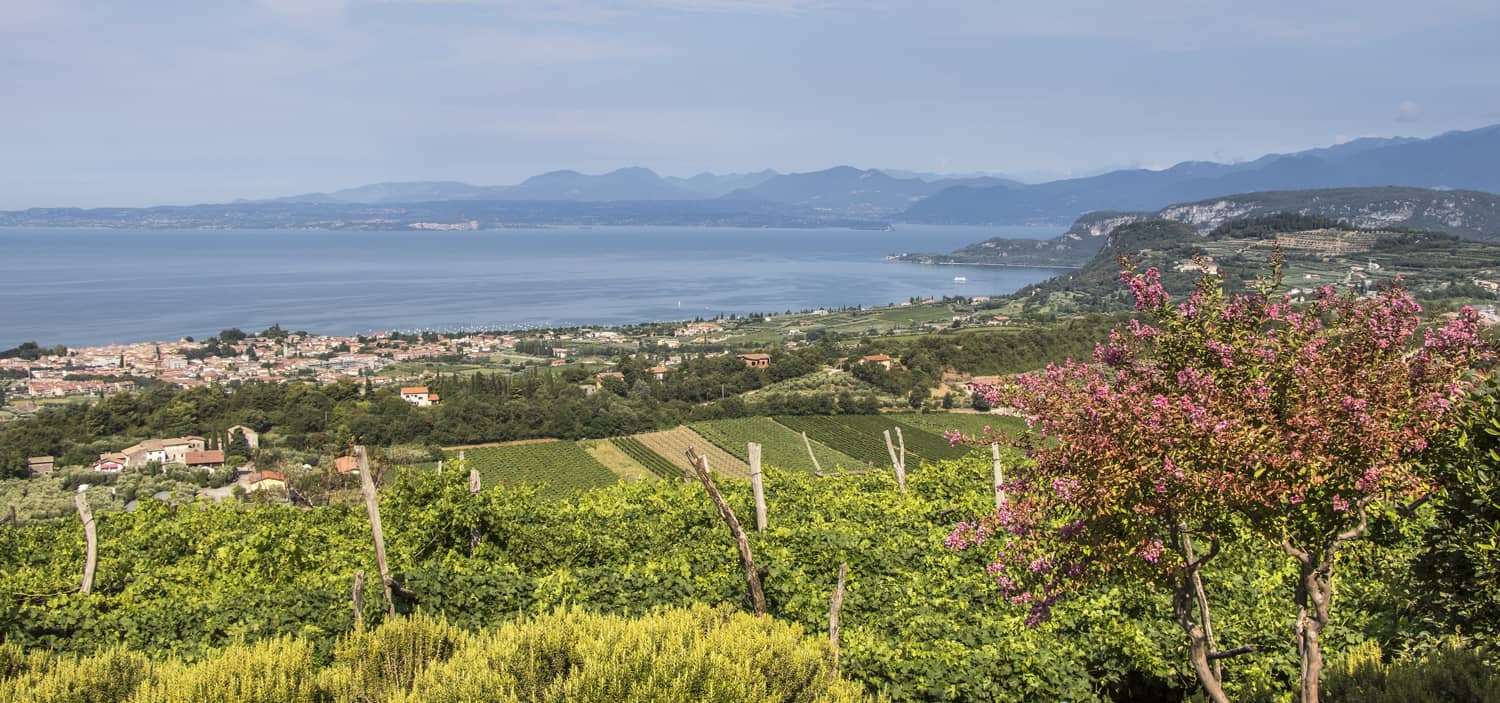
The lake’s influence is felt even 20 kilometres south of Bardolino, but lightness and finesse are not reproducible everywhere: the composition of the soils matters too, a morainic patchwork of gravelly, stony moraine. Montebaldo is the freshest and most vertical zone, La Rocca the most Mediterranean with more spiced profiles, Sommacampagna the most continental, sunny, for open sips and black pepper.
The differences show clearly in the glass: three Bardolinos tasted, all from the 2025 vintage, share blood orange as the recognisable marker. Cà Battura Bardolino is jovial, open, almost Mediterranean, with fullness and roundness, a sense of juice, notes of strawberry and undergrowth, a broad nose with spices. Villa Medici Bardolino is more rigorous and austere, among aromas of cherry and strawberry, fragrant in the fruit that invites a sip. Bardolino Marchesini Family, from the southernmost part of the denomination, stays juicy, fleshy, spiced and of consistent, pleasing structure.
Guerrieri Rizzardi Bardolin Delara 2023, from Montebaldo, delivers balsamic aromas, velvety tannins and good material density; Bergamini Bardolino 2024, La Rocca, mineral and citrusy, with lovely breadth and juiciness, very harmonious; Il Pignetto Bardolino 2022, Sommacampagna, of great finesse and dynamic, with very fine, compact tannins, elegant on the palate — confirmation, too, of Bardolino’s potential with a few years behind it. On price, we remain under €20 on the shelf, confirming that it is within everyone’s reach.