
Nicolas – Jay
wines of the pacific wind
written by Erika Mantovan
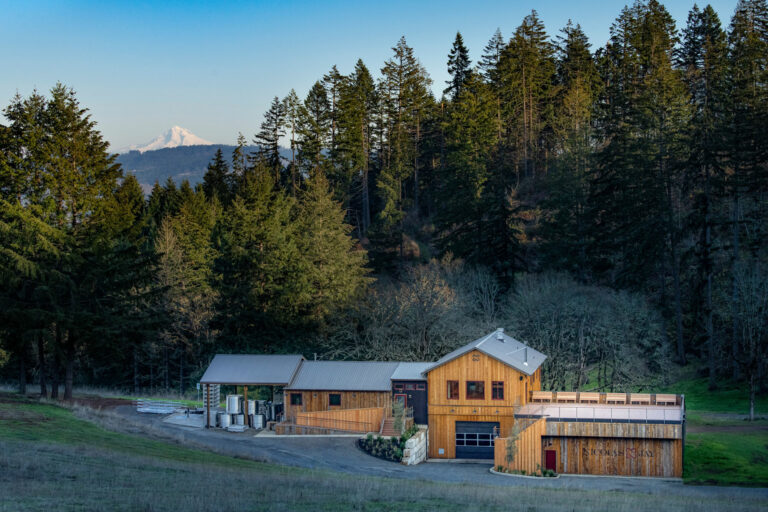
To reach the winery you drive several hundred meters through the woods, along a narrow, tightly winding road, with Douglas firs (Pseudotsuga menziesii) dominating the scene, interspersed with maples and oaks. You park in front of the winery, which recalls a country/mountain lodge, finished being converted in 2021 (the 53-acre property was purchased in 2019); if you look up, on one side you’ll notice Mount Hood, and on the other a slightly concave amphitheater that follows the shape of the hill.
Tasting Nicolas-Jay‘s wines is remarkably effective — the range spans several different areas and gives back a very broad picture of Oregon. The project was born from the meeting between Jean-Nicolas Méo, heir to the historic Domaine Méo-Camuzet in Vosne-Romanée as well as a direct student of Burgundian legend Henri Jayer, and Jay Boberg, an American music entrepreneur, founder of IRS Records. The two met when Méo was in the United States for his studies — he knew Jay’s sister, his university classmate — a friendship that was never broken again, consolidated into a project uniting Oregon and Burgundy.
In the telling of Noah Roberts, the winemaker who accompanied us on the visit, it was Jay — recently retired and, by his own account, “a bit bored” — who proposed to Jean-Nicolas that they start a winemaking project together. The choice fell on Oregon instead of California also thanks to Méo’s relationship with Véronique Drouhin (Domaine Drouhin Oregon), a pioneering French presence in this region since the ’80s. As Roberts tells it:
“He doesn’t love California Pinot. He doesn’t dislike California wines, but they’re just not the same style that he would be making.”
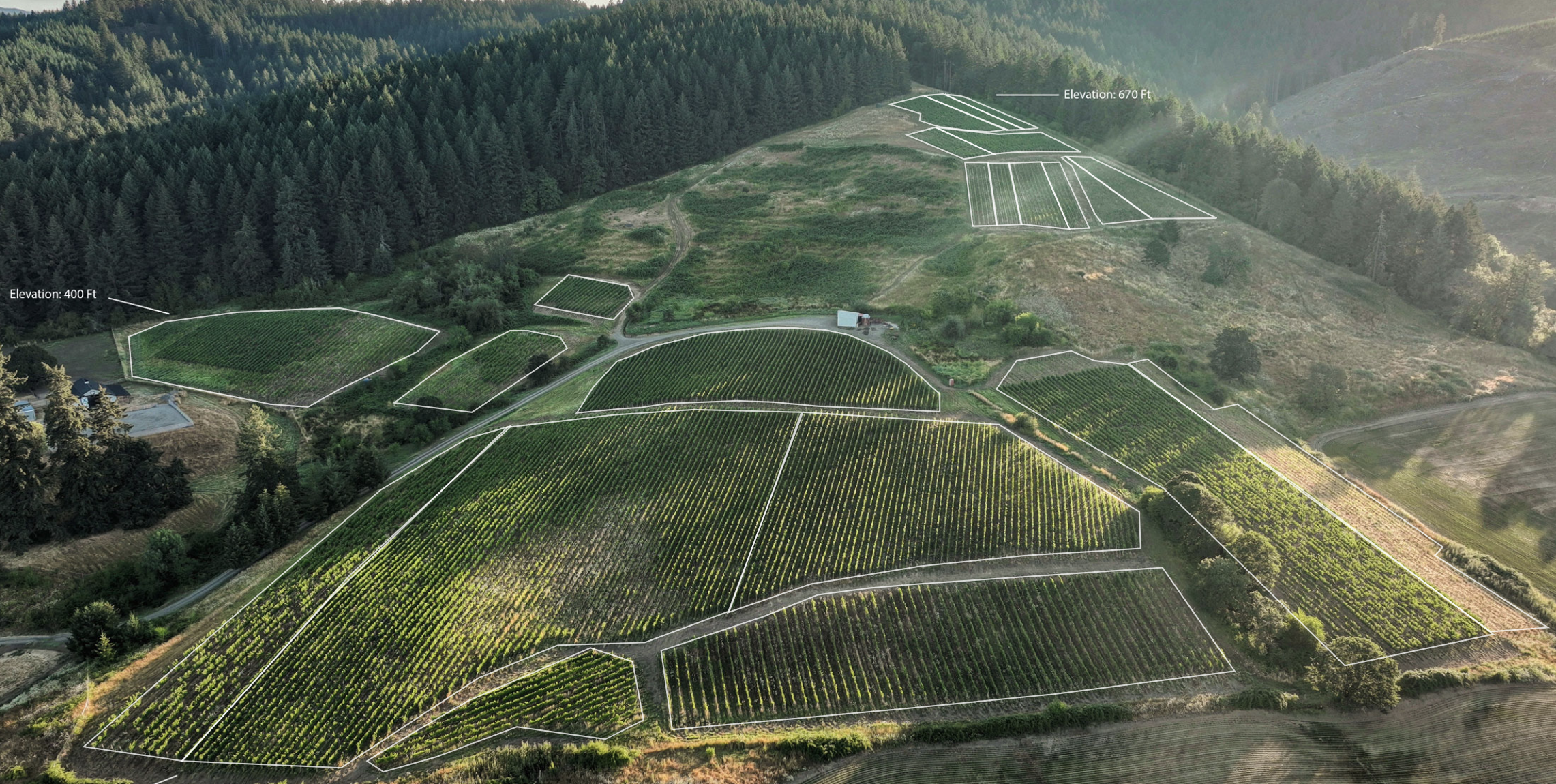
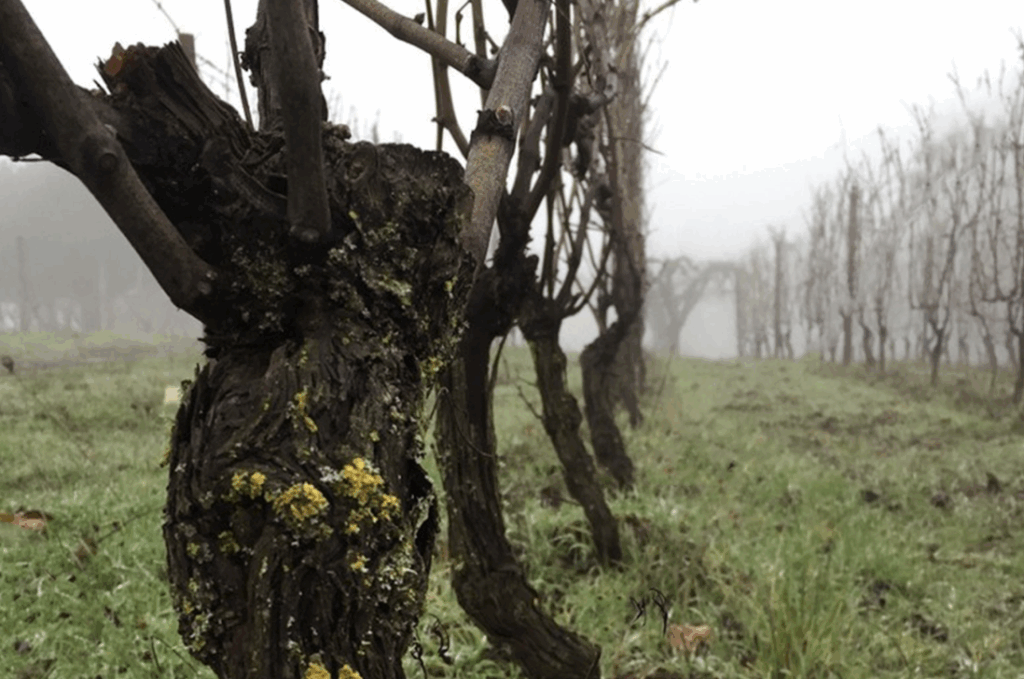
The turning point came in 2014: the purchase of the Bishop Creek vineyard, located about 15 miles northwest of the current winery, planted entirely to Pinot Noir in the late ’80s — its vines are now nearly 40 years old, and largely own-rooted. Before having their own facility, Nicolas-Jay produced wine “on loan,” at other wineries in the area. The choice of Bishop Creek was no accident: the vineyard already enjoyed an established reputation, having for years been a fruit source for well-established producers like Erath and Bergstrom (with winemaker Marcus Goodfellow). A “critical mass” of validation before the purchase. Bishop Creek, today divided into seven different blocks (with clonal varieties such as Pommard and 777), accounts for about 25% of the total harvest, down from a peak of 50% in the past — confirming a progressive growth in sourcing from other historic sites like Hyland (McMinnville, planted in 1971, own-rooted) and Nisa (Dundee Hills, 1991).

In the cellar with Noah
One very clear identity trait of the Nicolas-Jay style is the total rejection of whole-cluster fermentation: “We have experimented with it. It does not work for our winemaking style” — Noah tells us.
Harvest happens at contained alcohol levels, between 12.7% and 13.2%, a deliberate stylistic choice that affects the brightness and freshness of the wines. For aging, the winery uses almost exclusively François Frères barrels for Pinot Noir, while for Chardonnay Damy and Mercurey barrels also come into play. The percentage of new oak stays low, around 5%, with aging sitting around 15-18 months in barrel. A not-insignificant investment when you consider that a quality French barrel costs around €1,100 including shipping, against roughly €400 for an Italian barrel.
As for the Willamette Valley Reserve, the winery’s highest-volume wine, Roberts clarifies that the production process doesn’t differ from the other Pinots: it’s a barrel selection drawn across all the vineyards. On the sparkling wine front, the winery doesn’t yet produce its own bubbles, but Roberts doesn’t hide future ambitions, while acknowledging the complexity of the path ahead:
“I think Oregon wine producers still learning our way with sparkling wine, they’re very good right now, but I think they’ll be great one day. We don’t make sparkling wine… I think our bubbles will be great one day.”
Wine driven soil
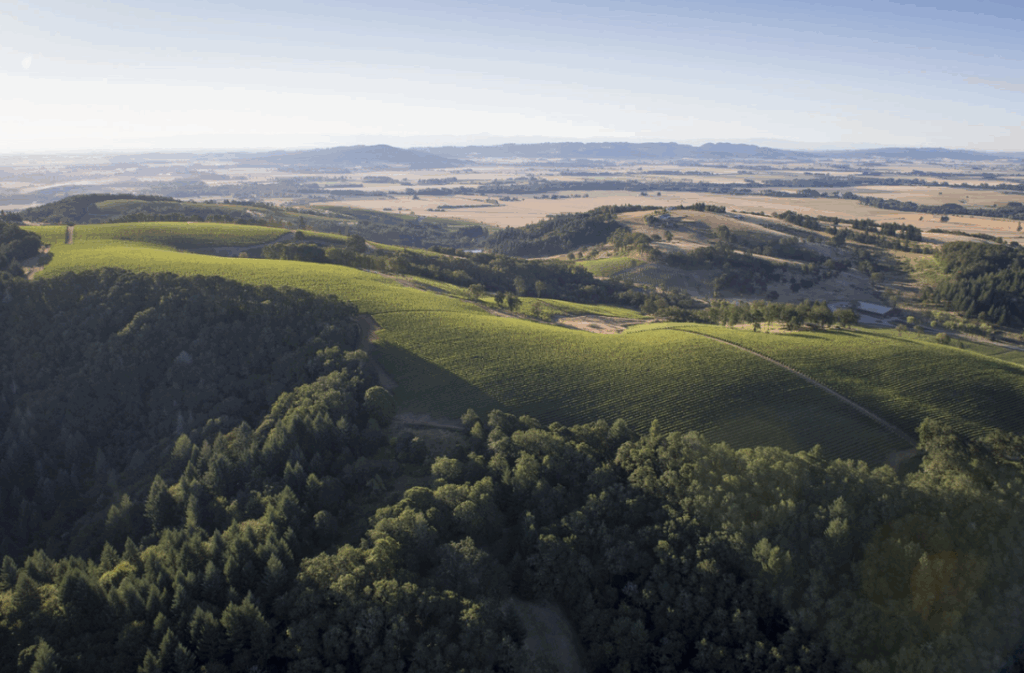
Oregon’s soils show up in the glass as different style and structure. Let’s think about that. Bishop Creek (Yamhill-Carlton), made up of marine sediments, is an ancient ocean floor, and the result is a dense but well-drained soil. Roberts describes it as ground that offers “the right amount of struggle” for the vine, unlike volcanic soils, which are “too generous.” The vineyard is today mapped into seven-eight different blocks, with different clones, nearly all own-rooted. Highland (McMinnville AVA), on the other hand, is one of the historic vineyards Nicolas-Jay sources from, planted in 1971, still own-rooted. “We love that we’ve been sourcing from.” Then there’s Nysa (Dundee Hills), which sits on volcanic Jory soil, biodynamically farmed, roots reaching down as far as 10 meters; extremely low grape pH (3.3), among the highest acidity in the range; as a counterpoint there’s Momtazi (McMinnville AVA), a vineyard heavily exposed to the cold winds of the Van Duzer corridor, farmed biodynamically by “Mo” (of Momtazi Vineyards, with the largest Demeter-certified vineyard in Oregon). Roberts visited him in person in mid-July, watching him prepare stinging-nettle infusions for managing silica in the soil. On the very dense planting typical of some of their plots, Roberts explains: “It’s one reason we plant, we, Nicolas-Jay, plants very densely, especially in these soils, to make them closer together, to make them bite a little bit more. Otherwise, it can be so vigorous, so generous.” Lastly, at Spirit Hill (Eola-Amity Hills) ripening is slower due to exposure to coastal winds, with a hang time 10-15 days longer than at other sites.
“Oregon has a lot of own-rooted vines… they understood that Phylloxera was going to be an issue. They were not stupid — they knew. But if your choice was to plant or to not plant, they chose own-rooted. We still have hundreds of acres of own-rooted Pinot Noir here in Oregon.”
During the tasting of the whites, returning to the theme of perceived salinity in wines from marine sediment soil, Roberts adds a broader reflection on the ocean’s role in Oregon’s winemaking identity:
“We’re not literally on the coast, but we are coastal influence. All our weather comes from the coast. Everything is about our region is related in some way to the Pacific Ocean. Burgundy is an inland area — there is no maritime influence for them. And for us, it’s everything. It’s everything. It’s our soils. It’s our weather. It’s our climate. It’s all of it.”
Vine age, too, is becoming an emerging identity factor: Nicolas-Jay’s oldest vines are approaching 55 years (Hyland), with an average around 45 years for the historic vineyards.
“Twenty years ago in Oregon, vine age wasn’t a real thing, and now we’re finally getting to the place where vine age is starting to become a real vector.”

Tasting notes
Pinot Noir
Bishop Creek 2023 — 96/100 Bright, translucent ruby. Smoky nose, flinty, volcanic, ferrous, intense and deep. On the palate, great balance and harmony, with freshness perfectly framing a velvety tannin. Very long finish on cherry and strawberry. Great evolutionary potential.
Momtazi 2023 — 97/100 Cherry, elegant flowers, broad and silky tannic structure, notes of terracotta. Generous, with beautiful tension; hints of blue fruit, rose, blueberry. A fuller, more plush sip. Extremely elegant.
Nysa 2023 — 96/100 Airy, ethereal notes of eucalyptus and pomegranate, floral. Round on the palate, integrated tannin, fine and deep, pronounced minerality. Dark fruit on the finish, an agile and contemporary sip, great salinity and drinkability.
L’Ensemble Pinot Noir 2023 — 93/100 A blend of ten Pinots from the Willamette Valley. Fresh, dynamic style, a “classic Bourgogne”: blueberry, cherry, floral notes, balsamic with a hint of menthol and a light lacquered edge. Great harmony, delicacy, freshness.
Own Rooted 2023 (a blend of three own-rooted vineyards, vines around 40 years old) — 94/100 Translucent and bright. Nose of dried flowers and oriental spices, cherry, deep and intense. Vertical, fresh and dynamic on the palate, light yet with fruit concentration at mid-palate; velvety, crisp tannin, dynamic, fragrant.
Chardonnay
Spirit Hill 2023 (Eola-Amity Hills) — 95/100 Deep straw yellow. A more concentrated area, with longer ripening time due to wind exposure. Nose of citrus, yellow flowers, saffron, magnolia, lemon and ripe cedar. Very taut, long and elegant, with pleasant acidity on the finish, ellagic tannins.
Bishop Creek 2023 — 95/100 Deep straw yellow. Citrus, flowers, iodine and balsamic notes, a hint of oysters. Harmonious, coastal, broad yet light, with pleasant roundness and great persistence.
Affinités 2023 (a blend of five vineyards, including Bishop Creek and Spirit Hill) — 94/100 Deep straw yellow, very round, harmonious and silky. Nose of lemon blossom and melon, with hints of sweet tangerine and toasted grain; on the palate, yellow-fleshed fruit (apricot, green apple) and a savory minerality that lends tension. Citrusy, zesty, light and fresh, with good persistence on the finish.
Pearlstad 2024 (a new project, Eola-Amity Hills) — 98/100 Balanced, seasonally near-perfect. Balsamic notes, lemon, cedar, pomelo — almost like a mature Pinot Blanc. Elegant, delicate, harmonious, with spectacular finesse and remarkable concentration, without a single break point. Intense, luminous volume, with alpine, refreshing notes.
“I think the future of Oregon, this is me personally, is going to be very much about white wine.”
And, given the quality on display, we’re not inclined to disagree.