
Grow du Monde 2026
Welschriesling : a small grape, a wider horizon
There are grape varieties that became global brands, and others that survive under many passports. Welschriesling belongs to the second family. In Italy it is Riesling Italico; in the Czech Republic, Ryzlink vlašský; in Hungary, Olaszrizling; in Croatia, Graševina; in Slovenia, Laški Rizling; in Serbia, increasingly, Grašac. Different names, different accents, the same unresolved question: how can a grape so deeply rooted in Central and South-Eastern Europe remain so underestimated ?
The fifth edition of GROW du Monde, held for the first time in the Czech Republic and celebrated at Mikulov Castle during the Welschriesling Without Borders Festival, offered one answer: by building a movement before building a market. The competition is not simply a medal machine. It is an itinerant forum for growers, technicians, journalists and international judges who are trying to give Welschriesling the one thing it has often lacked: a shared narrative.
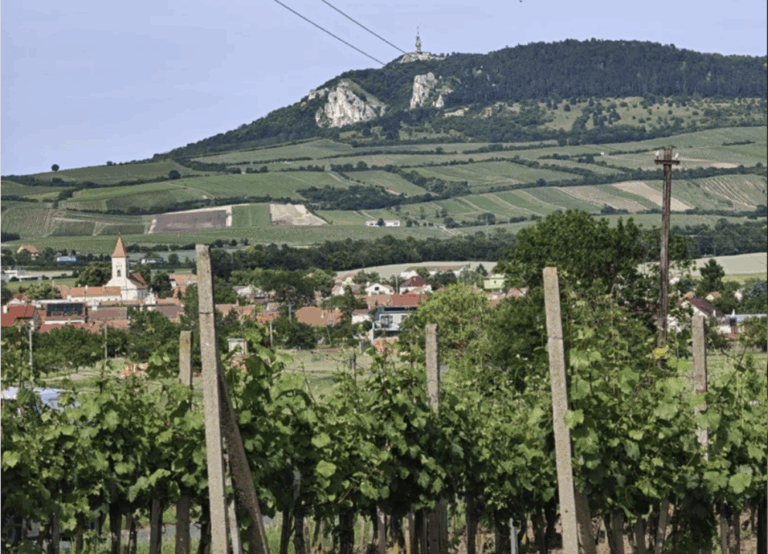
This year the numbers were significant: 356 entries, including 344 varietal wines and 12 cuvées, from the Czech Republic, Hungary, Croatia, Serbia, Slovakia, Slovenia, Italy and Austria. Moravia dominated the symbolic map, winning four of the seven categories and confirming Mikulov as one of the most convincing contemporary homes of the grape.
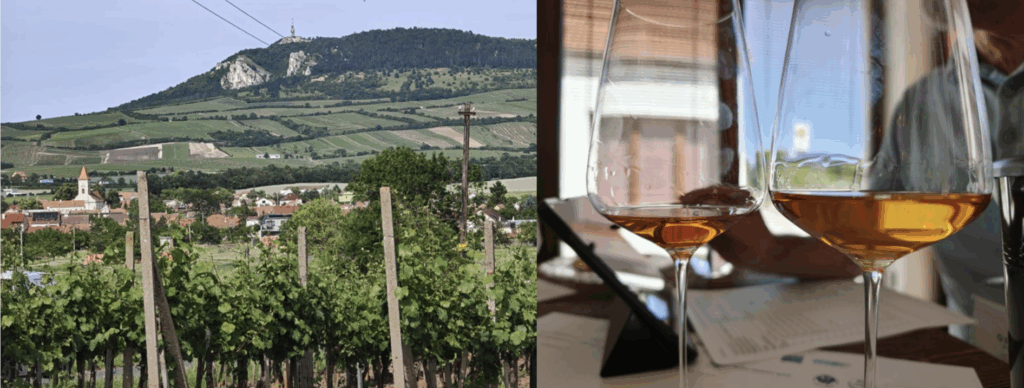
The headline results say enough without needing a long roll-call. Among the Best-in-Category wines, Martin Šebesta’s 2023 Ice Wine won Sweet Welschriesling with 96 points, while Vinařství MiQueen’s 2023 Late Harvest took Mature Dry Wines, also on 96. Vinařství No. 44 prevailed among Young Dry Wines with its 2025 Selected Grapes, and Vinařství won the Semi-Dry category with a 2023 Selected Grapes. The international titles went to Serbia’s Winery Đurđić for Sparkling, Vinarija Vučurević for Orange Welschriesling, and Hungary’s Folly Arborétum with Cédrus 2024 in the Cuvée category.
The Platinum roll-call included Martin Šebesta, MiQueen, Volařík, Vinarija Vučurević, Víno Marcinčák Mikulov, No.44, Mikrosvín Mikulov, Švásta Kadlec, Víno Ludvik, N3 Borműhely, Bzenec Chateau Winery, Balatoni Délután, Vajbar, Zelna, Verkat, Bujdosó, Kamil Prokeš, Tichý, Vinofol and Mlýnek. The geography of these names matters as much as the scores: the variety is not a local curiosity, but a cross-border language.
And yet, the most paradoxical case remains Italy. Oltrepò Pavese is arguably the sleeping giant of Riesling Italico. It counted more than 1,200 hectares of the variety in 2015 and still recorded 854.92 hectares in April 2025, far more than Rhine Riesling in the same area. This should be a strategic asset, as evidenced by the gold medal won by the Colle del Bricco winery for its Khione 2024.
Instead, the grape is blurred by bureaucratic and communicative confusion, often lost under a generic “Riesling” label that prevents consumers from understanding what they are actually drinking. The result is almost absurd: the region with Italy’s most important surface of Riesling Italico – more than 1000 hectares – has not yet turned it into a clear identity.
There is also a scientific irony. Despite its misleading name, Riesling Italico is not genetically related to Rhine Riesling. The most relevant clue points in another direction: official studies of National Research Council of Italy (CNR) link the variety historically to the hills between Oltrepò Pavese and the Tortona area, where its only known parent, Coccalona Nera, was identified. In other words, Italy does not merely have hectares; it has a piece of the grape’s family story.
This is why GROW du Monde matters. It does not ask Welschriesling to become fashionable by imitating Sauvignon Blanc, Pinot Grigio or Riesling Renano. It asks it to become legible on its own terms: acidity, sapidity, drinkability, food affinity, late-harvest potential, sparkling aptitude. And, in the best cases, a mineral depth that rewards patience rather than shouting for attention. The 2026 edition shows that the variety’s future will not be built by one country alone.
Moravia currently has the momentum, Hungary – the cultural confidence, Croatia – the popular base, Serbia – a new identity around Grašac, and Italy – a vast but still underused vineyard heritage. If Oltrepò Pavese wants redemption, it should look at Mikulov not with envy, but with urgency. And to Serbia, which has courageously embarked on its own legislative process to rename the variety, as one of the ways to rediscover and promote the grape variety. GROW du Monde is still a young competition. But its real achievement is already clear: it is teaching a neglected grape to speak in many languages without losing its voice.