
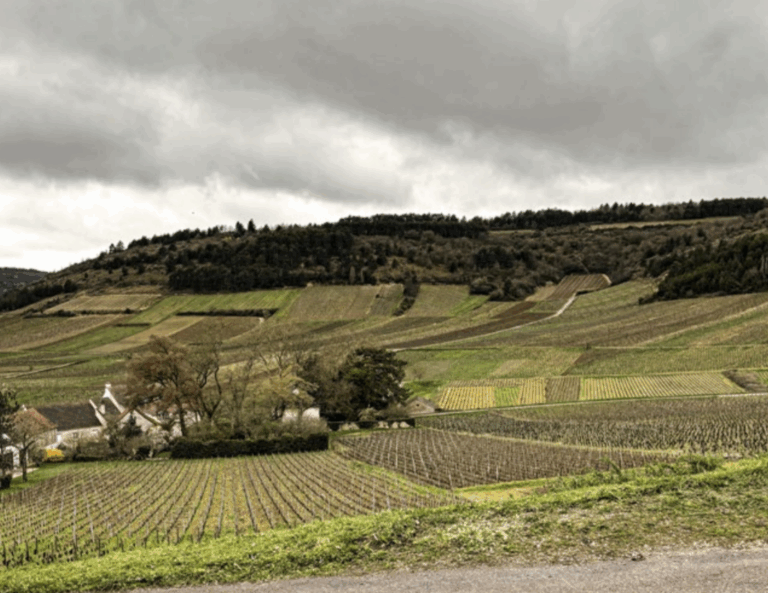
Florent Garaudet
The Quiet Strength of Monthelie
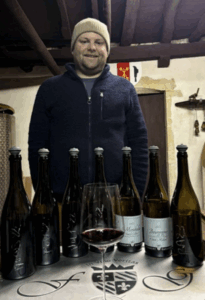 In Monthelie, the small hillside village between Volnay and Meursault, wine remains a matter of craft and conviction. Florent Garaudet, a fifth-generation vigneron, farms just over eleven hectares alongside his father, maintaining close control over every stage of production. “We harvest, rack and bottle ourselves,” he says. “That’s how we stay true to the pace of the wine.”
Part of a long-established local family, Garaudet founded his own domaine in 2008, gradually expanding from a handful of parcels to a mosaic of sites across Monthelie, Meursault, Puligny-Montrachet, Volnay and Pommard. Today, the estate remains resolutely small-scale and hands-on, with Garaudet personally overseeing both vineyard work and vinification — a level of involvement that defines the wines’ precision and identity.
Curious and self-driven, he has emerged as one of Burgundy’s most clear-minded younger voices, combining deep respect for tradition with a quietly independent streak. Before returning home, he trained in Pic Saint-Loup and Pomerol, becoming cellar master at Château L’Enclos at just twenty-two — an experience that shaped his pragmatic, self-reliant approach. “A vigneron must decide for himself. Otherwise, you’re just following instructions.”
In both vineyard and cellar, his philosophy is uncompromising. Yields are tightly controlled, harvests are manual and timed for full physiological ripeness, and fermentations rely on native yeasts. Ageing takes place in carefully selected French oak, with no fining or filtration and only minimal sulphur. The aim is not polish, but articulation: wines that are structured yet alive, shaped more by site than by technique.
There is also a less orthodox side. Garaudet is known locally for his curiosity — experimenting with late-harvest Aligoté, alternative vinifications and small-scale trials that rarely leave the cellar but inform his broader understanding of balance and texture. It is this combination of discipline and experimentation that gives his wines their particular energy.
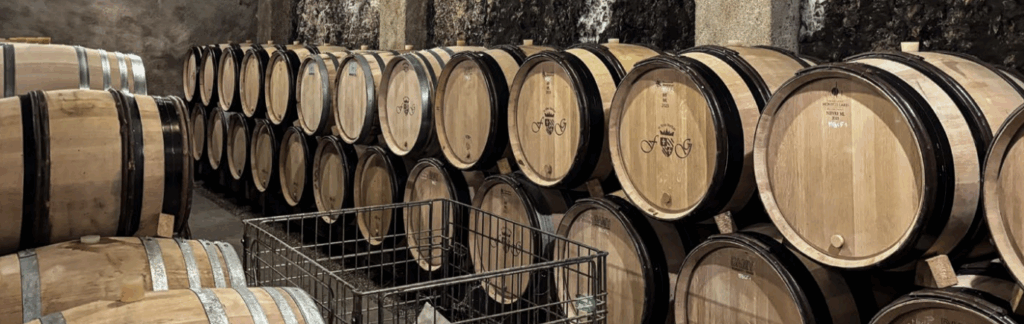
The cellar reflects that philosophy. The Aligoté 2023, from fifty-year-old vines planted on limestone soils in the Puligny-Montrachet area, shows saline tension and discreet depth after extended élevage — a wine of lift rather than weight. The Monthelie Sous le Cellier 2023 adds floral nuance and gentle oak; elegant and finely drawn, it echoes the finesse of Chambolle. In the Monthelie 1er Cru Les Champs Fulliots 2022, red fruit and measured length replace brute power — “a premier cru should be judged by its persistence,” Garaudet notes.
Further north, the Pommard Vieilles Vignes 2022 — from three upper-slope parcels — offers cherry, smoke and spice, with barrels sourced from the same cooperage used by Romanée-Conti — though Garaudet quietly works across different tonnelleries, all selecting wood from the same forest.
At the top sits Mont Helios, a cuvée from ninety-year-old vines, aged in a rare wood used for just two thousand barrels worldwide. Production remains tiny — only six hundred bottles a year, each one hand-bottled and wax-sealed — underscoring the domaine’s scale and intent.
“Even a modest appellation can reach high,” he says simply.
In Monthelie, Garaudet is quietly proving exactly that.