
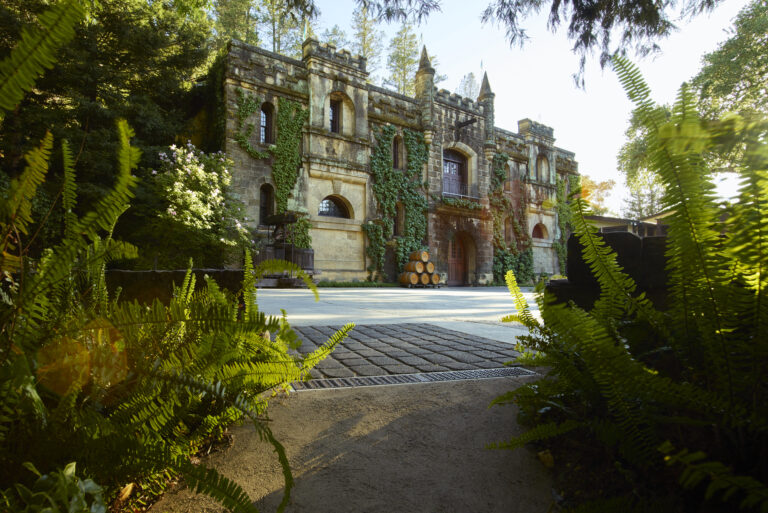
Château Montelena
A classical interpretation of Napa Valley
In Calistoga, at the northern end of the Napa Valley, Château Montelena embodies a distinctive vision of Californian viticulture, founded on classicism, restraint and the expression of terroir. Owned by the Barrett family, the estate has established itself as a historic benchmark, notably through its emblematic role in the international recognition of Napa wines.
George Blanckensee, estate director for 17 years, summarises this philosophy: “We make classical wines, terroir-driven, closer to a French style.” This approach is rooted in his own background. Trained in hospitality, notably with Le Méridien, he developed an early sensitivity to great European wines. “I was a Francophile. We built a collection that was 99% French, with First Growths and Grand Crus.” This culture continues to shape his vision, finding in Montelena “the closest thing to France in California.”
A mosaic of terroirs between valley floor and altitude
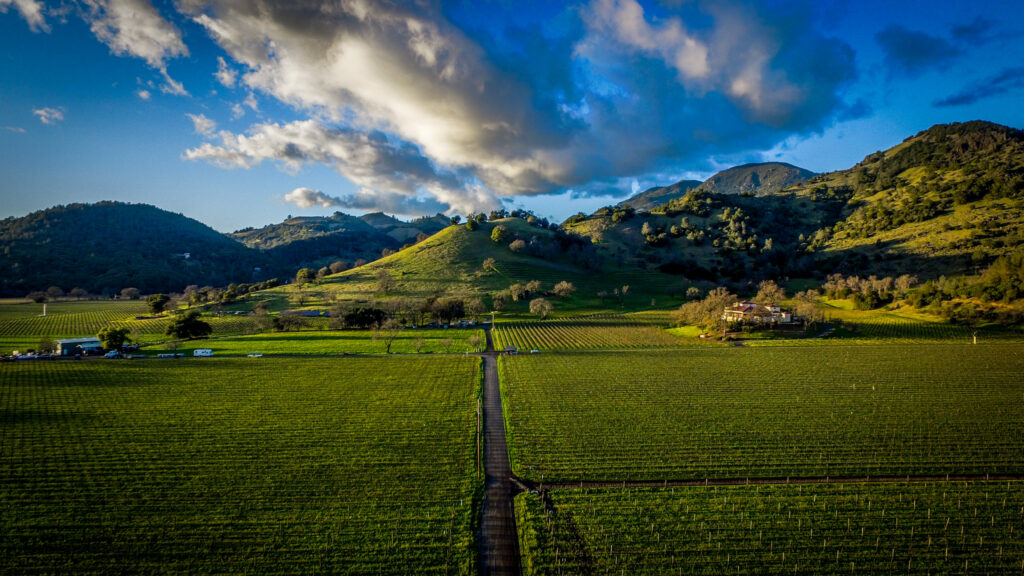
The estate’s vineyards draw on several complementary areas, reflecting the diversity of Napa Valley. Chardonnay is sourced primarily from the southern part of the valley, particularly within the Oak Knoll District, on soils combining clay and limestone. “We work with several vineyards, three,” notes George Blanckensee. A new project in Carneros, bordering Oak Knoll, aims in time to produce a fully estate-grown Chardonnay.
By contrast, Cabernet Sauvignon is rooted in Calistoga, where warmer conditions favour full phenolic ripeness. This geographical duality allows the estate to balance freshness, structure and depth.
The estate is now moving towards greater integration of its fruit sources. “ We are gradually reducing our contracts so that a large majority of our grapes come from our own vineyards. ” explains George Blanckensee. This transition to a fully estate-driven model ensures complete control over quality and consistency. At the same time, replanting programmes are underway, aimed at refining yields and further shaping the profile of the wines, particularly for Cabernet that shows the uniqueness and complexities of our diverse terroir and weather.
A signature of restraint and terroir expression
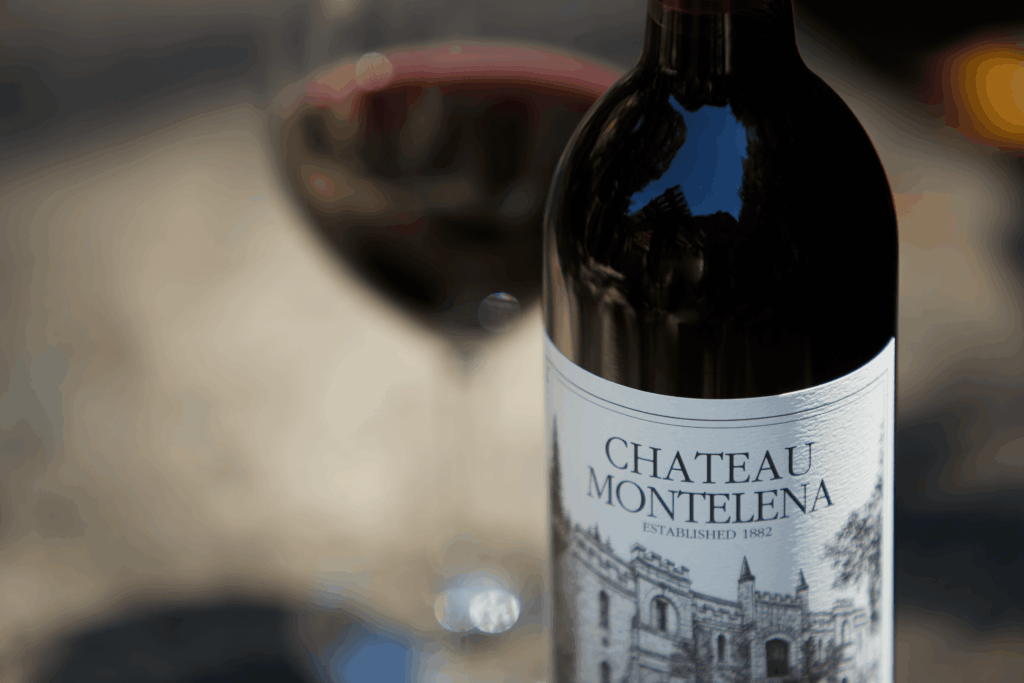
The signature of Château Montelena lies in a measured interpretation of Californian terroir. “Our wines are more earthy, less fruit-driven, less ‘manufactured’,” explains George Blanckensee. Far from a demonstrative style, the estate favours a more understated and nuanced expression.
In the whites, this philosophy results in wines that are taut, precise and structured. The reds, meanwhile, follow a more classical register, with a profile that leans towards savoury complexity rather than overt fruit. “We aim to let other elements come through: cocoa, olive, herbs,” he adds. The restrained use of oak, avoiding systematic reliance on new barrels, reinforces this balance.
More than a style, Château Montelena asserts a philosophy: that of “wines of place”. “We seek terroir, the expression of the soils, the fruit, without becoming formulaic,” insists George Blanckensee. Between historical legacy and contemporary precision, the estate offers a refined and measured interpretation of Napa Valley, where power is expressed with restraint and elegance arises from accuracy.