
The long wait
Larry Stone, Dominique Lafon and the making of Lingua Franca
written by Erika Mantovan
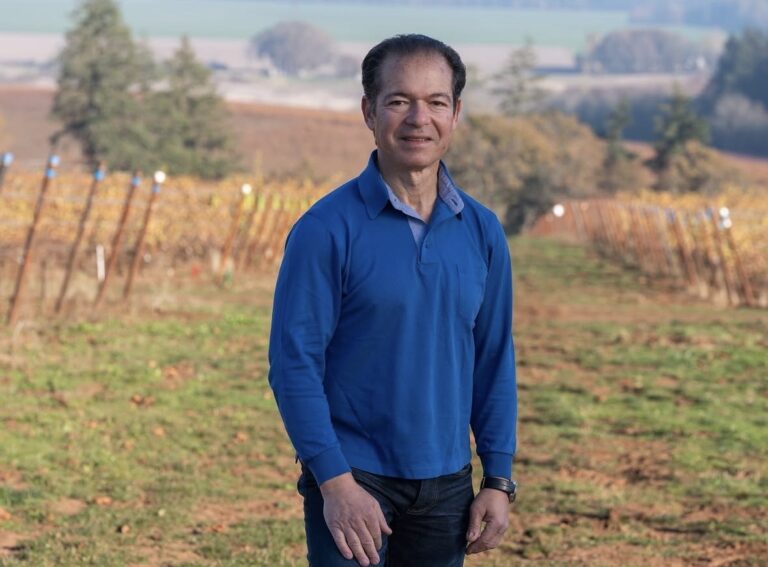
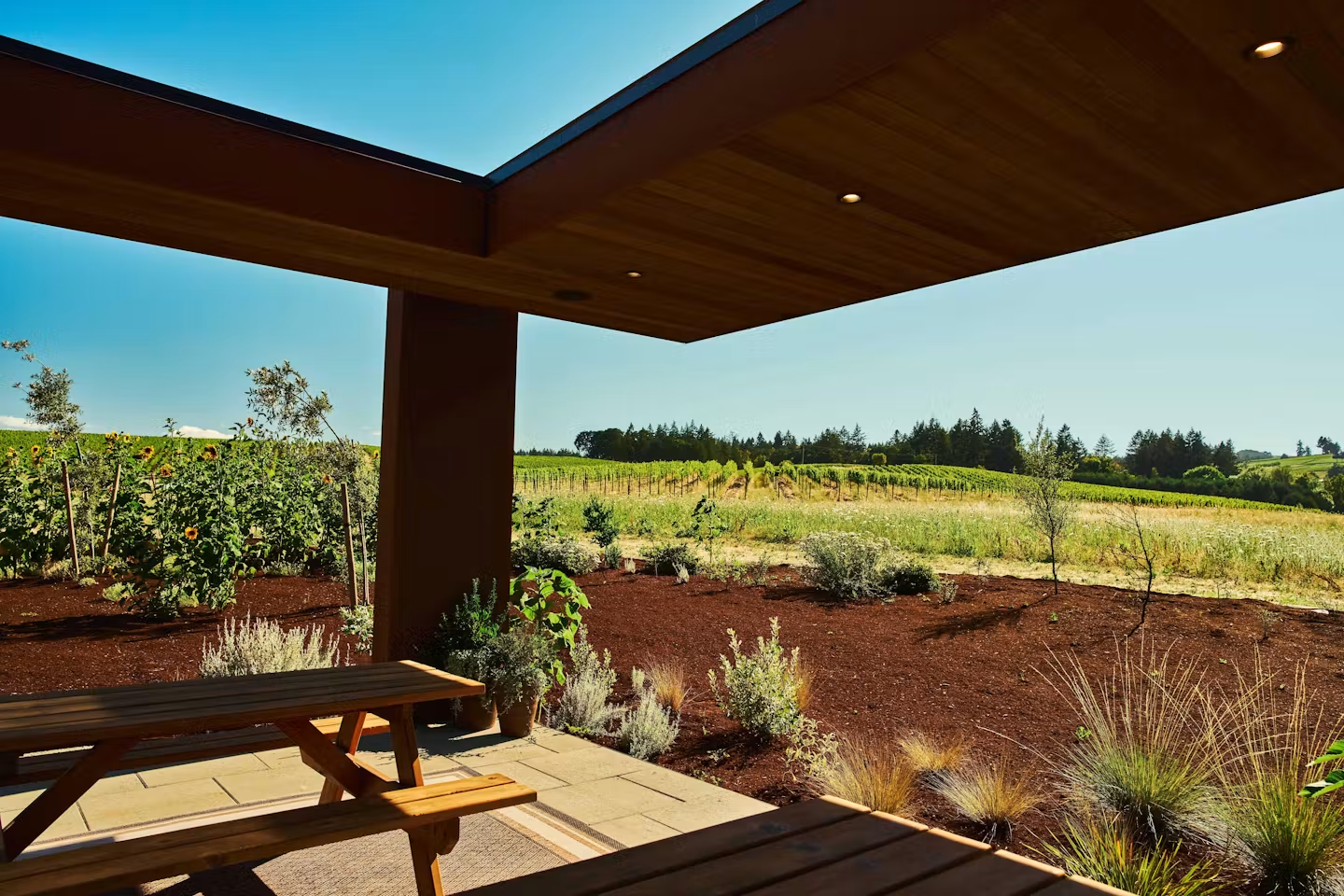
Set on 66 acres, Lingua Franca sits in the middle of an amphitheater of hills surrounded by woodland and wheat fields, at 9675 Hopewell Road Northwest, Salem — cool even in summer, thanks to its proximity to the Van Duzer Corridor. “There’s always wind here,” says Stone, founder of Lingua Franca, “but if we go to the other side of the hill, the one facing west, it gets much stronger.” Two days before our visit in late July, he recalls, his estate hit 40°C while the coast, just 40 kilometers away as the crow flies, never rose above 15°C. This is just one effect of the natural channel that funnels cold Pacific Ocean air into the Eola-Amity Hills — and it’s one of the keys to understanding the style of Pinot Noir and Chardonnay from the Willamette Valley.
Stone is not the child of winemakers, which makes his life story all the more interesting. His passion for wine first led him to become the ninth Master Sommelier in the United States, and to win the prestigious Best International Sommelier in French Wines competition in Paris.
He was born in Seattle, into a family whose relationship with the land ran through trade: his father was a fruit and vegetable merchant at Pike Place Market, and as a child Stone traveled the farms of Washington, Oregon and Canada, learning to recognize which place produced the best cherries and which the best apples. A sense of terroir avant la lettre — he grew up with the idea of terroir before he ever became involved with wine. “I was already interested in wine at six or seven years old. I was always trying to figure out which place did what best.”
That sensibility, applied to wine, eventually led him to Italy — at a time, he says, “when there wasn’t yet much good French wine available, but a great deal of good Italian wine.” In Seattle, in 1982, he met Angelo Gaja, who was in town for an extended stay to learn English and lay the groundwork for selling his wines in America. The following year, his father took him to Barolo. In the Langhe, what could have been a passing infatuation turned into a vision — helped along by a visit to Alfredo Currado at Vietti, where the son, Luca — today at the helm of his own project, Cascina Penna-Currado — “was still a teenager back then, making ravioli with nettles. Gaja’s bottles could be had for eight dollars; at the time, people were trying to get rid of them. I was a young sommelier, I didn’t earn much, but I could still afford to taste them, to drink them with friends,” Stone confides.

Before crossing over from sommelier to producer, Stone spent nearly 40 years observing the site where the winery now stands. “The land wasn’t for sale. It took me almost two years of persistence to convince them to let it go.” Known as Janzen Farm, it was simply that — a farm, with rotating crops of wheat, clover, radishes, even Christmas trees planted on the steepest section, where the soils were thinner. A landscape that nonetheless confirmed the fertility of the soils between the towns of Hopewell and Zena Crown, borne out by the wines of the neighboring Seven Springs Vineyard (planted in 1982). “When I tasted the first wines from Seven Springs, I thought they were the best ever made in Oregon, even though the vineyard was only one year old.”
With the acquisition of the land in 2012, Stone placed himself within what he calls the “third wave” of Oregon winemaking: after the pioneers of the 1960s and early 1970s (like David Lett’s Eyrie Vineyard), and after the arrival, in the 1980s, of Burgundian names like Robert Drouhin — who was drawn to invest in Oregon following a famous blind tasting pitting Oregon Pinot Noir against Burgundy Grand Cru, which the local wines won by surprise — came the generation of Eveningland, and then of Lingua Franca. The winery was founded by Stone together with business manager David Honig and winemaker Dominique Lafon.
Meeting Dominique Lafon
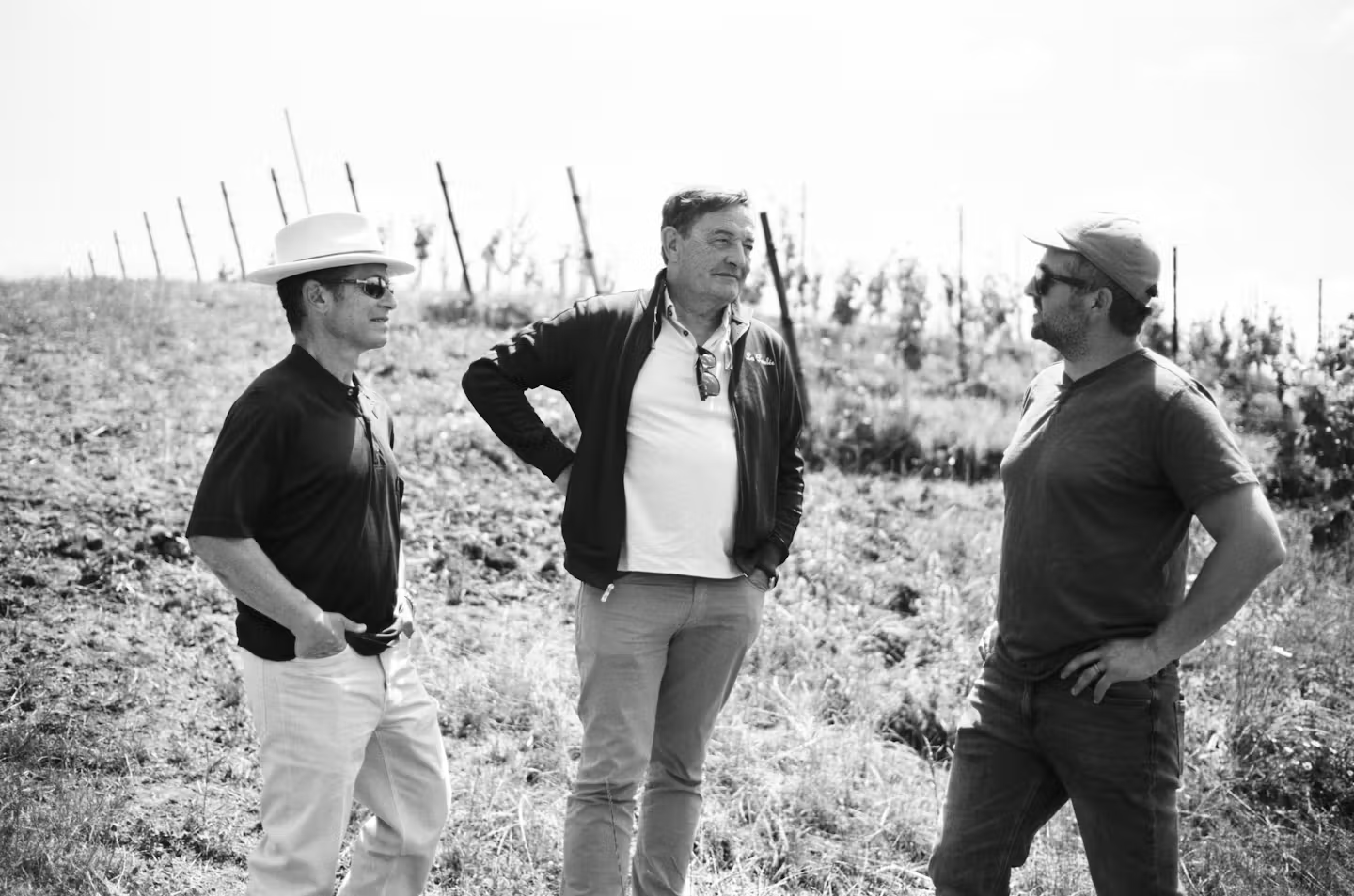
The celebrated Meursault vigneron’s awareness of Oregon’s potential dates back to the 1980s, when he was already active selling barrels through Becky Wasserman’s network. The defining episode of that partnership came in 2007, when Lafon — initially reluctant even to work with Chardonnay, convinced that Pinot Noir was the only path forward for Oregon — decided to harvest a small parcel following his instinct alone, against the advice of the winemaker at the time. The result was one of the most celebrated Chardonnays in the region’s history, landing on the cover of Wine Spectator. “We wanted to find out what he would do if he made the wine here,” Stone explains. “How he would treat it. We wanted him to recreate his Burgundian way of thinking here, because we saw that what Americans were doing was too fat, too rich, too much of everything.”
Wine growing, not wine making
This is where the guiding principle of Lingua Franca was born — the one Stone repeats like a mantra: don’t make the wine, grow it. “I don’t like the idea of producing wine in a particular style,” he says. “You have to trust the terroir, the climate, everything that belongs to the place, and let the flavors form at the moment the grape itself says it’s ready. You can force it to hang longer — that’s what most New World producers do — but you’re not eating the grape, you’re making wine. If you wait until the grape tastes good enough to eat, you’ll have to acidify. And you’ll never arrive at an authentic, integrated flavor profile for your wine, for your place.”
“I think of winemaking as a form of cultivation, not manufacturing,” he explains. “Once you harvest the fruit, you have to raise it in the cellar until it becomes wine from juice — it’s like raising a child. You have a product of nature in your hands, and you’re responsible for not ruining it along the way, whether through too much intervention or too little. You have an obligation to care for it without ruining it, because owning this is a privilege.”
What lies beneath Stone’s feet
Behind the philosophy lies a complex geology that Stone knows down to the smallest detail. The area’s bedrock traveled a long way to get here: basalt flows formed between 14 and 17 million years ago, originating near the Idaho–Washington border, which gradually filled in what is today the Willamette Valley. Much more recently — during the last Ice Age — this volcanic layer was overlaid with sediment carried by the so-called Missoula Floods: catastrophic floods triggered by the repeated collapse of an ice dam in Montana, capable of unleashing a 90-meter wall of water traveling at over 100 kilometers per hour down the length of the valley.
Here, across volcanic Jory basalt, Missoula flood deposits, and the marine sediments found nearby at Bunker Hill, Stone identifies the subtlest differences between his parcels. Breaking the estate down block by block, the most telling comparison is between his east-facing property and the west-facing Bunker Hill vineyard: “It’s the same macroclimate, essentially the same soil, but a different orientation. And because of that, the result in terms of flavor is completely different.” East-facing exposure gives grapes that ripen in the morning sun and are sheltered from the harsher afternoon heat — the same principle, Stone notes, behind the best terroirs of the Côte d’Or. Bunker Hill, fully exposed to ocean winds and afternoon sun, develops thicker skins and a more mineral, structured profile, at the cost of two to four additional weeks of ripening.
The comparison becomes even sharper when set against Burgundy’s latitude: just two degrees of difference (45° versus 47°), an almost identical growing season, with barely ten minutes’ difference in daylight length at the height of summer. “That’s why it’s so transparent,” says Stone, returning to a principle he had already learned as a child observing fruit: “If you move even sixty meters, everything changes. And the wine can reflect that difference.”
Climate change, too, according to Stone, has worked in this specific area’s favor: “It’s been good for us, because we used to be too cold, and the vintages were very irregular. If I’d tried to do in the 1980s what I do now, it would have been difficult — there were so many difficult vintages where you had to pick just because the rain was coming, not because the grapes were actually ready.”

The Plow: the vineyard chosen by the rock
Among Lingua Franca’s crus, one in particular tells the story of Stone’s method especially well: The Plow, sourced from a specific block of the estate identified even before the vineyard produced its first harvest. Confirmation of that instinct came from Pedro Parra, a Chilean geologist specializing in vineyard soils, who offered to buy grapes from that block at three times the local average price — before there was even a crop to sell. “I told him I’d noticed the gravel on the surface was different from the rest of the vineyard, I thought it might be something special, but I didn’t know why,” Stone recalls. Parra’s answer had to do with the electroconductivity of the bedrock: as roots grow around fragments of rock rich in conductive metals, they gain an extra source of energy, resulting in more complete phenolic development at ripeness than the rest of the vineyard. “I recognized that potential through intuition,” says Stone, “built on my experience in vineyards since I was nineteen — forty years spent looking at vineyards and farms.”
The privilege of not ruining anything
What still drives Stone today, with such passion and energy? “What I love most about this property is that there’s so much clarity and purity of flavor, and it really comes through in the wine. We let it emerge by not manipulating anything, and it’s truly extraordinary. I’m very proud of that. That’s the reason I wanted to be a farmer — I wanted to plant this vineyard, and design it the way I thought it should be, after spending my whole life,” he says, among the vine rows, watching the land, long before ever learning to turn it into wine.
Restoring the land
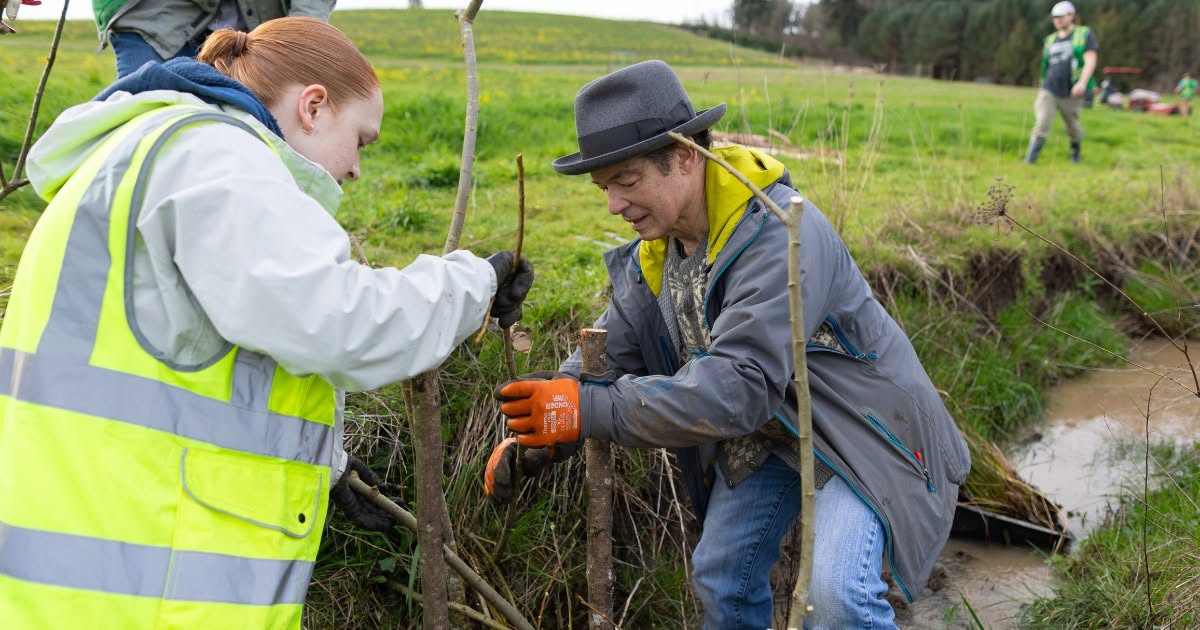
That philosophy extends well past the vine rows. Recently, the entire Lingua Franca team — vineyard, production, hospitality staff, and Stone himself — came together to build four human-made beaver dams and plant 150 native wetland species, restoring the natural floodplain that runs through the property. By slowing the water down and reconnecting the stream to its original path, the dams recreate the conditions for native plants and a healthier ecosystem to take root. It’s a small but telling gesture, one that mirrors Stone’s broader conviction: that the estate isn’t something to be optimized, but something to be cared for.
Tasting notes
That same spirit of experimentation and research carries through into the cellar. Alongside traditional Burgundian oak, the winery also uses Hungarian barrels — a choice reserved for the whites, better suited to preserving their aromatics.
Lingua Franca Estate Chardonnay 2024
From the highest point of the hill, where Stone chose to plant Chardonnay precisely because he dislikes seeing it on deep soils: “I prefer florality — I don’t want to lose minerality.” The nose carries an almost Burgundian imprint — light toasted oak, iron, a hint of smoke, tobacco and citrus — with a pleasant, acid-driven structure. The mid-palate opens into a broader, nutty (noisette) note, alongside yellow fruit on the finish, with fine aging potential. 96/100
Bunker Hill Chardonnay 2024
Harvested at a pH of 3.8, from across the river from the estate, on a vineyard planted in 1995 with the same genetic material used for the Estate wine — but 15 miles away and with a different, less sheltered exposure, where the roots reach deeper. Smoky, floral nose, white flowers, warm citrus. On the palate it’s saline, vertical, taut and compact through the finish. 95/100
Avni Chardonnay 2024
Vinified in large 350-liter casks with native yeast and spontaneous malolactic fermentation. Straw-yellow color with golden hints. Wild, floral nose — smoky and spiced, ripe lemon, white pepper: an austere wine, deeply smoky and peppery, designed — not by chance — to pair with Asian cuisine. Acidity is less pronounced, the mid-palate rounder, with great depth and length. 95/100
Sisters Chardonnay 2024
The pinnacle of the estate’s white wine production, dedicated to Stone’s mother and aunt. A barrel selection from volcanic soils, made in just 150 cases (around 800 bottles). Golden straw color, nose of flowers and yellow fruit, smoke, sweet oak, dried apricot, ripe lemon. On the palate it’s elegant, deep, round, with rare finesse and acidity perfectly integrated into the structure. 96/100
Avni Pinot Noir 2024
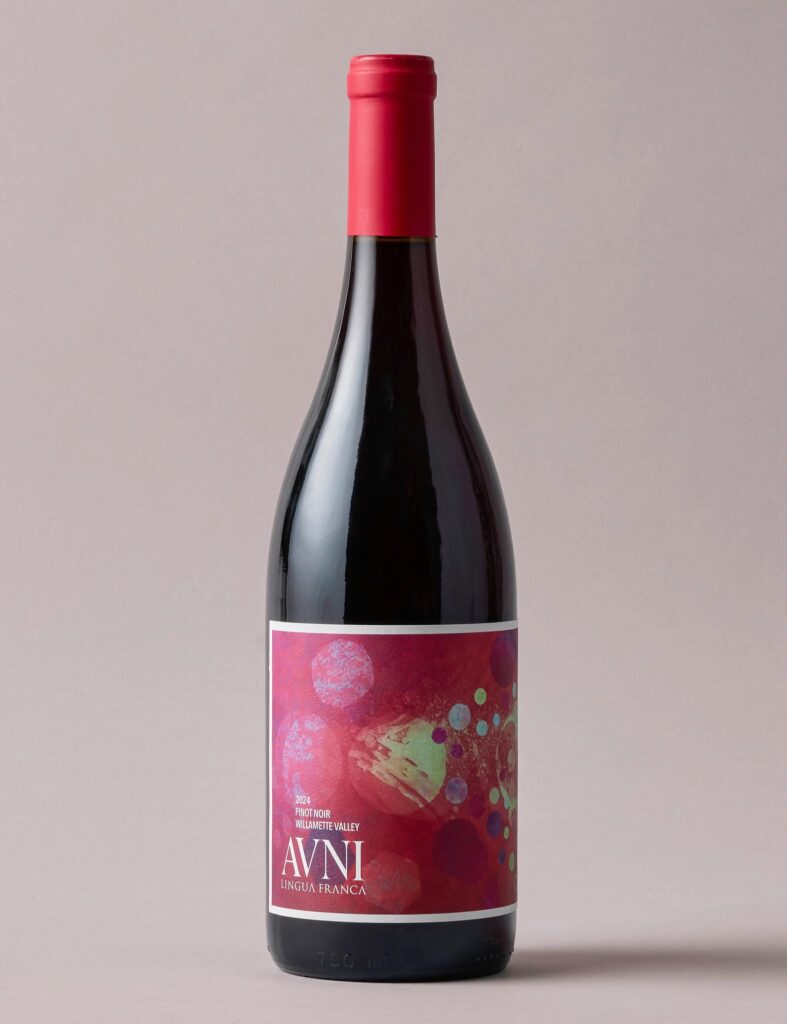
From a vintage Stone considers among the best for balance, free of vegetative stress. Sourced from a vigorous soil close to the winery, designed as an easy-drinking, by-the-glass wine. Surprisingly rich and fruity on the nose — redcurrant, cherry, a touch of spice — with a small percentage of whole cluster lending a vegetal, balsamic note. On the palate it has an almost electric energy: agile, propulsive, with well-preserved acidity and a complex finish that never tips into opulence. 94/100
The Estate Pinot Noir 2024
A blend drawing from twenty different parcels across the estate. Bright cherry color with pink reflections. The nose opens on nearly earthy notes before turning floral — peony, rose — eventually revealing a pronounced, almost oyster-like salinity reminiscent of the nearby ocean. The mid-palate remains driven by fruit and salinity. Bottled in March, Stone describes it as still settling, though already capable of reaching a remarkable balance with a few more months in bottle. 95/100
The Plow 2024
The estate’s most sought-after cru, from the block richest in gravel (roughly 50% surface rock coverage), the one identified years ago by geologist Pedro Parra for its electroconductivity. Deeper, more concentrated cherry color. Nose rich in flowers, cherry, blackberry, redcurrant, with light oak notes. Aged 70–80% in barrique, it delivers a long, complex sip, with mineral, almost iron-like tannin and a vegetal note that dissolves into a velvety finish. A wine that, as Stone himself warns, needs time in bottle to become truly silky and refined. 97/100
La Belle 2024
Vinified entirely with whole clusters, in true Dominique Lafon style. Deep violet color. On the nose, sweet cherry and blueberry fruit, dark and deep notes. On the palate it’s rich, almost woody on first impression, but carried by an acidity that keeps it elegant despite the density; the tannin is extremely fine, almost velvet-soft. 95/100
Novo Vivo 2024
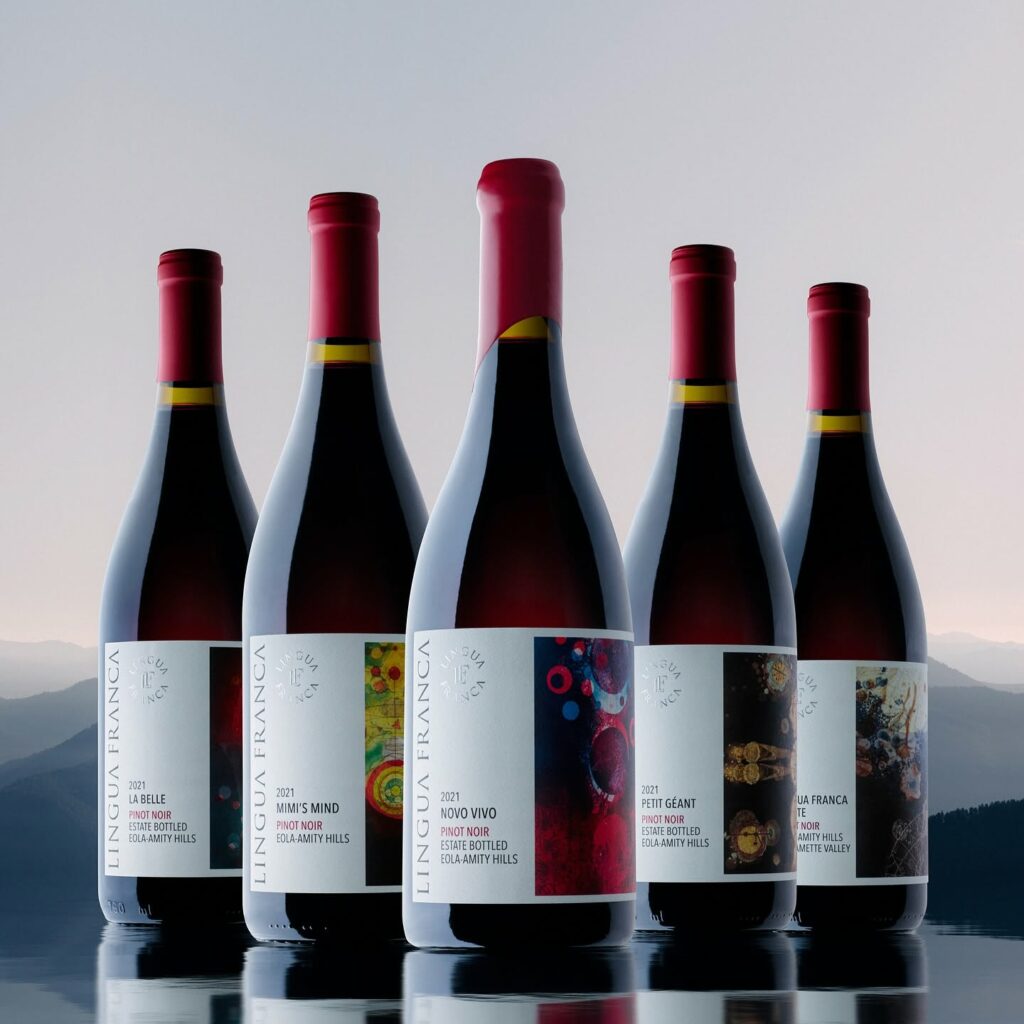
The most experimental wine in the entire Lingua Franca range, born from an extremely rigorous parcel selection within blocks 4b and 7b of the estate, on volcanic and sedimentary soils cooled by the winds of the Van Duzer Corridor. At its core is the prized French clone 943 — a low-yielding, small-berried Pinot Noir known for producing wines of great concentration and aromatic finesse — vinified by pushing the winery’s stylistic limits to the max: a high percentage of whole clusters and up to 50% new oak, the highest share in the entire production. A bold protocol, carried through despite the initial resistance of Dominique Lafon, historically more attached to a classic Burgundian style with a lighter touch of new oak in youth.
The name, inspired by Dante’s “Vita Nova”, carries a meaning that is anything but merely symbolic: the first vintage, 2020, was devastated by the wildfires that ravaged Oregon that summer, drastically reducing the estate’s harvest. Novo Vivo is literally born from destruction — a small wine of rebirth, made from the best grapes salvaged from an extraordinarily difficult vintage.
To the eye, an intense ruby red with brilliant violet reflections. On the nose, pomegranate and small, tart red fruits, with a refreshing vegetal note and spiced nuances from the oak. On the palate it is dense, weighty and deep, yet vibrant at the same time: energetic acidity cleanses the palate and calls back the fruit in an extremely long finish, while the tannins — dense but already velvety — deliver an almost grand cru sensation. Produced in just 90 cases a year. 98/100