
Cavazza
Between volcanic and limestone soils, the foundations of a family history in Veneto
As it approaches its centenary, the Cavazza estate embodies a certain vision of Italian viticulture: family-driven, deeply rooted and closely tied to its terroirs. Founded in 1928 in Gambellara, in the heart of Veneto, the property has been built patiently, generation after generation, from modest beginnings. “It was my great-grandfather who bought a very small plot of land. And every year, whenever he managed to save some money, he would buy more land,” the family recalls.
In its early days, the estate was closer to subsistence polyculture than to a true winegrowing venture. “Between the two wars, you couldn’t really speak of a proper wine business.” Maize, tomatoes, fruit and vines coexisted on the family’s land. It was only in the 1960s that the estate made a decisive shift, focusing exclusively on wine and gradually asserting its identity and ambitions.
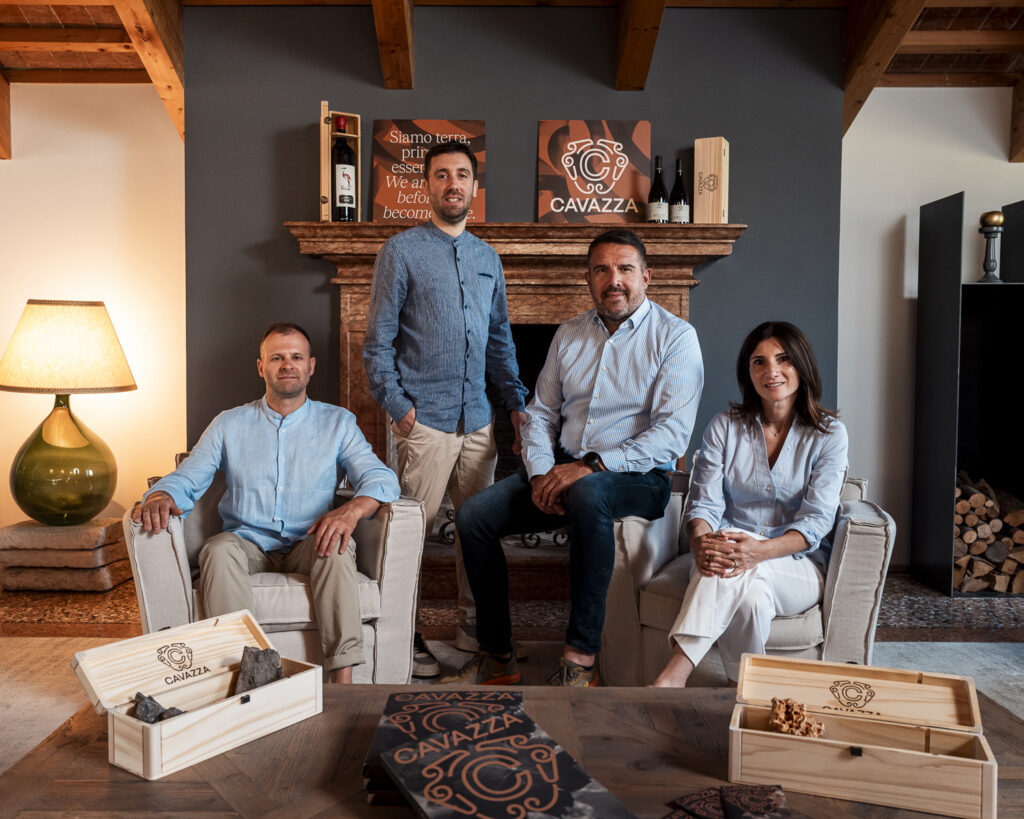
Historically based in Gambellara, Cavazza benefits from a distinctive volcanic terroir, characterised by black basalt soils that bring tension and minerality to the white wines, largely based on the Garganega grape. “Our soul is Gambellara,” they emphasise. A key milestone came in 1987 with the acquisition of vineyards in the Colli Berici, just a few kilometres away yet radically different in nature. “There, we move from volcanic rock to limestone soils, former seabeds. It’s an ideal terroir for reds.” This dual geological identity now underpins the entire production of the estate, balancing precise, taut whites with more generous reds, notably from Tai Rosso, a local grape variety “belonging to the Grenache family”. This evolution also reflects the opening to export markets: “When we started exporting, especially to Northern Europe, there was growing demand for red wines.”
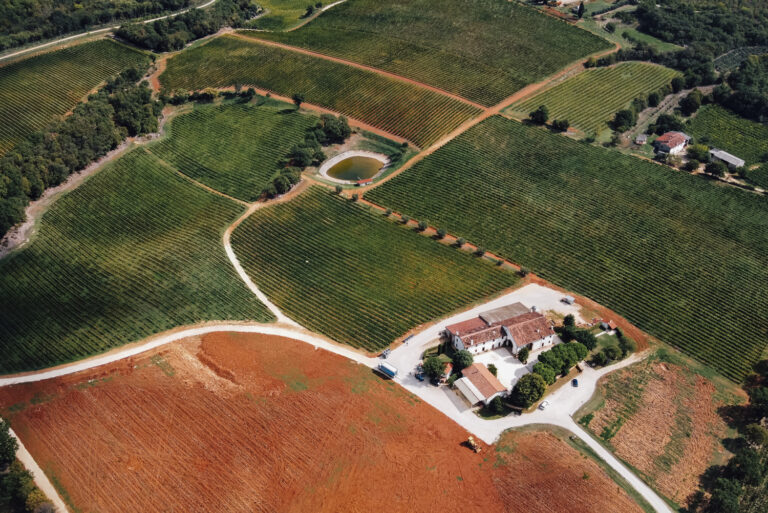
With around 130 hectares of vineyards and an annual production of approximately 600,000 bottles, Cavazza remains faithful to the model of an azienda agricola, overseeing every stage from vineyard to bottle. “We work exclusively with our own grapes.” This commitment is reflected in a clearly structured range built around three lines: the Classici, approachable and easy-drinking wines (sparkling belongs of that); the Identità cuvées, sourced from specific plots and considered the most representative; and the sparkling wines, including Lessini Durello, emblematic of the region.
Beyond the range itself, it is a philosophy that guides the work. “Our wines are very straightforward. They aim to respect the grape and the terroir.” In contrast to certain international trends, Cavazza favours a low-intervention approach and avoids standardising aromatic profiles. “Many wines today are made to be sold. We try to be as pure as possible.”
The estate also preserves more confidential traditions, such as Recioto di Gambellara and a local Vin Santo. “Few people know that there are three main Vin Santo traditions in Italy: Tuscany, Trentino and Gambellara.”
As the centenary draws near, new projects are quietly taking shape. Yet the essential remains unchanged, rooted in the continuity of a deeply embedded family heritage. “It’s something that runs through our veins,” they say. A commitment that, for nearly a century, has given rise to sincere wines, authentic reflections of their origin.
• Cavazza – Millesimato 2024 – Lessini Durello DOC
• Cavazza – Bocara 2024 – Gambellara DOC Classico
• Cavazza – Creari 2023 – Gambellara DOC Classico
• Cavazza – Tai Rosso 2025 – Colli Berici DOC
• Cavazza – Corallo 2021 – Tai Rosso Colli Berici DOC
• Tenuta Cicogna – Cabernet 2021 – Colli Berici DOC
• Cavazza – Santa Libera 2009 – Gambellara DOC Classico Vino Santo