
Alice Hartmann
Riesling as the guiding thread of a Luxembourg vineyard of terroirs
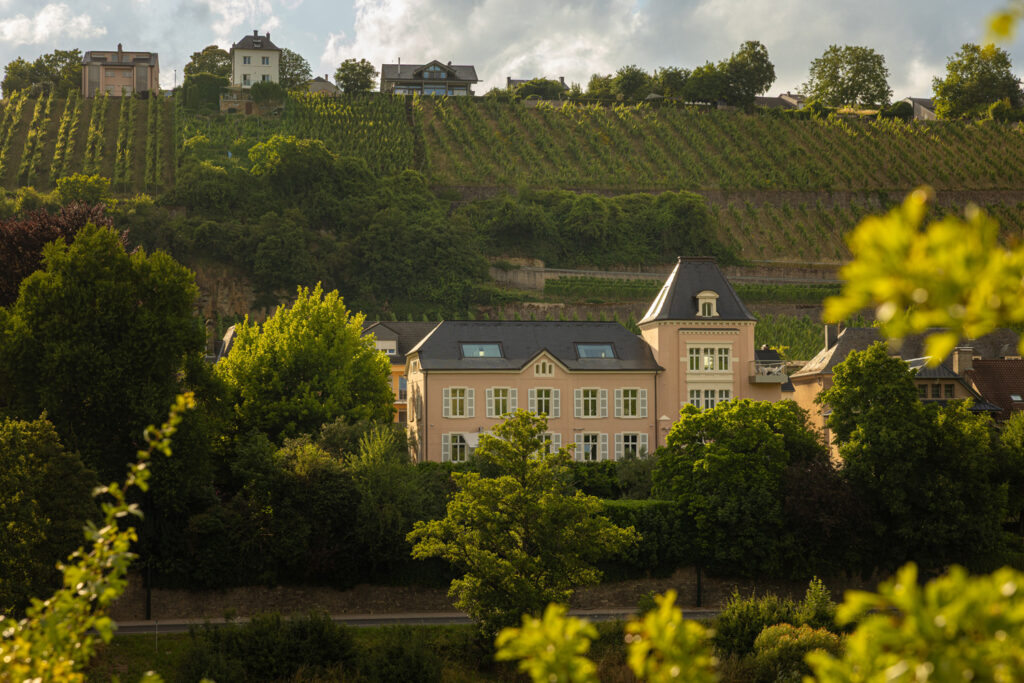
In Luxembourg, the Alice Hartmann estate is rooted in a long-standing viticultural tradition while embracing a contemporary approach to Riesling. Founded more than a century ago, the domaine originates from a singular family story. “It was Mrs Hartmann and her husband who received the estate as a wedding gift,” recalls Jos Wesner, now at the head of the property. At a time when inheritance laws were highly codified, this transmission through a woman was already something of an exception.
Over the generations, the vineyard has gradually taken shape and expanded. Acquired in 1996, it now covers around 15 hectares, largely dedicated to Riesling, the emblematic grape of the Luxembourg Moselle. “It remains a very traditional Riesling estate,” he explains. Yet behind this apparent simplicity lies a precise and thoughtful approach to terroir, developed patiently over the past two decades.
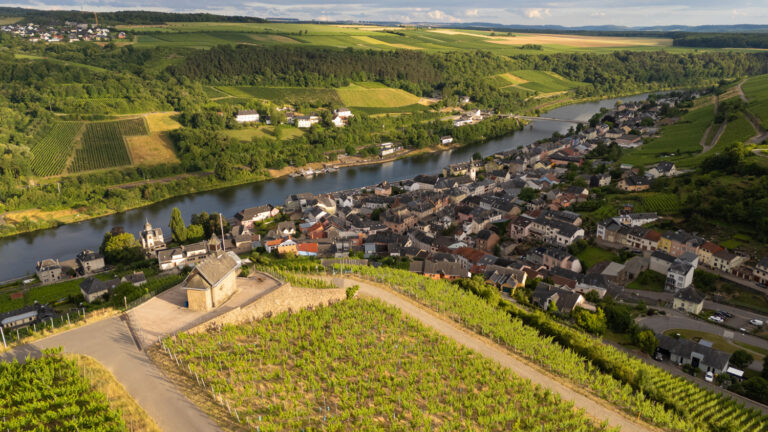
At the heart of the project is the expression of several distinct sites. Historically anchored in the Wormeldange lieu-dit, regarded as one of the country’s key Riesling terroirs, the estate has progressively extended its holdings to other vineyards, including Palmberg, Grevenmacher Fels and Wintrange. “Since last year, we have vineyards across all these terroirs,” notes Jos Wesner. This mosaic of sites allows for a wide range of expressions, even across relatively short distances.
The Luxembourg Moselle indeed offers a nuanced reading of Riesling. Steep slopes alternate between stony, gravel-rich soils and more sandy areas. In Wormeldange, some historic parcels, planted as early as 1937, lie on poor, rocky soils. “These wines are very mineral,” he emphasises. Further south, the profiles evolve towards more open textures, with alluvial soils dominated by sand and gravel. “Even over short distances, the differences are quite significant,” he adds.
Within this diversity, the cellar work remains deliberately consistent. “Riesling is made in the same way across all terroirs,” he explains. Fermentations are carried out at low temperatures, often using spontaneous yeasts, in order to preserve the maximum aromatic expression of the grape. “This allows us to retain as many aromas as possible and let the terroirs speak.” It is a restrained approach, placing the vineyard at the centre of the process.
The estate also places strong emphasis on quality control upstream. Alongside its own vineyards, it works with local growers for certain cuvées, particularly Crémant. “We were among the first to pay by the hectare rather than by the kilo,” he notes. This strategic decision allows intervention at the vineyard level, from pruning to yields and vineyard practices. “In this way, we maintain full control over quality.”
The range is structured around several expressions of Riesling, each tied to a specific terroir. An entry-level cuvée, sourced from Wormeldange Koeppchen (La Chapelle vinyard), offers a more accessible interpretation of the grape, while the other wines explore more defined profiles, balancing mineral tension, fruit maturity and structure.
In a context of increasing climatic uncertainty, certain traditional styles, such as ice wine, are becoming more difficult to produce. “In recent years, it has become more complicated,” he admits. Yet this constraint further underlines the need for precise and adaptive viticulture.
Beyond the wines themselves, the estate’s signature rests on a simple idea: to use Riesling as a translator of place. An approach where technique recedes in favour of origin, and where each parcel reveals, in its own way, a facet of Luxembourg’s vineyard landscape.
• Domaine Alice Hartmann – La Chapelle 2022, Riesling Wormeldange Koeppchen
• Domaine Alice Hartmann – Riesling 2020, Les terrasses, Wormeldange Koeppchen
• Domaine Alice Hartmann – Riesling 2023, Sous le rocher, Ahn Palmberg
• Domaine Alice Hartmann – Riesling 2023, Grevenmacher Fels
• Domaine Alice Hartmann – Riesling 2024, Wintrange Felsberg