
Slovakia’s wine awakening
 Slovakia remains one of the least discussed wine countries in Europe. Yet recent tastings and growing international attention suggest that this small Central European nation is entering a new phase of visibility. A tasting of more than one hundred Slovak wines, assessed through more than one hundred scores, revealed a quality level reaching 96 points and confirmed the country’s ability to produce whites and reds with strong identity and technical precision.
The results highlight a wine culture deeply rooted in Central European traditions. Varieties such as Riesling, Grüner Veltliner and Frankovka modrá dominate the landscape, supported by a national vineyard area of around nine to ten thousand hectares concentrated mainly in the southern part of the country.
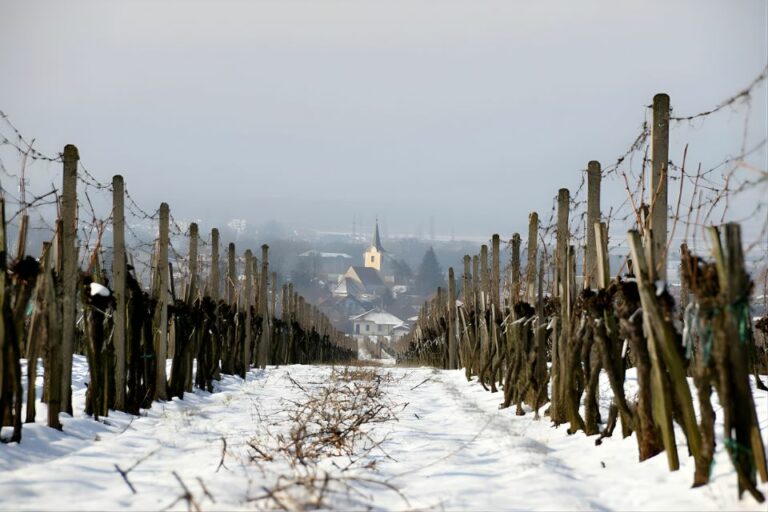
Although Slovakia’s vineyard surface is modest compared with major European producers, its geography offers favourable conditions for quality viticulture. Vineyards extend across the southern belt of the country, where the continental climate is moderated by the Danube and by the foothills of the Carpathian mountain range.
The historical influence of the Austro-Hungarian world remains visible in the style of Slovak wines. Clean aromatics, vibrant acidity and a strong focus on varietal clarity define a production that has become increasingly precise in recent years. Many wineries have invested in hillside vineyards and more careful cellar work, strengthening the country’s emerging wine identity.
Slovakia’s wine geography is structured into several official regions that run mainly along the southern part of the country. Among them, the area known as Malokarpatská, or Little Carpathians, plays a central role in shaping the national wine profile. Located near Bratislava and stretching along the slopes of the Little Carpathian mountains, it represents the historical heart of Slovak viticulture.
Wine towns such as Modra, Pezinok and Svätý Jur form a traditional wine corridor where hillside vineyards benefit from strong day-night temperature variation and well-exposed slopes. The soils, composed largely of limestone, clay and loess, contribute to whites characterized by clarity, freshness and mineral tension.
Further south, the Južnoslovenská region extends across the Danube plains, where warmer temperatures allow grapes to reach fuller ripeness. The landscape here is flatter and the soils are largely alluvial, sandy and clay-based, conditions that favour richer white wines as well as more structured reds.
In central parts of the country, the Stredoslovenská region introduces another dimension to Slovak viticulture. Vineyards are often planted at higher altitudes and many lie on volcanic soils. Wines from this area tend to be more restrained in alcohol, linear in structure and marked by pronounced mineral character.
Three grape varieties play a central role in Slovakia’s wine profile. Riesling produces wines marked by citrus notes, floral aromatics and vibrant acidity, often showing the mineral tension typical of cool Central European climates. Grüner Veltliner, locally known as Veltlínske zelené, tends to express more savoury and spicy profiles, frequently accompanied by subtle vegetal notes and pronounced freshness.
The key red grape is Frankovka modrá (Blaufränkisch), capable of producing wines with dark fruit, cherry tones and gentle spice, supported by lively acidity and moderate structure. Alongside these varieties, Slovakia also cultivates several local crossings such as Devín, Dunaj and Hron, which are gradually contributing to a more recognizable national identity.
The tasting of more than one hundred wines highlighted a group of wineries that stand out for consistency and quality. The highest score of the tasting, 96 points, was awarded to Cabernet Sauvignon 2009 by Víno Matyšák, confirming the estate as one of the leading producers in the country.
The same winery also achieved 95 points with several wines: Rizling vlašský 1997, Sylvánske zelené 2015 Limited Edition, Veltlínske zelené Prestige Premium Čierna zem 2021 and Cabernet Franc Vinum VI Prestige 2011, demonstrating impressive range across both white and red styles.
Another standout producer is Karpatská Perla, particularly noted for its whites from the Little Carpathians. The winery reached 95 points with Veltlínske zelené Noviny sur lie 2021, while Pinot Noir 2019 vinohrad Suchý vrch, Alibernet 2019 vinohrad Suchý vrch Sv. Martin and Veltlínske zelené Modra Noviny 2017, all produced by Karpatská Perla, also received 95 points. High scores were also achieved by Vinárstvo Svetík, whose Frankovka modrá 2009 earned 95 points, offering a compelling example of the potential of Slovakia’s flagship red variety.
Other wineries appearing among the highest-rated wines include Fundus Regius, Víno Fondrk, Dubovský & Grančič and Víno Zlatý Roh. Among the most notable bottles are Rizling rýnsky Extra 2021 by Fundus Regius, Cuvée Aurum by Víno Fondrk, Brut Nature St. George 2021 by Dubovský & Grančič and Pinot Noir 2021 by Víno Zlatý Roh, all receiving scores between 93 and 94 points.
Beyond the quality of its wines, Slovakia also offers growing opportunities for wine tourism. The proximity of many vineyards to Bratislava, combined with historic wine towns such as Modra and Pezinok, creates a compact and accessible wine landscape where visitors can move easily between cellars, vineyards and traditional wine routes.

The Little Carpathians in particular have long cultivated a culture of small wineries, traditional cellars and local wine festivals closely tied to regional identity. Visitors can explore hillside vineyards, historic wine houses and contemporary wineries within short distances, making the region especially appealing for wine travellers seeking authentic Central European wine experiences.
The diversity of grape varieties further enhances the appeal of Slovak wine tourism. Tastings often move from crisp Rieslings and Grüner Veltliners to structured Frankovka modrá, followed by local varieties such as Devín or Dunaj. This stylistic range allows visitors to experience the breadth of Slovak viticulture within a relatively small territory.