Bourgogne: a new tandem to steer the interprofessional body
Laurent Delaunay and Michel Barraud take the helm of the Comité des vins de Bourgogne with the drafting of the 2035 strategic plan as their compass, at a time of profound change for the wine sector.
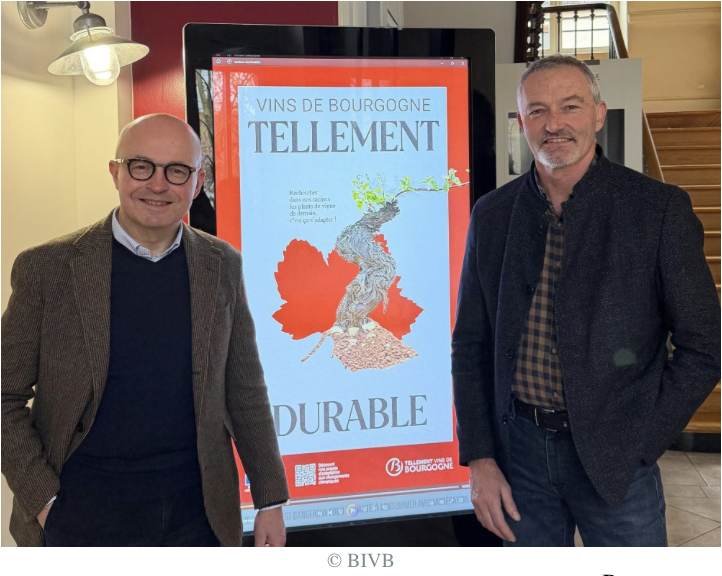
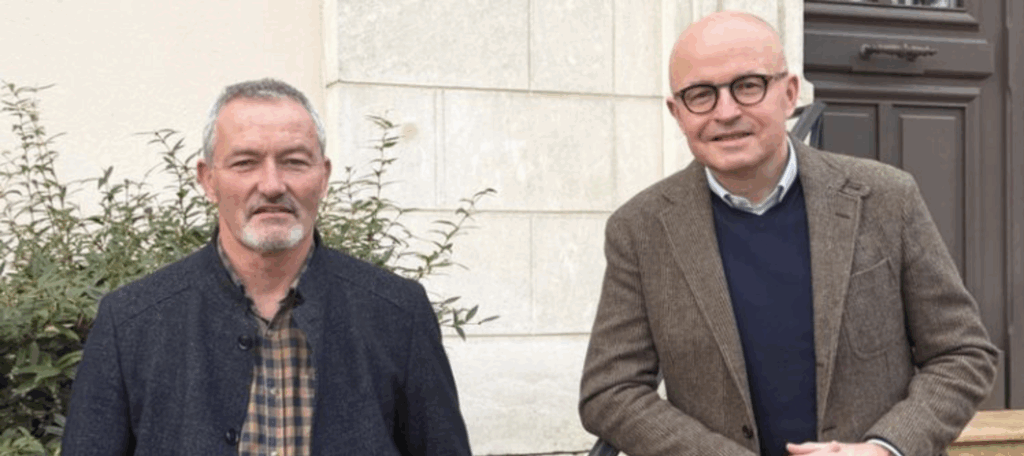
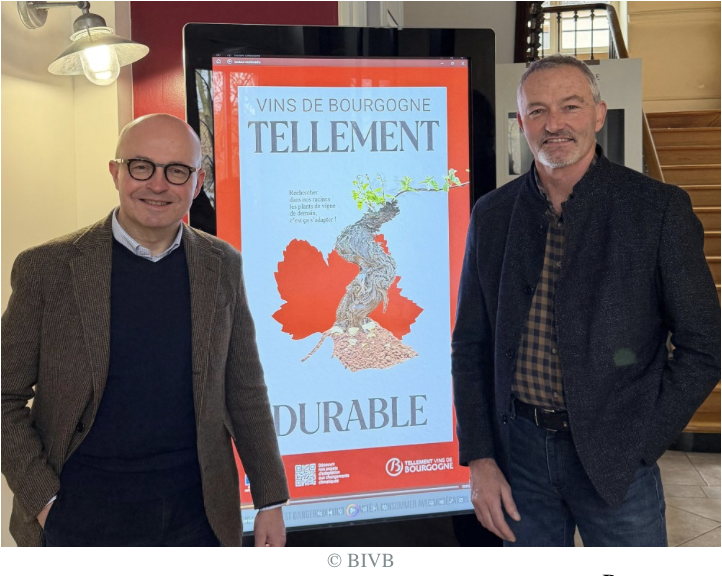
Meeting in Beaune on 30 January 2026, the General Assembly of the Comité des vins de Bourgogne marked a structuring milestone for the region with the election of a new Permanent Committee. At its head stands a duo set to work hand in hand over the next four years: Laurent Delaunay, reappointed to represent the négociant trade, and Michel Barraud, newly elected for the winegrowing college, succeeding François Labet. Their central task will be to steer the preparation of the sector’s strategic plan looking ahead to 2035, which is due to be put to the vote in early July.
Prior to this appointment, François Labet and Laurent Delaunay delivered a clear-eyed and candid assessment of the state of the industry. In a deliberately introspective address, Laurent Delaunay emphasised that the wine world is undergoing a phase of deep reappraisal, shaped by the accumulation of adverse factors. Climate change, geopolitical tensions, economic uncertainty, trade barriers, and societal and demographic shifts all represent structural challenges. While Bourgogne wines continue to enjoy an exceptional standing on global markets, current indicators nonetheless call for caution.
Against this backdrop, the first half of 2026 will be devoted to the collective drafting of the new ten-year strategic plan. Laurent Delaunay expressed the wish for this roadmap to be firmly focused on effectiveness and action, in the service of all stakeholders across the sector. This process builds on the momentum generated by the Vinosphère gathering, conceived as a forum for reflection and co-construction around a desirable future for Bourgogne wines. Speaking for the first time as President of the winegrowing college, Michel Barraud placed his mandate under the banner of unity and cohesion, across the entire region from north to south. He reiterated the structuring role of the interprofession’s three pillars. The Technical and Innovation division will be tasked with supporting adaptation to climate change while safeguarding qualitative excellence. The Economic Intelligence and Strategy division will draw in particular on a forward-looking study launched at the end of 2025 to inform long-term decision-making. Lastly, the Marketing and Communication division will continue its work on training key opinion leaders and strengthening direct links with consumers, notably through the development of wine tourism and visitor engagement at the Cités des Climats et vins de Bourgogne.
Carbon neutrality, announced as the cornerstone of the 2035 strategy, will form the guiding thread of this new cycle. In closing, Michel Barraud quoted Antoine de Saint-Exupéry, recalling that the future is built first and foremost through the organisation and coherence of the present.